The technological route of oil and gas recovery has gone through three generations: the first generation involves direct cryogenic treatment, the second generation utilizes activated carbon adsorption, and the third generation employs membrane separation. When selecting technology, it's not about choosing the latest name, but rather selecting the one that matches your specific scenario - considering factors such as gas volume, concentration, safety requirements, and site conditions to arrive at a clear answer. This article compares the principles and pros and cons of the three generations of technology, laying them all out on the same table. After reading, you will understand why membrane technology is increasingly being used in oil depots and gas stations. The article compares the three generations of technology side by side, allowing users to check against their own site's gas volume, concentration, and site conditions row by row during selection. For uncertain rows, common questions at the end provide a guide for judgment, and following the instructions will provide an answer.
What are the three generations of technologies
The cryogenic method reduces oil and gas to temperatures below minus seventy degrees Celsius or even lower, making them liquefied. It has a high recovery rate but requires significant refrigeration energy and high-quality equipment materials. Nowadays, it is often used as the initial stage of a combined process rather than as a standalone solution. Activated carbon adsorption involves capturing oil and gas on a carbon bed and then desorbing and recycling them. It is the most widely used method, but adsorption is an exothermic process, and local overheating of the bed poses a risk of combustion and explosion. Therefore, a complete set of safety measures such as temperature measurement and detection, as well as inert gas protection, are required. Membrane separation is the third generation: the mixed gas is separated by the pressure difference on both sides of the membrane according to the mechanism of dissolution and diffusion. The permeation rate of oil vapor through the membrane is tens of times faster than that of air, allowing oil and gas to pass through preferentially for enrichment and recycling, while air is trapped and discharged after meeting emission standards.
The evolution logic of three generations of technology is actually a history of balancing safety and economy: cryogenic technology trades temperature for recovery rate, at the cost of energy consumption and equipment; adsorption technology trades materials for flexibility, at the cost of safety investment and consumable disposal; membrane separation technology trades material science for selectivity, reducing the burden on both safety and energy consumption. For site operators, technological progressiveness ultimately boils down to two practical matters - whether emission testing can consistently pass, and whether the book value of recovered oil can cover operating costs. In most site scenarios, membrane technology excels in both aspects.
What are the advantages of membrane technology
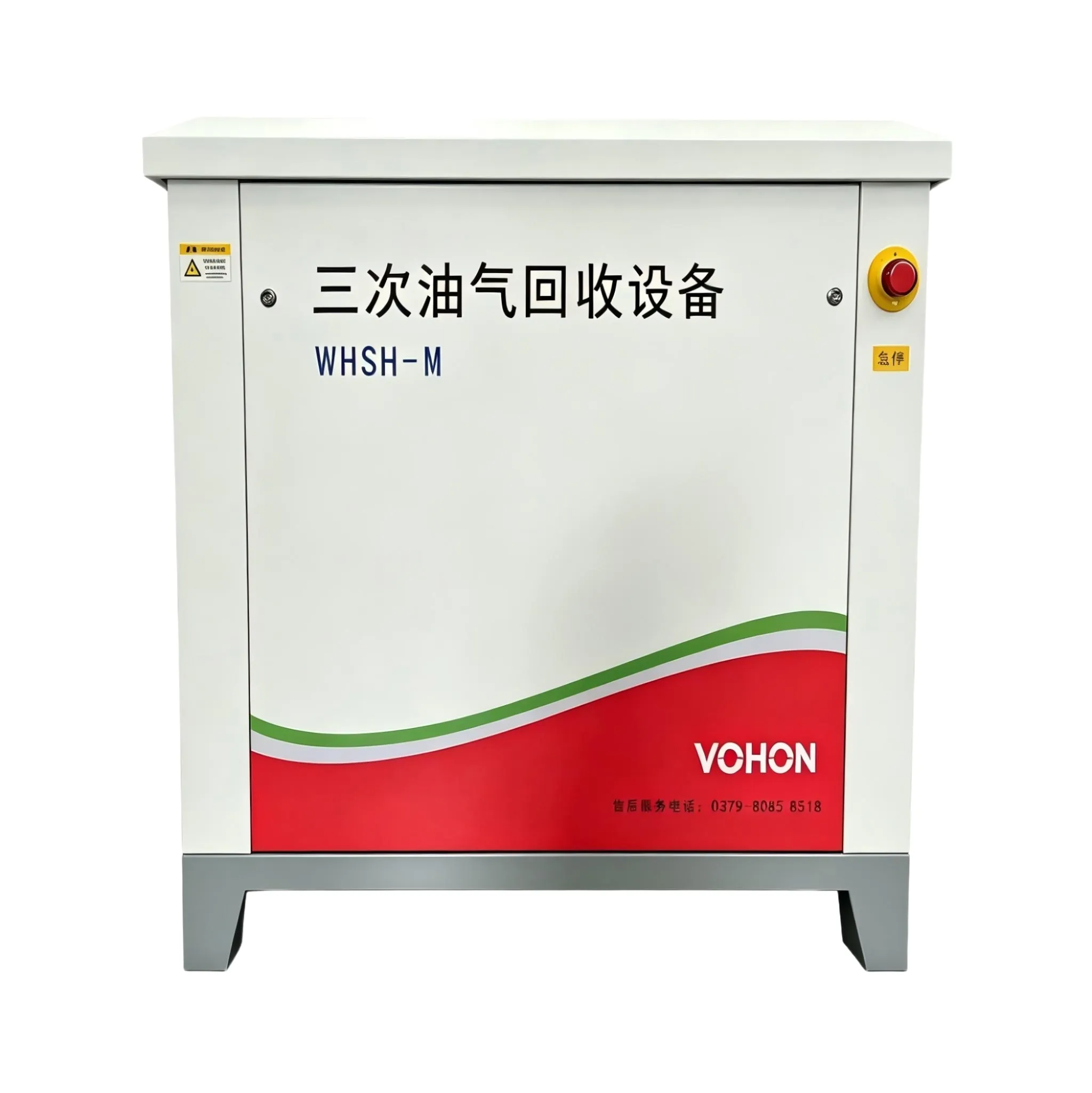
The membrane is a non-porous and dense structure, which is not prone to clogging and has no electrostatic accumulation during operation. The device adopts an open processing mode, eliminating concerns about pressure and temperature buildup in a closed system, making it naturally friendly to flammable and explosive conditions. The separation process mainly involves no phase change, resulting in significantly lower energy consumption compared to cryogenic processes. The device has fewer components and a high degree of skid-mounting, occupying only about half the space of traditional equipment with the same capacity. After being connected to a control system, it can operate fully automatically without human supervision. The recovered oil and gas are liquefied and returned to the storage tank, which is a real benefit.
Comparison of three generations of technology
| dimension | cryogenic | activated carbon adsorption | membrane separation |
|---|---|---|---|
| recovery rate | High, dependent on deep cold temperature positions | High, attenuated with the carbon layer | Combined process: over 99% |
| Energy consumption | extremely high | moderate | Low, primarily characterized by no phase change |
| safety | High material requirements | Exothermic with potential for combustion and explosion hazards | Open-type, with no electrostatic accumulation |
| cover an area of | big | big | Small and skid-mountable |
| Operations and Maintenance (O&M) | complicated operation | Replace charcoal and add detection protection | Primarily based on inspection |
| Secondary pollution | Nothing | Waste charcoal needs to be disposed of | Nothing |
How to choose
- In scenarios with high concentration, large flow rate, and high recovery value: a combination of condensation and membrane filtration, where condensation accounts for the majority and membrane filtration serves as a check;
- In scenarios where emission compliance is the primary goal and the concentration is low, both adsorption and membrane methods can be employed, with costs calculated based on safety investments;
- For sites with high safety level requirements: priority should be given to membrane separation, with an open design to prevent static electricity accumulation;
- Renovation project with limited space: skid-mounted membrane device, ready to use upon connection;
- Uncertain: First, measure the gas volume and concentration, and then prepare a plan based on the data.
Frequently Asked Questions
Can membrane technology replace condensation?
The two are partners, not rivals: condensation captures the majority of heavy hydrocarbons, while membranes capture the low-boiling-point components that are difficult to recover. The recovery rate of the combined process is higher than that of any single process. This is how the mainstream configuration for tertiary recovery in gas stations came to be.
Can activated carbon adsorption still be used?
It can be used, and it has its place in low-concentration, high-volume scenarios. However, we must carefully consider the safety aspect - the investment in detection and protection against overheating and explosion of the bed layer is significant. For sites with high safety requirements, a combination of membrane method or membrane plus adsorption is more convenient.
Is membrane technology investment very high?
After modularization, investment has been significantly reduced, and the recycled oil products themselves have economic value. Based on the conversion of recycling volume, the investment payback period for most stations falls within a reasonable range. Besides environmental benefits, there is also an economic benefit to be calculated.
This article is compiled by Luoyang Wohong Petrochemical Equipment Co., Ltd. The company provides design and manufacturing, skid-mounted customization, installation and commissioning, as well as after-sales operation and maintenance services for three-time oil and gas recovery equipment to gas stations and oil depots. If you need on-site inspection or scheme configuration, please feel free to contact us for discussion.