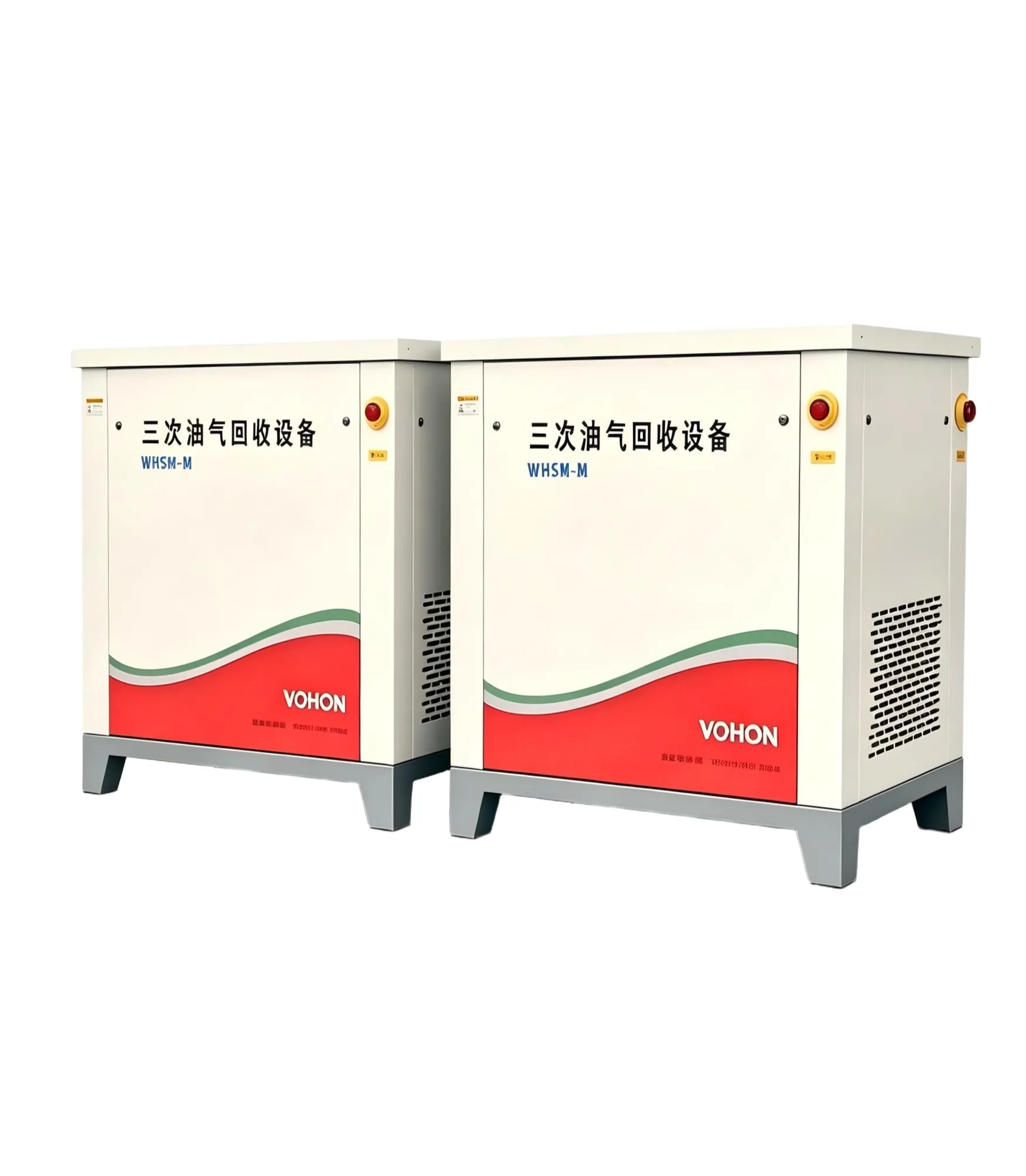
The membrane separation module serves as the core of advanced treatment in tertiary oil and gas recovery equipment: After the condensation unit has liquefied and recovered most of the oil and gas, the residual low-concentration tail gas enters the membrane module, where organic molecules are selectively permeated through the polymer membrane and enriched, then recycled back to the condensation unit for further liquefaction and recovery. The purified air is discharged in compliance with standards. It determines the "final recovery amount and cleanliness of the exhaust" of the entire device, and is also a key component for routine maintenance.
1. The position of membrane separation in the entire system
The typical process chain for three-stage oil and gas recovery typically involves the following steps: The collection system first centralizes the oil and gas from refueling, unloading, and tank breathing. The compression condensation unit then liquefies and recovers the high-concentration oil and gas. The membrane separation component processes the condensed non-condensable tail gas. The enriched gas on the permeate side of the membrane returns to the condensation unit to form an internal loop, allowing solvent oil and gas to "only enter and not exit." This ensures the system's recovery rate.
II. Working principle of membrane module
1. Selective permeation
The permeation rates of oil and gas molecules through the polymer membrane differ from that of air. Oil and gas molecules preferentially permeate through the membrane wall and accumulate on the permeate side.
2. Pressure difference drive
Membrane separation is driven by the pressure difference between the feed side and the permeate side, and the system maintains a stable pressure difference with a fan or compression unit.
3. Recycling
The enriched gas is returned to the condensation unit, and the liquefiable portion is recycled again, forming a closed loop.
III. Division of labor between membrane components and other units
| unit | Processing object | Responsibilities |
|---|---|---|
| Collection system | Oil and gas at each emission point | Closed collection and conveyance |
| Condensation unit | High-concentration oil and gas | Liquefied recovered solvent gasoline |
| Membrane separation module | Low-concentration non-condensable exhaust gas | Enrichment cycle, deep purification |
| discharge outlet | Purge gas | Emission compliance and monitoring |
IV. Maintenance points of membrane components
- Regularly record the pressure difference before and after the membrane. An abnormal increase in pressure difference often indicates pollution or blockage;
- Maintain the temperature of the gas entering the membrane within a suitable range to prevent liquid gasoline from being entrained into the membrane;
- Conduct performance testing according to the manufacturer's schedule, and promptly investigate any decline in recovery rate;
- Spare parts inventory: Seals, membrane cores, etc. should be planned for replacement in advance based on their service life.
Frequently Asked Questions
Q: How long can the membrane module last?
Answer: Under normal operating conditions, the membrane module has a long lifespan. The specific lifespan is related to operational load and maintenance conditions. Wohong provides maintenance cycle recommendations along with the device.
Q: What happens if the membrane is broken?
Answer: It is manifested as a decrease in recovery rate and an increase in concentration at the discharge outlet. Regular testing can help detect and replace the membrane core in a timely manner.
Q: Do membrane components need special care in winter?
Answer: Attention should be paid to preventing condensation and freezing in low temperature environments. The electric heat tracing and insulation configuration of the device are particularly important at northern stations.
Luoyang Wohong Petrochemical Equipment Co., Ltd. specializes in the application of tertiary oil and gas recovery equipment and membrane separation technology.