When selecting a three-stage oil and gas recovery equipment, the core is to match the processing capacity with the actual working conditions in the station: determine the processing capacity based on the type of oil and daily throughput, determine the skid-mounted layout based on site conditions, and determine the membrane separation configuration based on emission requirements. If the capacity is too large, the power consumption will be falsely high; if it is too small, the treatment will not be thorough. Accurate selection can save energy and ensure stable compliance.
Step 1 of model selection: Calculate the air volume and load
- The daily throughput and oil unloading frequency determine the peak gas volume, and the processing capacity of the device is reserved with a margin based on the peak value;
- The number of storage tanks and breathing conditions determine the foundation load;
- The condition of the refueling aircraft's return air (secondary recovery) affects the baseline of the air volume entering the tertiary recovery.
Step 2 of model selection: matching process configuration
- Standard station configuration: standard skid-mounted setup consisting of a buffer tank, compression condensation, and membrane separation, catering to daily loads;
- Bulk oil depot: Increase the number of condensation stages, and collect the recovered liquid by components;
- For sites with limited space: The skid-mounted integrated equipment occupies a compact area and can be easily lifted into place.
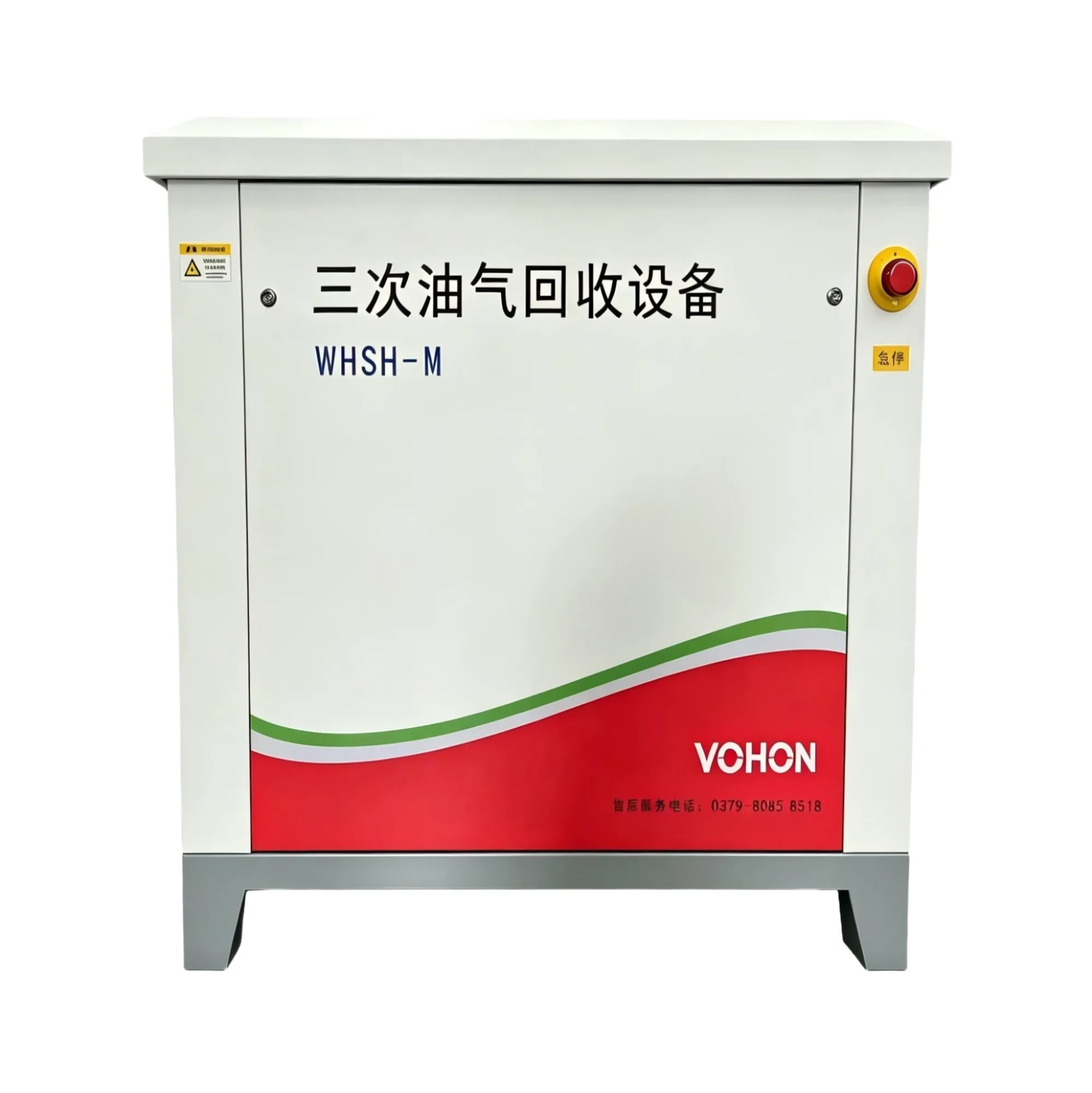
Common scale and configuration comparison
| Site Type | Load characteristics | Recommended configuration direction |
|---|---|---|
| Urban gas station | Intermittent oil unloading, with significant fluctuations in gas volume | The buffer tank is appropriately enlarged, and the compressor unit is equipped with a frequency converter |
| High-speed/mainline station | Large throughput and centralized oil unloading | Increased processing capacity, with dual-machine redundancy |
| Oil depot/transit depot | Continuous large displacement | Fractional condensation + high-flux membrane module |
Three common pitfalls in model selection
First, selecting equipment based solely on average gas volume can lead to device overload during peak oil unloading periods. Second, neglecting the health of the secondary recovery system can result in distorted gas volume baselines. Third, configuring membrane components based on peak values can lead to energy wastage during long-term low-load operations. A standardized equipment selection process should begin with an initial assessment of on-site data, followed by a detailed calculation to determine the optimal configuration.
The current secondary recycling system is outdated. Can we directly implement tertiary recycling?
It is recommended to conduct a preliminary assessment of the gas volume and tightness for the secondary recovery first, and then determine the configuration for the tertiary recovery based on this. Only when the two are matched can the operational efficiency be high.
What are the requirements for the foundation of skid-mounted equipment?
Generally, hardened ground with fixed pre-embedded parts is sufficient. Specific calculations should be based on the equipment's own weight and wind load. A list of basic conditions will be provided upon delivery.
What on-site data is required for model selection?
The more complete the information provided about the number and volume of storage tanks, types of oil products, daily throughput, unloading methods and frequencies, and site dimensions, the more accurate the configuration will be.
Luoyang Wohong Petrochemical Equipment Co., Ltd. provides design, manufacturing, and installation services for tertiary oil and gas recovery equipment for gas stations and oil depots. We support customization according to the specific conditions of each station. Welcome to inquire.