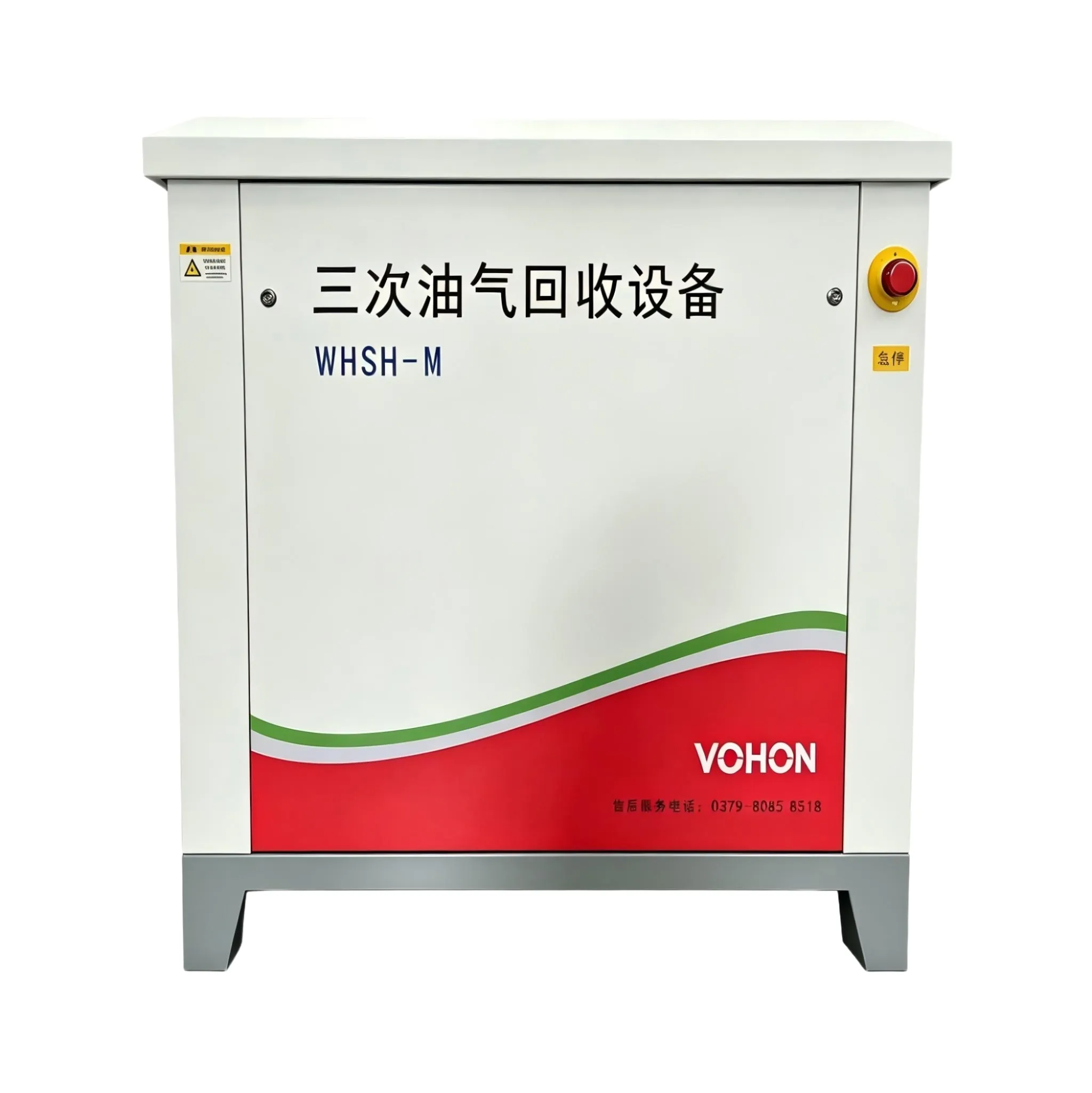
The oil and gas recovery at gas stations and oil depots is evolving from "up-to-standard emissions" to "solvent recycling": In previous years, the focus of the transformation was on oil and gas collection and closed transportation, addressing the issue of whether to discharge or not. The current trend is to equip with tertiary oil and gas recovery equipment, which can re-liquefy and recycle the escaping oil and gas into oil products, with environmental indicators and oil product loss accounts being calculated together. Behind this transformation lies the combined force of stricter regulation and operators' demand for reducing consumption.
1. Three stages from compliance to resource recovery
The first recovery stage addresses the closed displacement in the unloading process, the second stage focuses on the oil vapor recovery during the refueling process, and the third stage delves into the deep treatment of residual emissions from tank breathing and earlier stages. While the first two stages have reduced most emissions, the continuous generation of oil vapor from tank breathing remains a persistent issue, highlighting the value proposition of the third-stage recovery equipment.
II. Driving Factors of Resource-oriented Transformation
| driving factors | specific manifestations |
|---|---|
| Environmental regulation | Emission limits are becoming stricter and testing is becoming more routine |
| Demand for consumption reduction | Recovering oil and gas and reducing them into marketable oil products |
| management level | Popularization of online monitoring and data management |
| technologically mature | The condensation + membrane separation process is stable and reliable |
III. Common paths for transformation implementation
1. Current situation assessment
Check the sealing condition of the primary and secondary recovery systems, as well as the breathing and emission patterns of the storage tanks, to determine the access point for tertiary recovery.
2. Equipment selection
Select and configure condensation + membrane separation devices based on oil type, gas volume, and site conditions, ensuring compatibility with existing pipelines.
3. Installation, debugging, and acceptance
Utilize operational gaps to complete integration, and incorporate into daily operation and maintenance as well as data management after commissioning and acceptance.
IV. Industry Observation
- Due to the high environmental sensitivity, the renovation of urban stations is progressing faster;
- Oil depots and large-scale storage and transportation facilities tend to be equipped with skid-mounted devices with greater processing capacity;
- The data ledger for recycled oil products has become a standard for refined management.
Frequently Asked Questions
Question: The old station is still functioning normally for the first and second recycling processes. Is it necessary to proceed to the third one?
Answer: Primary and secondary recovery cannot address the breathing emissions from storage tanks. Whether to proceed to tertiary recovery should be comprehensively evaluated based on emission requirements and oil loss accounts.
Q: How long will the business be closed for renovation?
Answer: Access operations should be arranged during business intervals as much as possible, and most projects can be completed within the window period without affecting business operations.
Q: Can the oil loss really be reduced after the transformation?
Answer: The third recovery process involves liquefying the breathing and residual oil and gas back into the tank. The recovery amount can be verified through metering data, and most stations can achieve significant consumption reduction effects.
Luoyang Wohong Petrochemical Equipment Co., Ltd., a professional manufacturer of tertiary oil and gas recovery equipment, welcomes discussions on modification plans.