Three-stage vapor recovery is often regarded as an environmental protection expenditure, but it is also a measure to recover the "escaped oil". The vapor emitted during the unloading, storage, and refueling processes at gas stations is essentially the purchased product that has evaporated. The three-stage vapor recovery device liquefies these vapors and returns them to the storage tank, reducing fugitive emissions and retaining valuable resources within the system. This is why it is called "dual value".
The first level of value: keeping emissions under control
- There are corresponding control measures for volatilization in the three stages of oil unloading, storage, and refueling, forming a complete closed loop;
- Reduce the concentration of oil and gas within the factory boundary and station, and improve the working environment and surrounding perception;
- In the context of gradually refined supervision, device operation data has become a part of daily management.
The second level of value: recovering oil and gas
The main components of oil and gas are light hydrocarbons, which can be directly returned to storage tanks for sale after being recovered and liquefied. At stations with heavy traffic and frequent oil unloading, the recovery volume increases with the turnover volume, and this part of the output will continue to accumulate over time. The higher the efficiency of the recovery device, the greater the proportion of resources that remain in the station.
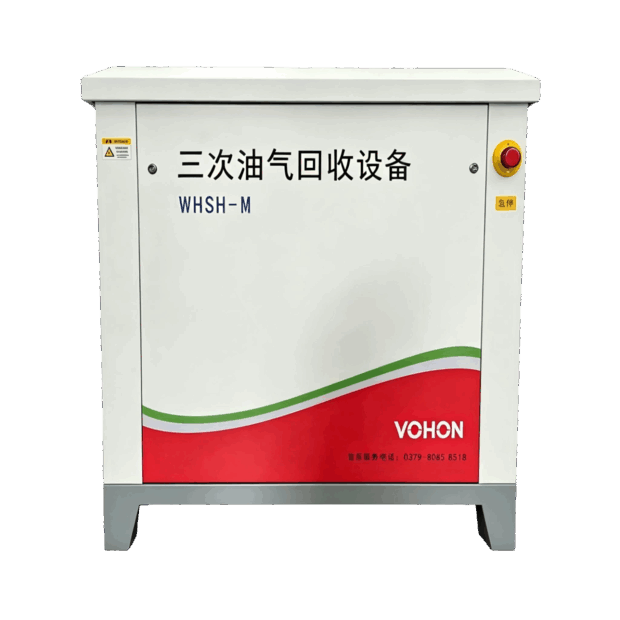
How do two values interact with each other
Environmental compliance and resource recovery are not two parallel lines. The more fully the device recovers oil and gas, the lower the emission concentration at the end, and the easier it is to achieve compliance; conversely, if only compliance is pursued without emphasizing recovery efficiency, the device often has to rely on increasing processing capacity or end-of-pipe measures, which in turn leads to higher operating costs. Taking recovery efficiency as the design goal, compliance is a natural result.
The focus of attention at different sites
| Site Type | Main features | Focus on the key points |
|---|---|---|
| City Center Station | Heavy traffic and frequent oil unloading | Recovering capacity and operational stability |
| National and provincial highway stations | Large single oil unloading volume and slow turnover | Collection efficiency in the oil unloading process |
| Oil depot supporting station | Large scale, continuous operation | Match processing capacity with energy consumption |
| Renovation station | Limited space, existing pipelines to be utilized | Equipment footprint and pipeline connection |
The approach to determine whether a device is worth investing in
- First, calculate the annual average turnover volume and oil unloading frequency of the site, which are the basis for the recovery volume;
- Next, we need to calculate the operating energy consumption and maintenance costs of the device, which are long-term expenses;
- Compare the value of the recovered liquid with the operating costs on the same time scale;
- At the same time, environmental protection requirements should be taken as a constraint, rather than the only goal.
Frequently Asked Questions
Q: Can all the recovered oil and gas be returned to the storage tank?
Answer: After being processed by the recycling device, the liquid is returned to the storage tank, with a small amount of components still being discharged in low concentration. The higher the efficiency of the device, the greater the proportion of the liquid returned to the tank.
Q: Is it cost-effective to install solar panels on a small site?
Answer: It needs to be calculated based on turnover volume. Although the recycling volume at small stations is limited, the compliance requirements are the same. We can match the equipment scale and operation mode to reduce long-term operating costs.
Q: Will the operation of the device increase a lot of electricity bills?
Answer: Energy consumption is directly related to the processing capacity and refrigeration method. It will be calculated based on actual operating conditions during the scheme design stage, and cannot be generalized.
Luoyang Wohong Petrochemical Equipment Co., Ltd. provides selection, manufacturing, and service of tertiary oil and gas recovery equipment for gas stations and oil depots. Welcome to inquire about site operating conditions and configuration ideas.