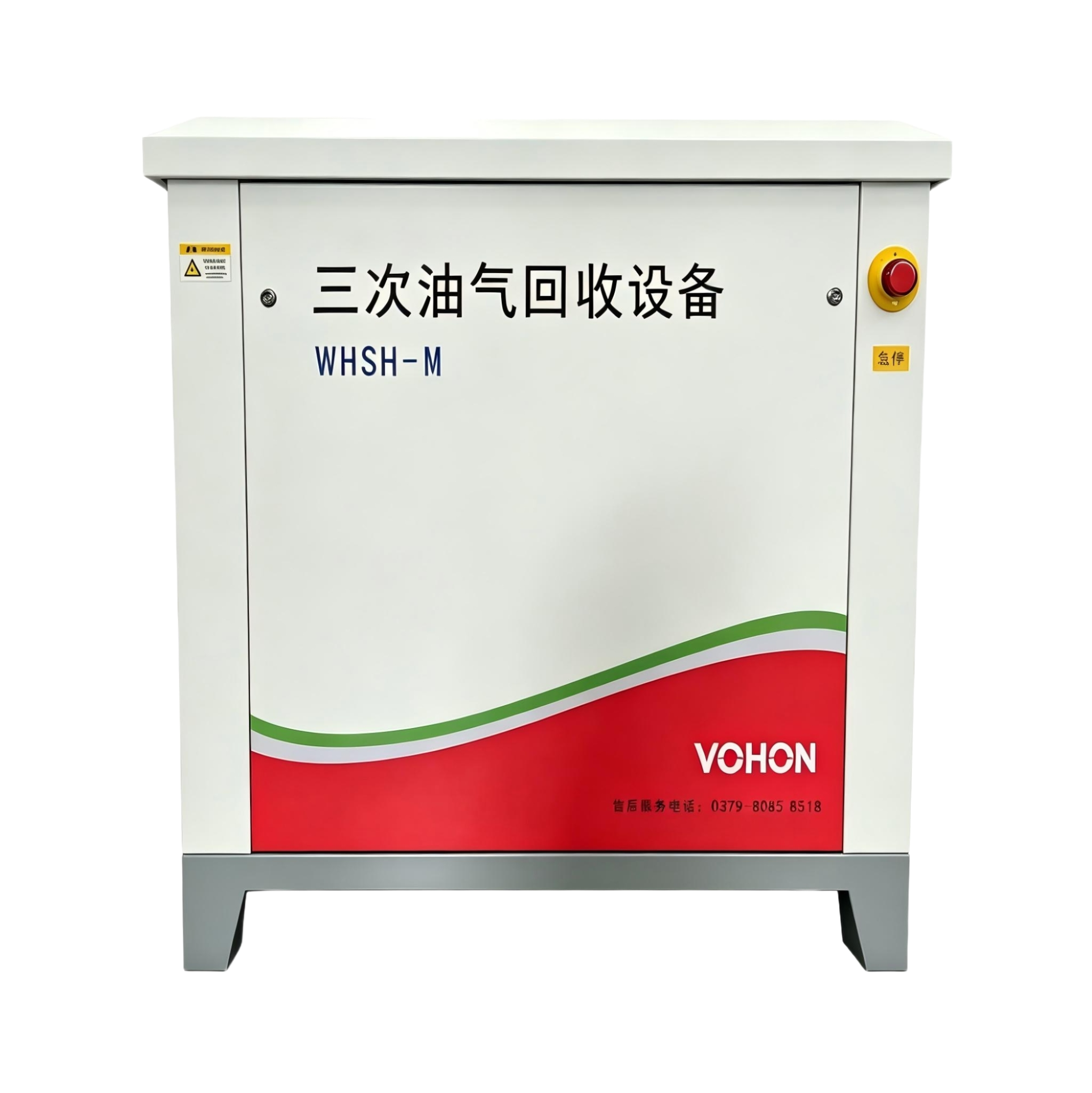
The three-stage oil and gas recovery equipment handles the rich oil and gas generated from tank breathing, unloading circuits, and daily emissions. The effectiveness of this system's recovery and its energy efficiency largely depend on whether the condensation temperature level is set reasonably. If the temperature level is set too low, the residual oil and gas concentration cannot be reduced; if set too high, the refrigeration energy consumption doubles unnecessarily. The engineering principle is to "set the final temperature level according to emission management requirements and determine the condensation load according to gas volume fluctuations". First, the gas source should be clarified, and then the condensation arrangement should be determined step by step.
What are the characteristics of tank breathing exhaust gas
The breathing exhaust gas from storage tanks exhibits two distinct characteristics: firstly, high concentration, with the oil vapor in the gas phase space inside the tank approaching saturation, and the exhaled gas possessing direct recovery value; secondly, significant fluctuation, with the breathing volume doubling during oil loading and unloading operations, and falling back to a very low level during standstill periods. The tertiary oil vapor recovery equipment is specifically designed for this type of "low during normal times, high during operations" condition. The condensation unit must be configured according to the peak operating value, while using a buffer tank to absorb fluctuations and avoid frequent start-ups and shutdowns of the refrigeration unit.
"Three steps to understand the gas source"
- List all exhaust points: tank breather, oil unloading vapor circuit, oil measuring port, and the vicinity of emergency release device, and register each point;
- Assess gas volume and concentration characteristics: distinguish between peak operational gas volume and static baseline gas volume, serving as the basis for condensation load and buffer capacity;
- Determined routing: High-concentration rich oil gas enters the condensation recovery unit, and the purified tail gas is discharged outside according to emission management requirements.
How to determine the condensation temperature level step by step
A common approach involves a two-stage arrangement: the first stage uses normal temperature water or chilled water to pre-cool the rich oil gas, liquefying most of the high boiling point components, and the recovered condensate is directly returned to the tank; the second stage further reduces the temperature, reducing the residual oil gas concentration to the level required by emission management regulations. The temperature level for each stage should be calculated using the saturated vapor pressure curve of the components, rather than just assigning a low temperature number based on intuition.
Operation steps for determining temperature position
- Based on the gas source components, temperature, and pressure conditions, plot the dew point range of the oil-gas mixture;
- Determine the precooling temperature level based on the first-level recovery target, allowing the main oil and gas to liquefy at this level;
- Derive the second-stage endpoint temperature based on the external exhaust concentration requirements, allowing for a margin for heat exchange temperature difference;
- Verify the load of the refrigeration unit at peak air volume and confirm the defrosting and drainage arrangements;
- During joint debugging, measure the concentration at the condensation outlet and fine-tune the temperature setting to find the balance point between effectiveness and energy consumption.
Comparison between single-stage condensation and two-stage condensation
| Comparison item | Single-stage condensation | Two-stage condensation |
|---|---|---|
| Applicable scenarios | In situations where the gas volume is small and the components are single | Stations with large gas volume fluctuations and strict emission requirements |
| Efflux concentration | Subject to single-level temperature constraints | The secondary cryogenic treatment further reduces the residual concentration |
| Operating energy consumption | lower | Slightly higher, but it can be controlled by putting into operation as needed at the secondary level |
| Configuration complexity | Simple | Add a level of heat exchange and control, while still maintaining a skid-mounted integration |
Supporting configuration and operational key points
In addition to the condensing unit itself, there are several essential components that cannot be omitted in the tertiary oil and gas recovery equipment: the buffer tank, whose capacity is selected based on the peak gas volume during operation, ensures the stable operation of the refrigeration unit; the condensate pipeline design and return tank pipeline make it clear how much oil is recovered; in cold regions, attention should be paid to defrosting and drainage of the unit to prevent freezing and blockage of the heat exchanger; for stations with higher purification requirements, a membrane separation unit can be connected after condensation to further trap residual oil and gas. During daily operation, focus on three key parameters: condensing outlet temperature, external discharge concentration, and condensate recovery volume. By combining these data, the system status can be quickly assessed.
Frequently Asked Questions
Is the lower the condensation temperature level, the better?
No. The lower the temperature level, the higher the refrigeration energy consumption and the heavier the defrosting burden. It is sufficient to deduce the final temperature level based on the external emission concentration requirements and leave a margin. Blindly increasing the cooling capacity will only increase operating costs.
The concentration of exhaust gas fluctuates greatly. Can the equipment keep up?
The buffer tank with automatic control is a standard configuration. The condensing unit is selected based on the peak operation load, and it operates at low load during standstill periods, ensuring that batch fluctuations do not affect the recovery efficiency.
How should the recovered condensate be handled?
After being metered, the condensate is directly returned to the tank or re-injected into the storage tank area. It is verified in conjunction with the oil product ledger, ensuring that the account of the recovered quantity matches the loss at the gas station.
This article is compiled by Luoyang Wohong Petrochemical Equipment Co., Ltd. The company provides design and manufacturing, skid-mounted customization, installation and commissioning, as well as after-sales operation and maintenance services for three-time oil and gas recovery equipment to gas stations and oil depots. If you need on-site inspection or scheme configuration, please feel free to contact us for discussion.