The primary gas sources for three types of vapor recovery equipment come from tank breathing: one is the "small breathing" caused by temperature changes, and the other is the "large breathing" resulting from material inflow and outflow. The gas volume characteristics and occurrence periods of these two types of breathing are different, and the selection and operation arrangement of the recovery equipment should take into account both of these working conditions. Estimating the magnitude of both small and large breathing clearly before determining the scale and buffer volume of the recovery equipment is the most time-consuming step in the design phase.
Small breath: Fluctuating with temperature changes between day and night
The small breathing is due to thermal expansion and contraction of the gas space inside the tank: During the day, the temperature rises due to sunlight, causing the oil and gas inside the tank to expand and the pressure to increase. When it exceeds the set value of the breather valve, a portion of it is discharged; at night, the temperature drops and contracts, creating a slight negative pressure inside the tank, which then inhales air. This type of breathing occurs daily, with small amounts but high frequency. The volume of gas changes significantly with seasons and diurnal temperature differences, with emissions in summer usually exceeding those in winter.
Key points for observation and estimation of small breaths
- Record the temperature difference between day and night and the sunlight conditions in the tank area, as these are the main factors affecting small breathing intensity;
- Observing the action period of the breathing valve typically focuses on two windows: the temperature rise in the afternoon and the temperature drop at night;
- Estimate the magnitude of gas volume changes due to thermal expansion and contraction based on tank capacity and gas space volume;
- Determine whether the tank body is equipped with insulation and spray cooling measures, as this directly affects the small breathing volume.
Deep breathing: focus on the oil loading and unloading period
The large breathing is caused by changes in liquid level: when oil is being filled, the liquid level in the tank rises, compressing the gas space and discharging excess oil vapor; when oil is being dispensed, the liquid level drops, creating negative pressure inside the tank, which leads to the inhalation of air or the return of gas from the recovery system. The characteristics of large breathing are concentrated time, large instantaneous gas volume, and the ability to discharge the breathing volume that would normally take several days in one oil loading and unloading operation. The processing capacity of the recovery equipment must be designed according to this peak value.
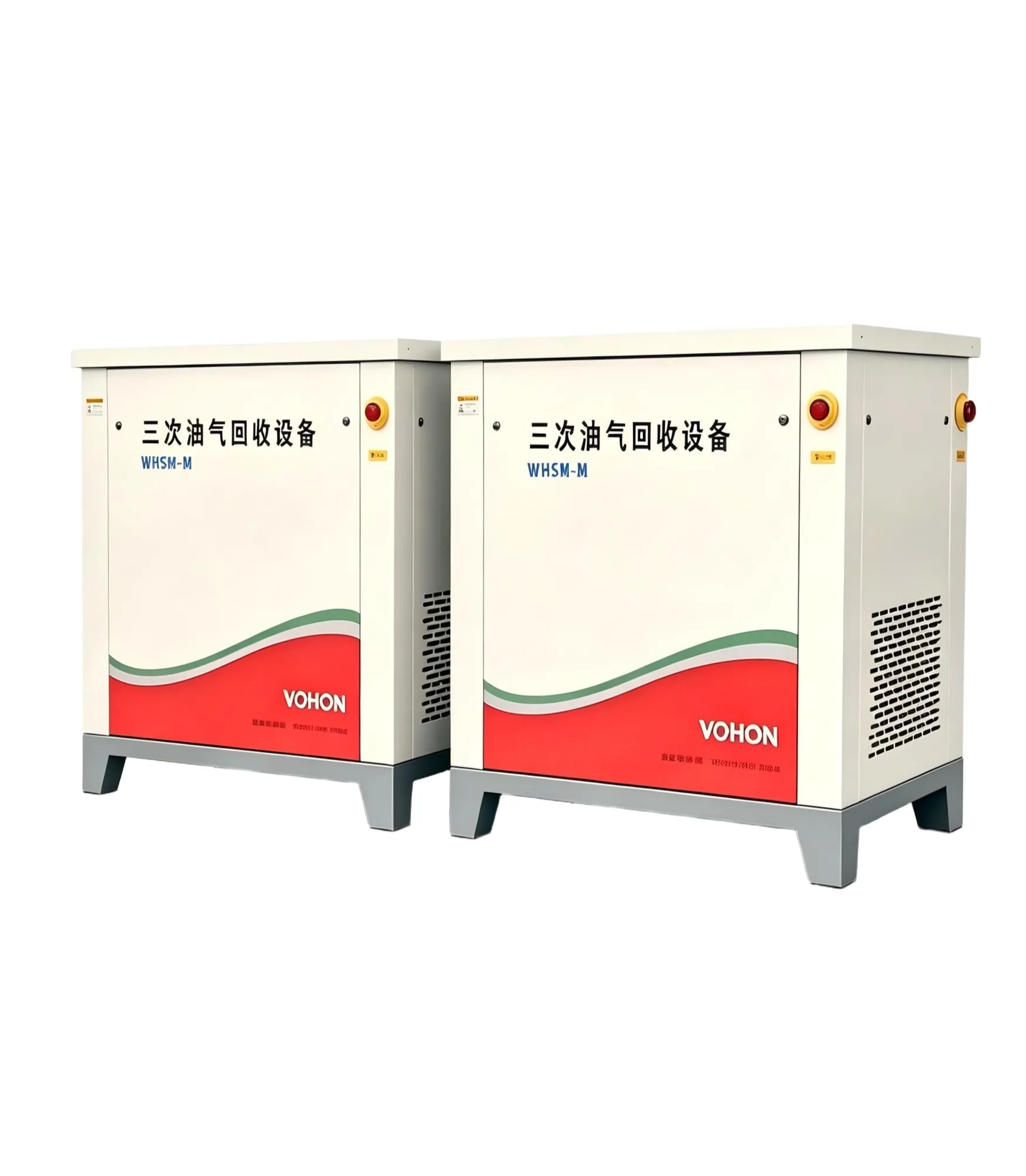
The connection method between the large breathing system and the recycling system
- When refueling, connect the oil vapor discharged from the tank to the recovery unit to avoid venting directly through the breather valve;
- When dispensing oil, arrange the return gas path according to the system design requirements to maintain stable pressure inside the tank;
- A buffer tank is installed on the collection manifold to even out the instantaneous volume of gas during large breathing and supply it to the recovery equipment;
- The start and stop of the recovery equipment are synchronized with the oil receiving and dispatching operation signals to reduce ineffective operation.
Comparison of characteristics between large and small breaths
| Comparison item | "Small breath" | Deep breathing |
|---|---|---|
| cause | Temperature changes cause gases to expand when heated and contract when cooled | The act of receiving and dispensing oil leads to changes in liquid level and alterations in gas space |
| Gas volume characteristics | Single occurrence, small in scale, frequent, and continuous | Time concentration and instantaneous high air volume |
| Main time period | Warming up in the afternoon and cooling down at night | During the oil receiving and dispatching operations |
| Configuration focus | Long-term low-load operation capability | Peak processing capacity and buffer capacity |
What to observe during the operation phase
After the equipment is put into operation, the daily focus is on three key points: whether the breather valve still operates (indicating that there is still oil and gas being discharged without being recycled through the system), whether the pressure inside the tank fluctuates within the normal range, and whether the start and stop of the recovery equipment aligns with the oil receiving and dispatching operations. If significant emissions are observed during small breathing periods, consideration can be given to optimizing the insulation or cooling measures of the tank body; if recovery during large breathing periods cannot keep up, it is necessary to review whether the buffer volume matches the peak gas volume and the processing capacity of the equipment.
Frequently Asked Questions
Can the volume of deep and shallow breaths be accurately measured?
Engineering estimates can be made based on tank capacity, temperature difference, oil receiving and dispensing volume, and operation frequency. For actual measurements, continuous records of tank pressure and breather valve action are required. Generally, the estimated values serve as the basis for model selection.
Should even small breaths be connected to the recycling system?
Small breaths can also cause solvent or oil loss. The conventional approach is to connect all breathing ports to a unified pipe, allowing both large and small breaths to be processed through a recovery system, rather than only treating the volume during operational periods.
What does an increase in the number of actions of the breather valve indicate?
Frequent operation of the breather valve may indicate a mismatch between the exhaust of the recovery system and the pressure inside the tank, excessive resistance in the collection pipe network, or decreased tightness of the tank body. It is recommended to investigate these three items one by one.
This article is compiled by Luoyang Wohong Petrochemical Equipment Co., Ltd. The company provides design and manufacturing, skid-mounted customization, installation and commissioning, as well as after-sales operation and maintenance services for three-time oil and gas recovery equipment to gas stations and oil depots. If you need on-site inspection or scheme configuration, please feel free to contact us for discussion.