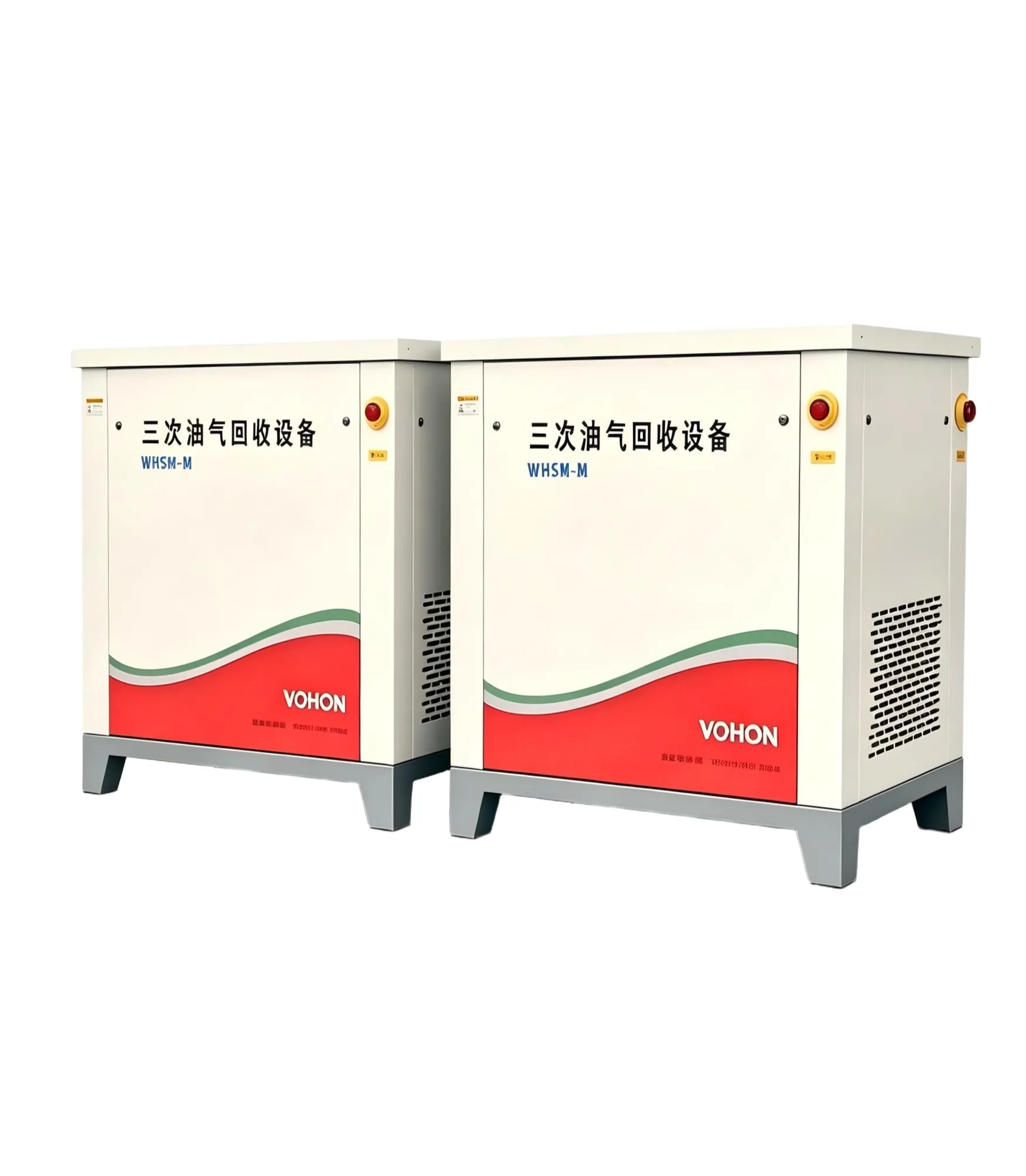
When equipment malfunctions, the speed of resolution often depends not on the capabilities of the maintenance personnel, but on whether the necessary replacement parts are readily available. Most components of oil and gas recovery equipment rely on external supply, and cross-regional procurement can take several days at the least, or even a week or two at the most. During this period, the recovery device must either be shut down or operate with defects. The significance of spare parts support lies in minimizing waiting time in case of malfunction.
Which parts are worth keeping in stock
To determine whether a component is worth stocking regularly, consider three factors: the probability of failure, the impact of failure, and the lead time for supply. Components with high values in all three factors are worth stocking regularly; those with low values in all three can be procured on an as-needed basis. For components falling between the two, a judgment should be made based on the number of sites and operational intensity. Large-scale operators typically centralize the storage of such components in regional warehouses.
How to estimate the quantity
Having a standing inventory does not necessarily mean the more the better. Spare parts have a shelf life, and seals can deteriorate if stored for extended periods. Electronic components may also experience issues if not used for a long time. A reasonable approach is to estimate based on the replacement frequency and supply cycle: the longer the supply cycle and the more frequent the replacement, the larger the standing inventory should be. The calculation formula does not need to be complicated. Simply multiply the "average replacement frequency" by the "time from order placement to arrival" to get a usable starting point.
Four-step approach for spare parts matching
- Organize the list of equipment components and sort them based on three dimensions: probability of failure, impact severity, and supply lead time;
- Based on historical maintenance records, calculate the actual replacement frequency of various components;
- Estimate the standing quantity based on the supply cycle, distinguishing between site-owned reserves and regional centralized reserves;
- Establish a ledger to record inventory inflows, outflows, and replacements, and regularly review whether the standing inventory list remains reasonable.
How to cooperate with the replacement service
Spare parts and replacement services are two separate matters, and the coordination method needs to be agreed upon in advance. There are three common arrangements: the user provides the spare parts, and the service personnel come to replace them on-site; the spare parts and services are entrusted together, and the user only needs to confirm the downtime; key components are replaced periodically, scheduled according to the operating time, without waiting for failure to occur. Each of these three methods has its own applicable scenarios, and the choice mainly depends on the technical staffing and equipment quantity at the site.
| Spare parts category | Common judgment criteria | Suggestions on reserve methods |
|---|---|---|
| Seals and gaskets | The replacement frequency is high, and the shelf life is limited | Maintain rolling reserves based on cycles, ensuring first-in, first-out |
| Wear-and-tear mechanical parts | The replacement cycle is determined by the operating time | Estimate usage based on operating hours |
| Filter cartridge and filter element | Pressure difference and time change | The site should have an appropriate amount of self-prepared items |
| Electrical and sensing components | The malfunction affects operation, and the supply cycle is relatively long | Reserve appropriately based on the number of stations |
| Piping and connectors | Most replacements are sporadic, with strong universality in specifications | A small amount of commonly used specifications can be kept in stock |
Ledger and periodic review
The value of the spare parts ledger becomes apparent only after one or two years of operation. The ledger reveals which components are replaced frequently, allowing for a retrospective examination to determine whether this is due to operational conditions or methods. It also identifies which spare parts have been idle for extended periods, occupying funds without being utilized. It is recommended to review the standing inventory annually, using the ledger data as a basis for adjustments.
Frequently Asked Questions
Is it true that more spare parts are better?
不是。部分备件本身有保存期限,存放过久会失去使用价值。按更换频次与供货周期估算数量,比单纯多备更合理。
Can key components be replaced on a periodic basis instead of upon failure?
Yes, this approach is commonly adopted for components whose lifespan is determined by their operating time. Scheduling replacement based on operating hours can avoid sudden failure during operation, at the cost of potentially having remaining useful life in the replaced components.
What information should be recorded in the spare parts ledger?
It is recommended to record the names and specifications of the components, the time of inventory entry and exit, as well as the corresponding equipment and date of replacement. During regular reviews, this information serves as a direct basis for judging whether the standing inventory list is reasonable.
This article is compiled by Luoyang Wohong Petrochemical Equipment Co., Ltd. The company provides design and manufacturing, skid-mounted customization, installation and commissioning, as well as after-sales operation and maintenance services for three-time oil and gas recovery equipment to gas stations and oil depots. If you need on-site inspection or scheme configuration, please feel free to contact us for discussion.