The first step in oil and gas recovery at gas stations is during the unloading process. When unloading, the tanker discharges into the underground storage tank, displacing the original gas phase inside. If this gas is not handled properly, it becomes the primary source of emissions during the unloading process. By standardizing the actions during the three stages of unloading—before, during, and after—emissions can be controlled to a very low level. Moreover, these actions do not add much to the workload. The key lies in establishing a fixed process and following it for every unloading operation.
What should be confirmed before unloading oil
The core of the pre-unloading process is connection and status confirmation. The proper docking of the dedicated oil vapor recovery interface and the normal state of the sealing ring are prerequisites for the organized flow of oil vapor throughout the entire unloading process. At the same time, it is necessary to verify the tank liquid level and the unloading volume to avoid overflow during the unloading process. Overflow not only causes loss but also leads to the unorganized discharge of oil vapor through the emergency exhaust passage.
The electrostatic grounding connection and tanker parking are also completed in this step. After confirming that the grounding is normal and the vehicle is parked steadily, start connecting the pipelines. Do not reverse the order, and do not skip the inspection steps to save time.
Key points of operation in the three stages of oil unloading
- Before unloading: Confirm the electrostatic grounding connection, connect to the dedicated interface for oil and gas recovery, and check the status of the sealing ring and quick connector;
- Before unloading: Check the tank level against the unloading volume to ensure no overflow will occur, and confirm that all valves are in the specified state;
- During oil unloading: maintain supervision by designated personnel, and observe the connections and pipelines for any leakage, unusual odor, or abnormal noise;
- During oil unloading: No other centralized operations are arranged, and no other tank openings are opened simultaneously;
- After oil unloading: Disassemble the pipeline in order, check the state of the sealing surface, and properly reset it;
- After unloading: Record the quantity, time, and observations of this unloading. Report any abnormalities promptly.
What key points should be monitored during oil unloading
The oil unloading process is a phase where both pressure and liquid level are changing. The key monitoring points are three areas: the oil and gas recovery interface, along the conveying pipeline, and the tank opening. The most feared issues at the interface are loose connections and failed sealing rings, which manifest as leakage or obvious odor. Along the pipeline, attention should be paid to any abnormal noise and vibration. At the tank opening, it is important to confirm that the measuring port and other parts are closed properly.
There is another rule during oil unloading: do not leave your post midway. Most issues in the oil unloading process occur within a few minutes, and only with a designated person present can they be detected and addressed in a timely manner. The cost of remedial measures afterwards is much higher than dealing with them on the spot.
The finishing actions after oil unloading
The completion of oil unloading does not signify the end of the process. When dismantling pipelines, operate in order to avoid spilling residual liquid; promptly inspect the sealing surface of the removed connectors and replace them if any wear is found. This is the foundation for maintaining airtightness during the next oil unloading. It is recommended to record fixed content during the process: oil unloading time, oil type and quantity, observation conditions, and any abnormalities. These records, when accumulated, can also reveal the changing trend of the system's sealed state, providing valuable reference for arranging inspections and maintenance.
| phase | key action | Frequently Asked Questions |
|---|---|---|
| Before unloading oil | Grounding connection, interface docking, liquid level verification | The inspection of sealing rings is overlooked, and the verification of liquid levels becomes a mere formality |
| In the process of oil unloading | Designated personnel for monitoring, observation of interfaces and pipelines | Leaving the post midway, operating multiple tanks simultaneously |
| After unloading the oil | Disassemble in order, inspect the sealing surface, and record | The sealing surface is worn but not replaced, and records are missing |
| exception handling | If any leakage is detected, immediately stop the operation and report it | If any abnormalities are found, continue to unload the oil |
| Daily self-inspection | Operate item by item according to the process card | The process card is disconnected from the actual operation |
Establish and standardize the oil unloading process
The effectiveness of oil vapor recovery during the oil unloading process does not depend on how well it is done once, but rather on ensuring it is done properly every time. A feasible approach is to print the three-stage actions on an oil unloading process card and post it in a visible location for operators in the unloading area: new employees follow the card for operation, while experienced employees use the card for self-inspection. During team handover, any abnormalities in oil unloading should be clearly communicated, and the inspection and maintenance arrangements should be linked with the oil unloading records, forming a closed loop for the entire process.
Frequently Asked Questions
What happens if the vapor recovery connection is not properly connected during oil unloading?
The gas displaced from the storage tank will escape through the connection or poorly sealed positions, leading to an increase in oil vapor concentration in the unloading area, which not only increases losses but also poses safety hazards. Checking the sealing status after docking is an indispensable action.
Can the liquid level of other storage tanks be measured simultaneously during the oil unloading process?
It is not recommended. Opening other tank openings during oil unloading will introduce new emission points and interfere with monitoring observations. It is more prudent to schedule such centralized operations as measurement and cleaning outside of oil unloading hours.
How often should the sealing ring be replaced?
There is no fixed cycle; replacing based on condition is more reliable. Whenever dismantling the interface, it is convenient to check the sealing surface and sealing ring. If wear, deformation, or decreased elasticity is found, replace them. The cost is low, and it is more cost-effective than waiting until leakage occurs before handling.
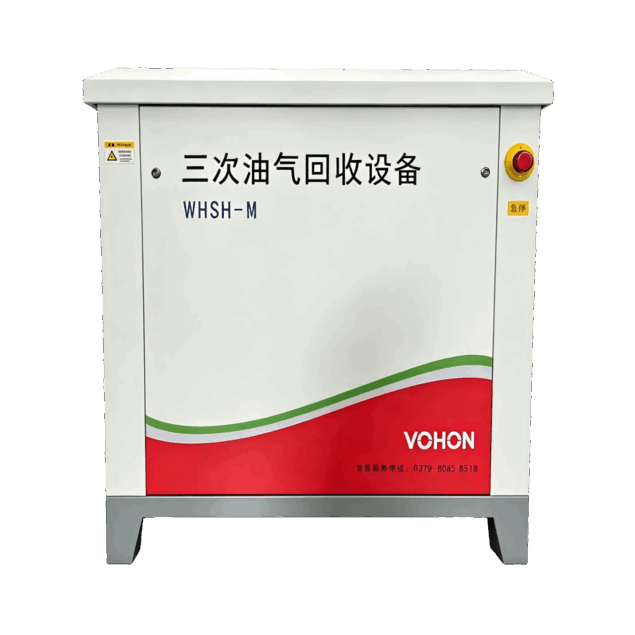
This article is compiled by Luoyang Wohong Petrochemical Equipment Co., Ltd. The company provides design and manufacturing, skid-mounted customization, installation and commissioning, as well as after-sales operation and maintenance services for three-time oil and gas recovery equipment to gas stations and oil depots. If you need on-site inspection or scheme configuration, please feel free to contact us for discussion.