Only seeking spare parts when equipment breaks down represents the most reactive state of spare parts management; stocking a large quantity of everything consumes both funds and storage space. The goal of spare parts management is to categorize parts needed for the device based on their consumption characteristics, ensuring that frequently used parts are adequately stocked, regularly replenished on a periodic basis, and long-cycle parts are ordered in advance, allowing inventory to align with actual usage records.
How are spare parts classified
Based on consumption characteristics, there are three categories: consumable parts that require frequent replacement, such as seals, filter elements, and rubber hoses and gaskets that are prone to aging, which should be delivered with the device and accompanied by a batch of such parts; regular replacement parts that have a relatively stable replacement cycle, for which stock should be maintained according to the cycle; and key components that, if damaged, affect the operation of the entire machine, for which procurement cycles are long and stock should be maintained in advance according to the ordering cycle.
The basis for classification is usage records, not feelings. The consumption of devices of the same model varies significantly across different sites and under different operating conditions. The replacement records of this device shall prevail, and the list will converge to a reasonable level after one year of operation.
There is another easily overlooked source for inventory preparation: the recommended spare parts list in the accompanying materials. The recommended list provided by the manufacturer is based on the general consumption patterns of devices of the same model. Using this as a starting point is more reliable than starting from scratch, and it can be revised year by year based on the actual records of the station.
How to compile a list of commonly used parts
| Category | Typical part | Stocking method |
|---|---|---|
| vulnerable parts | Seals, filter elements, gaskets | Allocate a batch randomly, and replenish the inventory based on consumption |
| Regular replacement parts | Desiccant, filter core | Prepare goods in advance according to the replacement cycle |
| key component | Compressor, pump, valve assembly | Maintain a year-round stock based on the arrival cycle |
| electrical components | Sensors, contactors | Keep two or three pieces of commonly used specifications |
| Oil and grease consumables | Lubricating oil, lubricating grease | Prepare the amount according to the maintenance cycle |
| Random Tool | Special disassembly and assembly tools | Accompany the device and keep it separately |
When compiling the inventory, specify each item's name, model and specification, installation location, replacement cycle, current inventory, and inventory base. The inventory base is the threshold that triggers replenishment, not the maximum inventory level: when the inventory drops below this threshold, an order will be placed for replenishment. The determination of the base should consider the procurement and arrival cycle as well as the replacement frequency. For items that arrive slowly but are used quickly, the base should be set higher.
Don't aim to compile the entire inventory at once: initially cover commonly used parts that affect operation, and gradually supplement as the ledger accumulates. Each item on the inventory should have a designated responsible person, specifying who will conduct inventory, place orders, and inspect and accept the arrival of goods. An inventory without designated responsible persons cannot be effectively implemented for long.
How to determine the base inventory level
A simple algorithm: The base number equals the expected consumption within the arrival cycle plus a safety margin. For example, if the sealing parts need to be replaced four times every quarter and the arrival time is two weeks, setting the base number to eight is relatively stable. The base number for key components should be set based on the principle of "being able to afford repairing one broken unit". For components with an arrival cycle measured in months, such as compressor units, it is better to have one unit on standby all year round.
For enterprises with scattered sites, allocation must also be considered: when multiple sites share a central warehouse, the base number is calculated based on overall consumption. Allocating between sites is more cost-effective than having each site store a separate set. Allocation must be recorded, and the ledger must be kept up to date with the items.
The base number is not fixed once and for all: it adjusts accordingly with changes in replacement frequency and arrival cycle. During each inventory check, the matching between consumption rate and base number is verified.
What are the key things to adhere to in management
- Record the location, part number, time, and reason for each replacement, and accumulate a replacement log;
- Revise the list and base number quarterly according to the ledger;
- Inventory replenishment is triggered based on the baseline, and the replenishment records correspond to the ledger;
- Upon receipt of spare parts, their models and conditions shall be verified, and sealing elements shall be managed according to their storage periods;
- Update the spare parts list synchronously after the device transformation.
Frequently Asked Questions
To what level of detail should the spare parts ledger be recorded?
Record to the extent that it can be reviewed: which device, which part, what component, when, and why it was replaced. Detailed records, checklists, and baseline data provide a basis, while cursory records degenerate into empirical estimates.
Can spare parts for different models of devices be interchanged?
Some standard components can be used universally, and seals and commonly used electrical components are often interchangeable. The list is compiled separately by device, with universal components indicated in the notes. Inventory can be consolidated for calculation.
The spare parts haven't been used for a long time. Have we prepared too many?
See which category it belongs to: If consumable parts remain unused for a long time, it indicates a deviation in consumption judgment, and the baseline can be adjusted downwards; it is normal for key components to be kept in reserve but not used, and their value lies in being kept in reserve. Therefore, it is not recommended to reduce them.
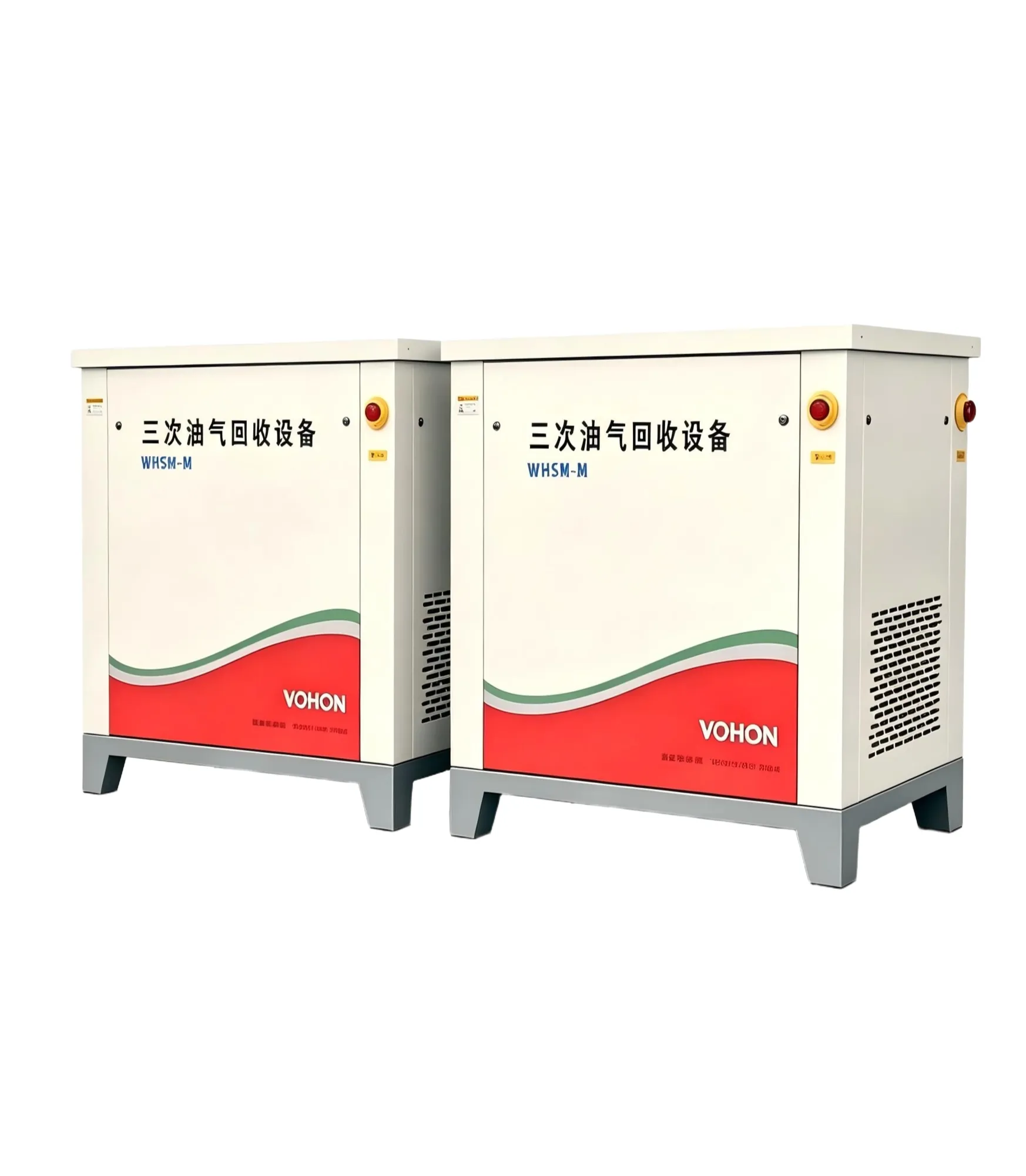
This article is compiled by Luoyang Wohong Petrochemical Equipment Co., Ltd. The company provides design and manufacturing, skid-mounted customization, installation and commissioning, as well as after-sales operation and maintenance services for three-time oil and gas recovery equipment to gas stations and oil depots. If you need on-site inspection or scheme configuration, please feel free to contact us for discussion.