Equipping a site with three sets of oil and gas recovery equipment, comparing prices is only a small part of the selection process. Equipment is an asset that requires a one-time investment and can be used for many years. What truly determines its economic efficiency are the matching degree between processing capacity and site load, the energy consumption level during long-term operation, the convenience of maintenance, as well as the land occupation and installation conditions. By comparing these factors together, the selected configuration can withstand the test of time, rather than just looking at the quotation on the day of signing the contract.
First, figure out what the site needs to handle
The first step in equipment selection is not to focus on the equipment itself, but to clearly organize one's own load conditions: site type, tank size, oil receiving and dispatching frequency, and peak-valley characteristics. The load conditions determine the processing range that the equipment needs to cover. Over-configuration is wasteful, while under-configuration can leave the equipment operating at the edge of high load for extended periods, leading to increased failure rates and maintenance expenses.
Writing the load conditions as a simple list of requirements and comparing them item by item during communication with the manufacturer is the most effortless way to avoid deviation in model selection, and it also facilitates reviewing the original decision-making basis in the future.
What are the key factors to consider in economic comparison
Economics encompasses more than just the purchase price. It is advisable to examine it from a full-cycle perspective: initial investment, operational energy consumption, expenditures on consumables and maintenance, and downtime losses. Different technological approaches vary significantly in these aspects. Some equipment may have a low purchase price but high energy consumption, while others may require a high initial investment but have simple maintenance. Simply comparing prices can lead to misguided choices.
When making comparisons, it is recommended that all parties provide data based on the same criteria: the same load conditions, the same assessment content, and the same service life. Only when the criteria are unified can the numbers in the tables be comparable.
Six steps for model selection comparison
- Organize site load conditions and form a written demand list;
- Determine the scope of technical routes involved in the comparison and specify which schemes are to be compared;
- Unify the comparison criteria: ensure consistency in load conditions, service life, and assessment items;
- Data is collected separately for four categories: initial investment, energy consumption, maintenance, and land occupation;
- Check the feasibility of each plan based on the installation conditions and on-site space;
- Summarize the comparison results and make the final decision based on the after-sales response capability.
How to examine each item of the four types of costs
In addition to the equipment itself, the initial investment also includes on-site expenses such as installation infrastructure, modification of supporting pipelines, and electrical accessories. Different schemes have varying requirements for site condition modifications, and the cost difference in this part can be significant. It is easier to underestimate the actual expenditure compared to just the equipment price. The operational energy consumption mainly depends on the power performance and start-stop characteristics under typical operating conditions, which should be estimated in comparison with the peak and valley characteristics of the site.
Maintenance expenditure depends on two factors: the types and prices of consumable parts, and the convenience of replacement. If consumable parts are widely available and do not require a professional team to be stationed on-site for long periods of time, the savings over the years will not only be in money, but also in time spent waiting for parts and personnel.
| Comparison item | What is the main focus | Comparative suggestions |
|---|---|---|
| One-time investment | Equipment price plus installation and supporting renovation costs | Let each company conduct separate calculations under the same on-site conditions |
| Operating energy consumption | Power and start-stop characteristics under typical operating conditions | Estimate based on the peak and valley characteristics of the station |
| Maintenance expenditure | Types, prices, and replacement convenience of consumable parts | Priority should be given to universal parts and easy-to-replace solutions |
| Land occupation and installation | Overall dimensions, maintenance access, and pipeline connection | Take the layout plan to the site for on-site verification |
| After-sales response | Spare parts channel, remote guidance, and inspection arrangement | List them in a comparison table and verify the terms for each one |
| Load matching | Correspondence between processing scope and site load | Compare and contrast peak and valley characteristics to avoid excess or deficiency |
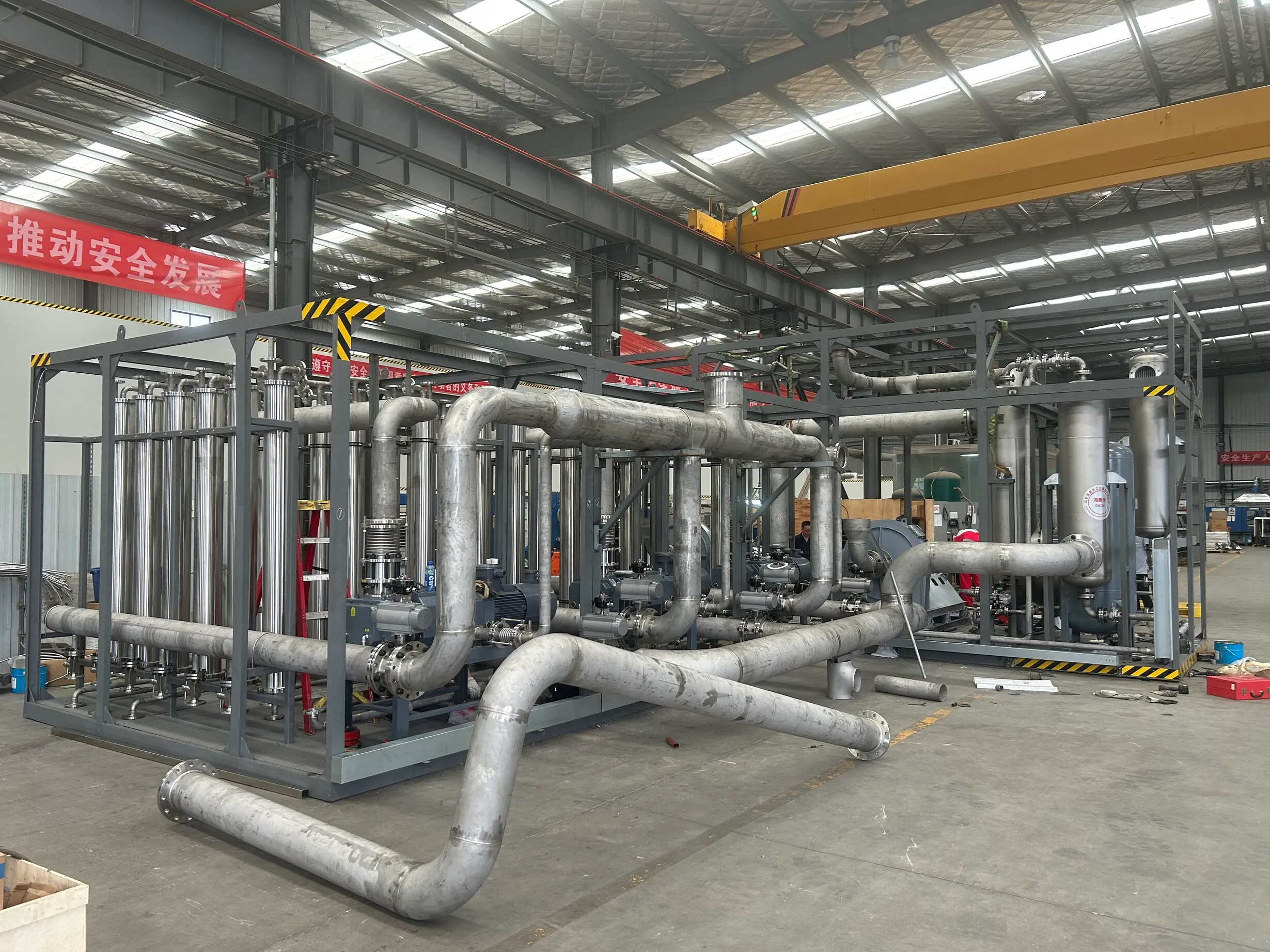
Don't overlook the land occupation and installation conditions
During the renovation of a camp station, the site often presents hard constraints. The equipment shape, maintenance access, and connection distance with existing pipelines all need to be verified on-site during the selection phase. No matter how suitable the plan is, if it cannot be accommodated on-site or if people cannot enter during maintenance, it will always be awkward to use in the later stages. It is recommended to take the layout plan to the site, walk through it to confirm the placement and access of each plan, and then come back to fill out the comparison table.
After-sales service
The operational continuity of oil and gas recovery equipment relies on after-sales response. When comparing after-sales services, it's not about comparing the wording of promises, but rather about the mechanism: whether there are regular channels for spare parts, whether remote guidance is available, and whether regular inspections are implemented. Clearly list after-sales terms as a separate column in the comparison table, ensure consistency in wording when signing the contract, and there will be much less disputes in the future.
Frequently Asked Questions
Is it always better to choose a model with greater processing power?
不是。配置过大意味着更高的采购成本与更低的负荷率,设备长期低负荷运行同样不经济。按站点实际负荷与峰谷特征选择匹配范围更合理。
How to compare quotations from different manufacturers?
Consistency is key: ensuring identical loading conditions, assessment content, and service life. It is also essential to confirm item by item whether the quotation includes installation, supporting modifications, and shipping costs, to avoid solely comparing the price of the equipment itself.
What are the special considerations in selecting models for camp station renovation?
Site and construction organization are two major constraints. During the selection phase, it is necessary to verify the land occupation and maintenance access on site, confirm the impact of the installation plan on business operations, and incorporate the construction organization requirements into the contract.
This article is compiled by Luoyang Wohong Petrochemical Equipment Co., Ltd. The company provides design and manufacturing, skid-mounted customization, installation and commissioning, as well as after-sales operation and maintenance services for three-time oil and gas recovery equipment to gas stations and oil depots. If you need on-site inspection or scheme configuration, please feel free to contact us for discussion.