The exhaust concentration at the outlet of the device is higher than usual, indicating that some components have not been collected by the recovery section or the check section has not been effective. When troubleshooting, start with the inlet conditions and move along the airflow direction towards the outlet, checking each section: has the inlet concentration changed? Is the temperature and heat exchange status of the recovery section still good? Is the load of the check section too high? Most high concentrations are not caused by a sudden failure in a certain section, but rather the result of a subtle drift in the status of several sections together.
The majority of high concentrations are not the result of a sudden malfunction in a specific section, but rather the consequence of a subtle drift in the status of multiple sections. The significance of troubleshooting lies in identifying the drifting sections and calibrating them individually, rather than waiting for the outlet concentration to reach the limit and then dealing with it passively.
Let's first check if the air intake conditions have changed
An increase in intake concentration is the most common reason for elevated exhaust concentration: either due to an increase in upstream oil collection volume, an increase in breathing volume caused by rising temperatures, or the inclusion of new volatile points in the collection system. If the intake conditions change, but the device continues to operate with old parameters, the outlet concentration will naturally increase. First, check recent oil collection and distribution records and records of changes to the collection pipeline to confirm whether there have been any systematic changes in the intake conditions.
If the air intake conditions have indeed changed, the approach is to re-evaluate the operating parameters. If the air intake remains unchanged, the issue lies within the device itself, and further investigation should be conducted.
What should be checked in the recycling section
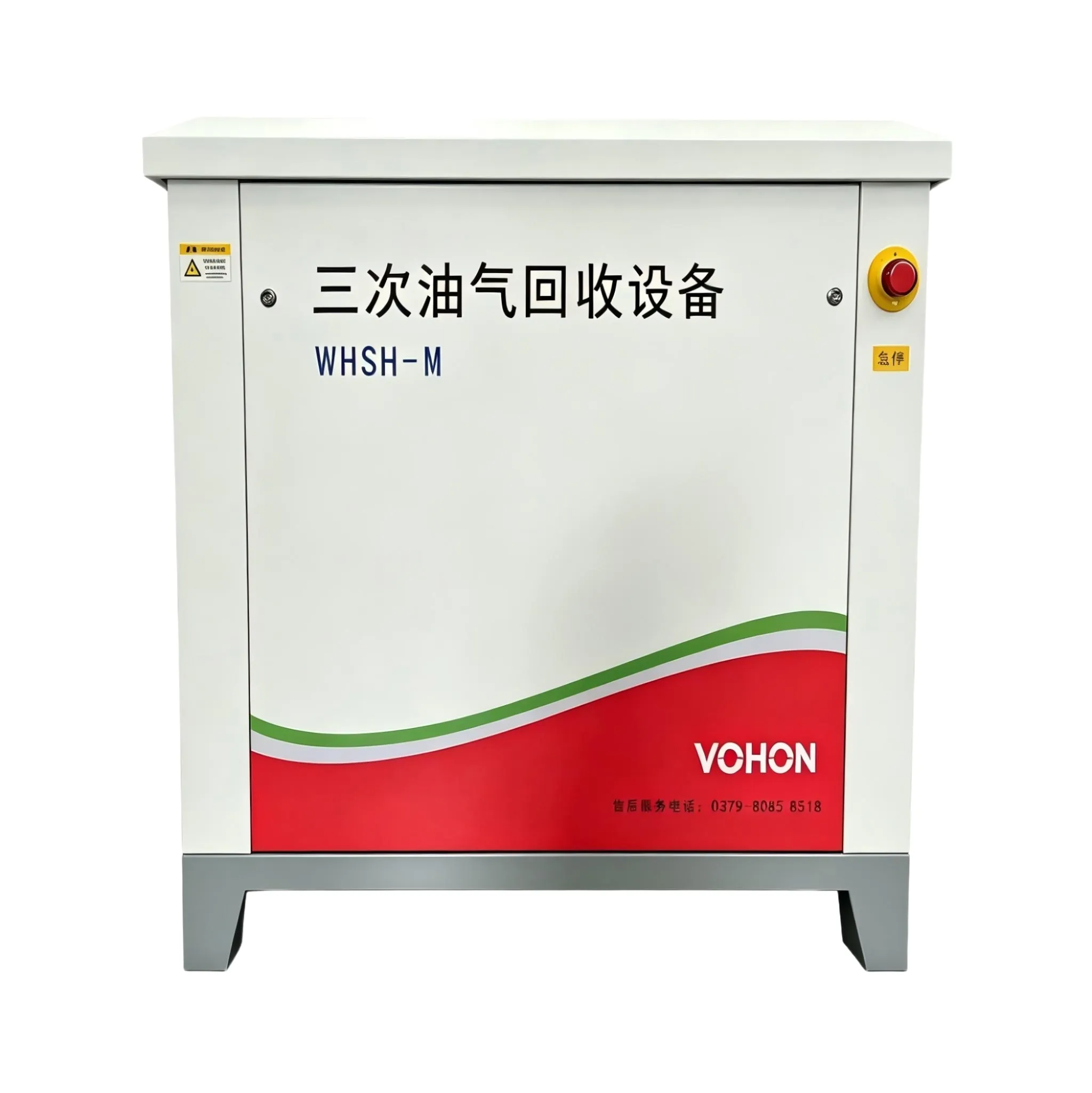
In the recovery section, we first check the temperature level: whether the condensation temperature level has drifted, whether the operating state of the refrigeration unit is normal, and whether the temperature and quantity of cooling water are sufficient. In summer, the water temperature rises, condensation efficiency decreases, and the outlet concentration increases, which are typical manifestations. Next, we look at the heat exchange surface: an increase in pressure difference and frost and scale formation on the heat exchange surface will all prevent the same temperature level from achieving the same effect.
Check the status of both the compressor and the separation device: abnormal suction pressure of the compressor and malfunction of the liquid level control of the separation device can both lead to incomplete separation of condensed components, and this loss is directly reflected in the outlet concentration.
What should be checked during the inspection phase
The check section bears the ultimate responsibility for meeting standards, and its workload comes from the uncleaned portion at the front end. When the recovery section experiences a decline in performance, the inlet concentration of the check section increases, and the outlet concentration follows suit. Check the operating status and design margin of the check section to determine whether the issue is due to conduction problems at the front end or inherent issues with the check section itself: Once the front end is repaired, the inlet concentration of the check section decreases, and the outlet becomes normal accordingly.
| Check the level | Focus on indicators | Common causes and solutions |
|---|---|---|
| Intake side | Concentration, gas volume, component | Due to changes in oil delivery and receipt, the parameters need to be re-verified |
| Condensation section | Temperature level, pressure difference, frost and scale | Clean the heat exchange surface and check the status of the refrigeration unit |
| Compression and separation | Inspiratory pressure, liquid level | Overhaul the compressor and calibrate the liquid level control |
| Cooling water side | Water temperature, water quantity | In summer, as water temperature rises, it is necessary to replenish water or clean it |
| Check and approval section | Import and export concentration, margin | Confirm whether it is due to front-end conduction or self-attenuation |
| Export | Concentration trend | After processing, track and confirm for several cycles |
How to proceed with the troubleshooting steps
- Call up the historical curve of exhaust concentration to confirm the starting time and magnitude of the deviation;
- Check the oil delivery and receipt volumes, temperature, and changes in collection pipelines during this period, and determine whether the air intake conditions have changed;
- Record the temperature, pressure difference, and liquid level segment by segment, and compare them with the benchmark data under normal operating conditions;
- First, address the drift term in the recovery section and observe the decrease in outlet concentration;
- When the decline is insufficient, reassess the status and margin of the check segment;
- After the processing is completed, continuously track several operational cycles and record this investigation in the archives.
Frequently Asked Questions
The exhaust gas concentration is slightly high but still within the limit. Is it necessary to take action?
It is recommended to check. A high concentration is a signal of device state drift, and it is still within the limit. Waiting until it exceeds the limit to address it often results in a combination of several issues, leading to higher processing costs.
Is it normal for concentrations to be generally higher in summer?
In summer, it is a common pattern for water temperature to be high, respiration rate to be high, and overall outlet concentration to increase. However, there is a normal range for the increase. Compared with the same period last year, if there is a significant increase, an inspection should be arranged.
How to judge whether the margin of the check section is sufficient?
Observe the difference between the inlet concentration and the outlet limit in the check section. When the recovery section is in normal state, it is safe if there is a surplus in this difference; if the surplus narrows down to near the critical point, repair the front end first and then evaluate.
This article is compiled by Luoyang Wohong Petrochemical Equipment Co., Ltd. The company provides design and manufacturing, skid-mounted customization, installation and commissioning, as well as after-sales operation and maintenance services for three-time oil and gas recovery equipment to gas stations and oil depots. If you need on-site inspection or scheme configuration, please feel free to contact us for discussion.