Eighty percent of the leakage in oil unloading and vapor recovery occurs at the joints: the aging of the sealing rings of quick connectors, the wear of the mating joints at the unloading port, and the failure of the packing in the return valve are all high-risk areas for leakage. The core of leakage prevention management lies not in repairing after an incident, but in treating the sealing components as consumables - replacing them periodically, inspecting them based on their condition, and tracking them through records. By doing so, leakage can be naturally reduced.
The cost of interface leakage extends beyond data emissions: the oil and gas that seep out during oil unloading accumulate around the unloading port, making it one of the most critical safety points within the station that requires strict control. Leaking stations often suffer from a cascading problem of poor air return - the inefficient air return due to poorly sealed interfaces also prolongs the unloading process, thereby widening the window of safety risks.
How are seals graded and managed
Seals are categorized into two levels based on their consumption rate: quick-connect coupling seals are fast-consumable parts, which are frequently touched and age quickly. They are visually inspected quarterly, and if any indentation or cracking is found, they are replaced immediately. Spare parts for the entire set are always kept on hand in the station. The oil unloading port connector and the return valve packing are slow-changing parts, which are included in the annual maintenance schedule for inspection and replacement. Both levels are recorded in the spare parts ledger, and replenished immediately after use. Monthly inventory checks reveal that many delays in leak rectification are due to the spare parts inventory being empty.
Replacing the sealing ring is a small task that takes a few hours, but it must be done correctly: the specifications and materials should be matched according to the interface model, and it is not advisable to use similar specifications for convenience; during installation, the sealing surface should be cleaned thoroughly, and a thin layer of suitable lubricating grease should be applied. After assembly, a connection test should be conducted to confirm the fit.
How to detect leakage early
The early signs of leakage can be detected through three habits: the oil unloader should visually inspect the sealing ring before each connection, and replace it on the spot if it is whitened, flattened, or has a gap; during oil unloading, apply a leak detector around the connection, and if bubbles appear, it indicates a leak, and the pump should be stopped immediately for handling; during monthly inspections, the oil unloading port and return valve should be included in the checklist, and each point should be checked and recorded. All three habits are effortless, but the key is to do them every time.
Management should leave traces: The results of visual inspection, leak detection liquid inspection, and monthly patrol inspection should be uniformly recorded in the oil unloading equipment ledger. The number of times the sealing rings of each connection have been replaced, and which connection repeatedly encounters problems, can be easily found by flipping through the ledger - connections that repeatedly leak often have underlying issues such as wear of the connection body or stress on the pipeline. Replacing the rings only addresses the symptoms, while the ledger data provides clues to identify the root causes.
The connections on the tanker side also need to be monitored: During arrival inspection, visually inspect the sealing surface of the tanker's recovery connection. If any obvious damage is found, notify the distribution party for handling and record it. No matter how well the connections on the station side are managed, if the connections on the tanker side are not tight, leakage will still occur. Data from both ends should be archived, so that there is evidence to refer to in case of disputes.
Inspection items and handling references
| Sealing part | Checkpoints | Handling arrangement |
|---|---|---|
| Joint sealing ring | Aging, cracking, and indentation | "Quarterly inspection and immediate replacement upon discovery" |
| Oil unloading port connector | Wear, deformation, and misalignment | "Deformation means change, not settling for less." |
| Return valve packing | The air leakage is not tightly sealed | Annual maintenance with inspection and replacement |
| Tanker side connection | Upon arrival, conduct visual inspection and acceptance | Notify the delivery party of the anomaly |
| Spare parts inventory | Complete sets of quantity and specifications | Replenish after monthly inventory |
| Leak detection record | Keep on file one by one | Monthly review of ledgers |
How to implement management
- Sealed components are categorized into two levels for record-keeping: quick-consumption items are inspected quarterly, while slow-changing items undergo annual inspection and replacement;
- Spare parts are regularly stocked and dynamically inventoried, with replenishment immediately after use to ensure uninterrupted supply;
- Before each oil unloading, visually inspect the sealing ring. If any abnormalities are found, replace it on the spot before proceeding with the unloading;
- During oil unloading, apply leak detection liquid and check for leaks by tracing circles. If bubbles appear, stop immediately and repair the leak;
- The monthly inspection covers the oil unloading port and the return valve, with records kept for each point;
- The side connection of the tanker is included in the station acceptance inspection, and any abnormalities will be notified to the distributor.
Frequently Asked Questions
The sealing ring shows no obvious damage. Should it be replaced periodically?
Consider both status and cycle: Status checks can identify major issues, but the aging of sealing performance may not be visible. For fast-moving items, rotating them on a regular basis and replacing them early if they show abnormal status is a more cost-effective approach than waiting for leaks to occur.
Can soap water be used as a substitute for leak detector liquid?
Sure, the principle of leak detector is the same as that of soap water. The key lies in the concentration and application method: the concentration should be sufficient, the entire area should be coated, and it should be left undisturbed for a few seconds for observation. For emergency use, soap water is fine, but for monthly special inspections, using a formal leak detector is more reliable.
The seal ring has been replaced, but there is still a slight odor. Is it because the repair was not done properly?
First, distinguish the source of the odor: the odor concentration differs between normal operational volatilization around the oil unloading port and interface leakage. After replacing the ring, use a leak detector to retest the interface, ensuring no bubbles appear. Then observe whether the emission data decreases. If both are normal, the repair is successful.
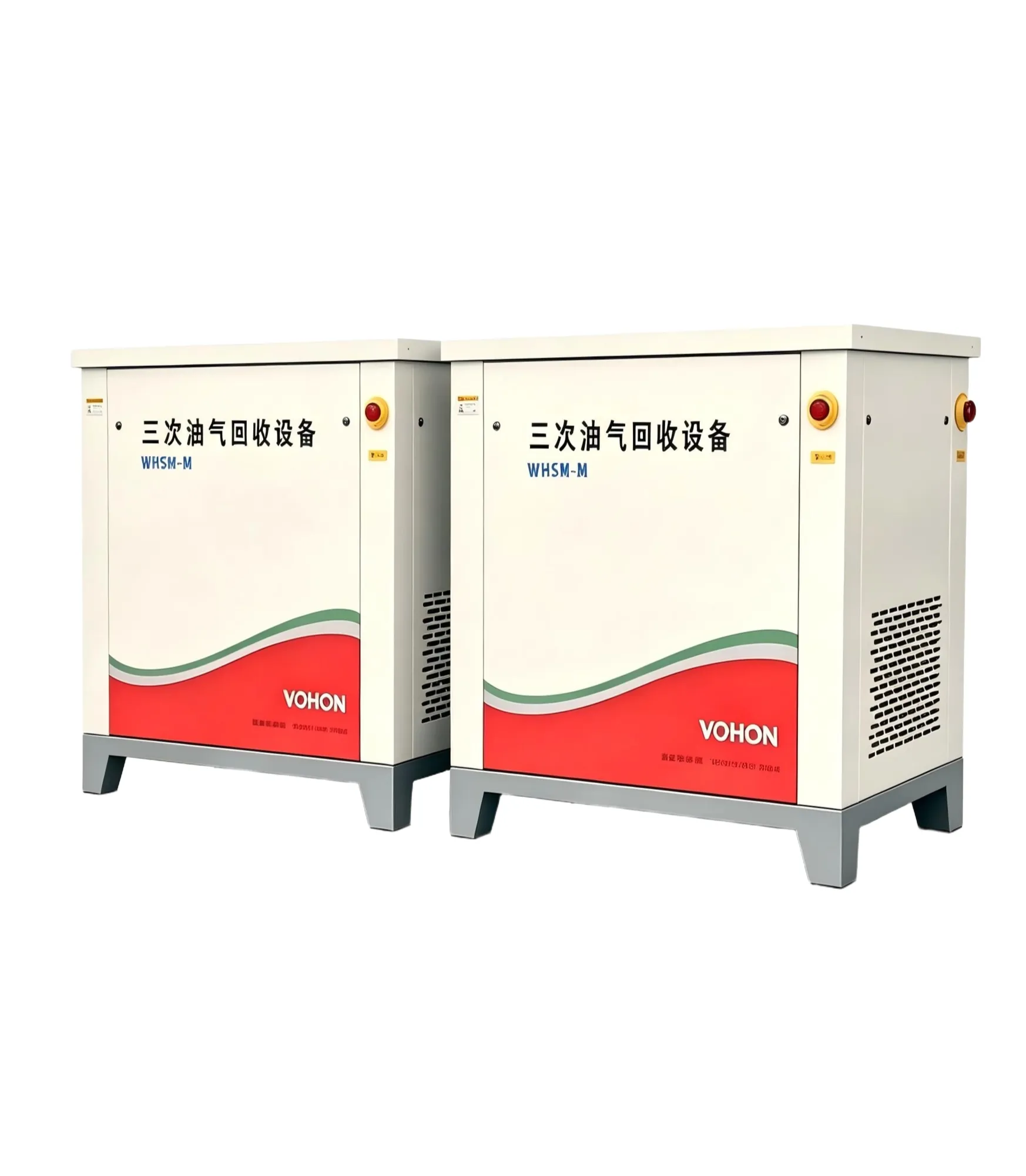
This article is compiled by Luoyang Wohong Petrochemical Equipment Co., Ltd. The company provides design and manufacturing, skid-mounted customization, installation and commissioning, as well as after-sales operation and maintenance services for three-time oil and gas recovery equipment to gas stations and oil depots. If you need on-site inspection or scheme configuration, please feel free to contact us for discussion.