The tripping and alarms that occur during the operation of the oil and gas recovery device are common emergencies in the station: most of the faults are not complicated in themselves, but the difficulty lies in the chaotic order of handling - what should be stopped is not stopped, what should be reported is not reported, and what should be isolated is not isolated. By properly aligning the order of handling device faults with the station's emergency plan, and following the instructions when an emergency arises, the situation can be stabilized within minutes.
The common disconnects in plan integration lie in two areas: Firstly, the equipment plan and the station-level plan are disconnected, with the device manual describing one set of procedures and the station records documenting another. Secondly, there is only paper documentation without practical drills, meaning employees have not gone through the process in hypothetical scenarios. The integration work is to bridge these two gaps, ensuring that equipment handling actions are embedded within the context of the station-level plan.
How to determine the shutdown sequence
The first response to equipment malfunction is to shut down in a fixed sequence: first, stop the intake recovery path to protect the collection system from pressure buildup; then, shut down the main equipment of the device and power off and tag it; finally, confirm the bypass and isolation status of the oil and gas pathways within the station. The sequence is written on a three-step card and posted next to the device, so that whoever is on duty can follow the instructions. The biggest taboo in emergency response is improvisation. One wrong step in the sequence can increase the risk.
The confirmation of the status after shutdown also follows a specific procedure: confirmation of device power-off, confirmation of isolation of oil and gas pathways, and confirmation of surrounding concentration. Only after these three confirmations are completed can the shutdown be considered stable. Concentration detection is carried out using a portable instrument at each point, and the data is recorded in the disposal record, which is useful for subsequent maintenance and reporting.
How to link reporting with contingency plans
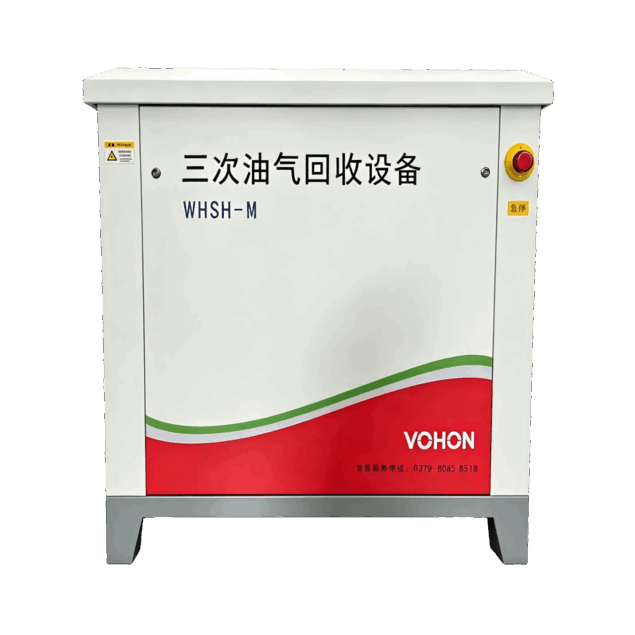
The reporting path is rigidly defined in the emergency plan: device malfunctions fall under the equipment-related scenarios. The on-duty personnel should first report to the station master according to the plan, and the station master will determine whether to escalate the report based on the impact. If refueling operations are not affected during the device downtime, the manufacturer should be notified to handle the situation according to the equipment malfunction procedure. If safety signals such as excessive concentration or odor diffusion occur, the station-level leakage scenario emergency plan should be immediately activated, and measures such as cordoning off, ventilation, and reporting should be carried out according to the scenario emergency plan.
Connection relies on verification through drills: Quarterly drills incorporate scenarios of equipment malfunctions. Following the three-step process of stopping the machine, reporting through the designated path, and switching based on the scenario, one can quickly identify where the bottleneck lies - issues such as the position of the three-step card not being convenient, the manufacturer's phone number not being updated, and no one recognizing the bypass valve position are all problems that emerge during drills. After the drills, revisions are made item by item, and the timeliness of the plan and cards is maintained through this cycle.
The coordination with the manufacturer should also be included in the interface clauses: it should be clearly agreed in advance on the point at which fault handling is handed over to the manufacturer, the response time, and the telephone channel for remote guidance. The shutdown of the device does not mean the risk is eliminated. The control measures during the waiting period for handling - isolation tagging, increased patrol inspection, and limited-time power restoration - should be clearly stated in the plan to avoid a management vacuum after shutdown.
Disposal items and action reference
| Fault phenomenon | First action | Subsequent handling |
|---|---|---|
| The device has tripped and stopped operating | Press the three-step card to stop and power off | Notify the manufacturer to provide data processing |
| Concentration alarm | Ventilation with machine shutdown and power cut-off | Find out the cause before turning it on again |
| Abnormal noise and odor | Shut down, isolate, and tag | No power restoration until the cause is identified |
| Smoke and overheat | Power off and put the fire extinguishing equipment in place | Report the alarm according to the contingency plan |
| Instrument malfunction | Observation of device load reduction | Verify or replace the instrument |
| Sudden power outage | Reset in the order of stopping | After receiving the call, follow the power-on procedure |
How to implement cohesion
- Next to the three-step shutdown card display device, everyone should be able to recite and perform the shutdown sequence;
- After stopping and confirming the three items, execute according to the order, and record the data in the disposal record;
- Establish a fixed reporting path plan, with clear switching between equipment scenarios and leakage scenarios;
- Incorporate device failure scenarios into quarterly drills, and review and revise each item accordingly;
- The manufacturer's linkage terms are agreed upon in advance, with clear timelines for on-site response and remote communication channels;
- During the outage period, control measures should be listed to avoid management vacuum.
Frequently Asked Questions
During the shutdown period of the device, should the refueling operation be stopped?
The shutdown of the device does not necessarily mean the cessation of refueling: if the pathways for phase one recovery and phase two gas return are confirmed normal and there are no abnormalities in concentration detection, business can continue but with increased inspection frequency. In the event of abnormal concentration or unusual odor, follow the leakage scenario plan for disposal, and adjust operations as necessary.
If the three-step card is inconsistent with the instruction manual, whose version should we follow?
The technical requirements specified in the manufacturer's manual shall prevail. The three-step card is a sequential refinement of the manual. If any inconsistencies are found, do not make any decisions on your own. Contact the manufacturer for verification and make unified revisions. Both sheets of paper should be changed accordingly.
How detailed should the fault handling record be?
Timeline with data: discovery time and phenomenon, shutdown action and time point, concentration detection data, reporting and manufacturer contact records, recovery time. This record serves as both a review material and a basis for settlement and responsibility determination with the manufacturer, and it is worth writing in detail.
This article is compiled by Luoyang Wohong Petrochemical Equipment Co., Ltd. The company provides design and manufacturing, skid-mounted customization, installation and commissioning, as well as after-sales operation and maintenance services for three-time oil and gas recovery equipment to gas stations and oil depots. If you need on-site inspection or scheme configuration, please feel free to contact us for discussion.