Signing a warranty agreement for equipment does not automatically guarantee seamless service. In practical use, many disputes during the warranty period arise from a lack of alignment between the two parties regarding "what is considered within the warranty scope and what the user must do first": the user believes that a call should result in immediate arrival, while the manufacturer believes that the user's failure to follow procedures is not covered by the warranty. Clarifying the communication methods and repair process in advance ensures that the warranty period can truly provide protection.
Align the scope of warranty first
It is recommended to confirm the scope of warranty clause item by item instead of glossing over it in general terms: which parts are covered by warranty, which parts are consumables and treated as wear parts, and what situations are not covered by warranty (such as damage caused by non-compliant operation, unauthorized modification, and abnormal external power supply). These terms should be clearly stated in the contract annex, which is much more convenient than referring to the contract after problems arise.
Wear parts are often a gray area. Components like seals and filter cartridges, which are replaced based on their lifespan, are typically treated as consumables. However, whether replacement services are included and how the replacement cycle is arranged can be agreed upon during regular inspections, which can save both parties trouble.
Five steps of the repair reporting process
- On-site record: When a fault occurs, take photos first, record the equipment status and alarm information, and do not rush to power off and reset;
- Report the repair by phone or online: specify the location of the site, equipment model, fault phenomenon, and the inspections that have been conducted on site;
- Remote preliminary judgment: The manufacturer remotely determines whether the issue is related to parameters or requires on-site inspection. If it can be resolved remotely, it will be handled on the spot;
- On-site handling: An agreed upon on-site time is required. After the handling is completed, a service form is filled out and signed by both parties;
- Follow-up and record archiving: Confirm the follow-up of the handling results, and include the service order in the equipment archive as a reference for subsequent maintenance.
Cooperation required from the user side
Whether the repair process is fast or not after a repair request is made, the cooperation from the user side accounts for half of the success. Firstly, providing complete information: equipment model, fault phenomenon, alarm code, and on-site photos all at once can save a round of back-and-forth questioning. Secondly, on-site cooperation: arranging personnel familiar with the equipment to be present, cooperating with power outages, opening cabinets, and trial runs, and confirming the status in person after the process is completed.
Daily operation records are also a part of cooperation. Equipment operation logs, the time and symptoms of fault occurrences, and records of previous handling are the basis for the manufacturer to judge fault patterns. The more complete the records are, the faster the judgment can be made, and the avoidance of repeated troubleshooting for similar issues can be ensured.
| Service Items | Responsible party | Key points for user cooperation |
|---|---|---|
| Report a repair by phone | Initiated by the user, accepted by the manufacturer | Provide all the models, phenomena, alarm information, and photos at once |
| remote processing | "Manufacturer-oriented" | Operate according to the instructions, and record the processing procedure and results |
| On-site maintenance | "Manufacturer-oriented" | Personnel familiar with the equipment are present, and confirmation will be made in person upon completion |
| Replacement of wearing parts | as stipulated in the contract | Make arrangements during the inspection and prepare spare parts in advance |
| Expiration inspection | Both parties jointly | Arrange before the warranty expires, and raise any remaining issues within the warranty period |
| Record and Archive | User-oriented | The records of repair requests, inspections, and parts replacements should be included in the equipment archives |
The connection between the warranty period and beyond
As the warranty period approaches its end, it is recommended to arrange an expiration inspection: thoroughly review the overall status of the equipment, address any remaining issues raised during the warranty period, and discuss subsequent maintenance arrangements based on the equipment's condition. If the expiration inspection is conducted properly, the warranty period and subsequent maintenance can be seamlessly connected; if not, issues are easily postponed beyond the warranty period, and responsibilities and costs become unclear.
The form of subsequent maintenance can be selected based on site conditions: repair by request, annual maintenance agreement, or a combination of remote monitoring and regular inspection. The principle of selection depends on the operational load of the equipment and the operation and maintenance strength of the site. For sites with high load and weak operation and maintenance strength, combining inspection and remote monitoring is more prudent.
Record and accumulate service records
Keeping records of every repair request, inspection, and part replacement may seem like a trivial task, but the value becomes apparent after accumulating such data for a year or two. The records reveal which parts of the equipment are prone to failure, which spare parts are consumed quickly, and what should be focused on during the next maintenance. With solid equipment records, the targetedness of service will be significantly improved, whether it is within or beyond the warranty period.
Frequently Asked Questions
What situations are not covered by the warranty?
Damage caused by non-compliance with operating procedures, unauthorized modifications, or abnormal external power supply is generally not covered by the warranty. Specific details shall be subject to the terms of the contract. It is recommended to clearly confirm each of these situations when signing the contract to avoid any discrepancies in understanding afterwards.
How can I express that the repair is handled quickly when reporting a repair?
Provide all the information at once: equipment model, fault phenomenon, alarm code, on-site photos, and inspections conducted. With complete information, the manufacturer can make a rough judgment remotely, saving time for back-and-forth inquiries.
What should we do before the warranty period ends?
Arrange an expiration inspection to thoroughly assess the overall status of the equipment. Any outstanding issues should be addressed within the warranty period. Meanwhile, discuss subsequent maintenance arrangements based on the equipment status. If this step is done properly, the warranty and subsequent services can be smoothly connected.
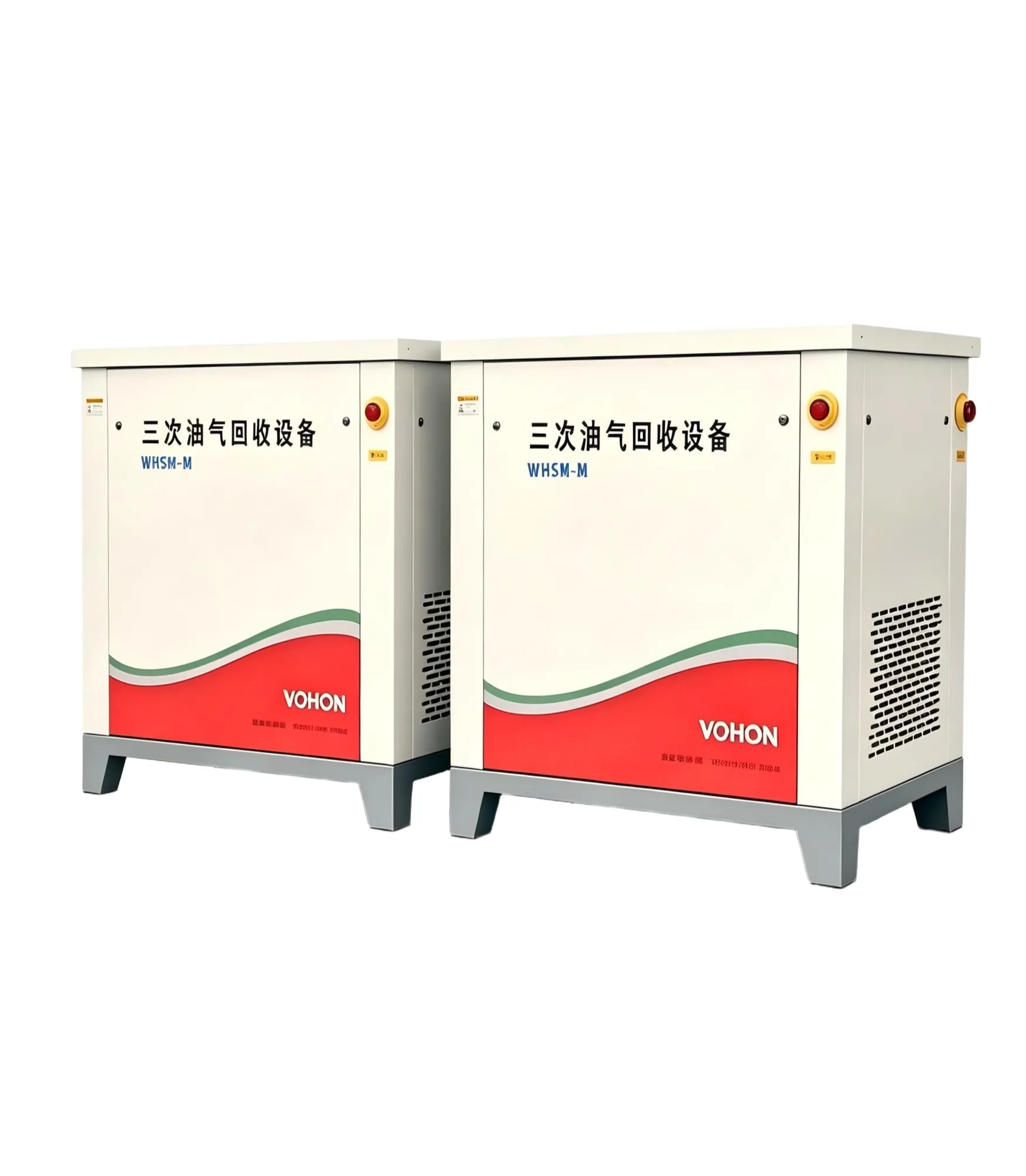
This article is compiled by Luoyang Wohong Petrochemical Equipment Co., Ltd. The company provides design and manufacturing, skid-mounted customization, installation and commissioning, as well as after-sales operation and maintenance services for three-time oil and gas recovery equipment to gas stations and oil depots. If you need on-site inspection or scheme configuration, please feel free to contact us for discussion.