In the event of a malfunction in the oil and gas recovery equipment, the emission of oil and gas and safety pressure within the station will immediately increase. The downtime is a period of risk. Whether the malfunction can be resolved quickly depends on half on the maintenance capability and half on the organization of the repair process: whether the on-site description is clear, whether information is transmitted quickly, and whether spare parts are available. If these three aspects of the process are well designed, the downtime for most malfunctions can be reduced by half.
The goal of the repair reporting process is to connect the three points of the scene, the service provider, and the spare parts into a line: the scene reports accurately in the first place, the service provider judges correctly in the first place, and the spare parts are available in the first place. If any of the three links is stuck, the downtime will be doubled.
How can we report accurately on the spot
The key to repair reporting information is to make it structured: equipment model, fault phenomenon (abnormal noise, alarm code, parameter abnormality), occurrence time, and inspections and actions already taken, with all four items reported in a fixed format. Photos and short videos are more effective than text descriptions. Take one photo each of the alarm panel, the part with abnormal noise, and the display screen showing abnormal parameters. Attach a repair reporting information card next to this device, printing the four items and key points for taking photos on it, so that new employees can follow the instructions without missing any items.
The repair reporting channel should be fixed: choose one main channel from service phone, WeChat, or platform work order, with emergency phone as a backup. Multiple repair reporting channels will result in scattered information, repeated responses, and unclear responsibilities.
How to classify responses
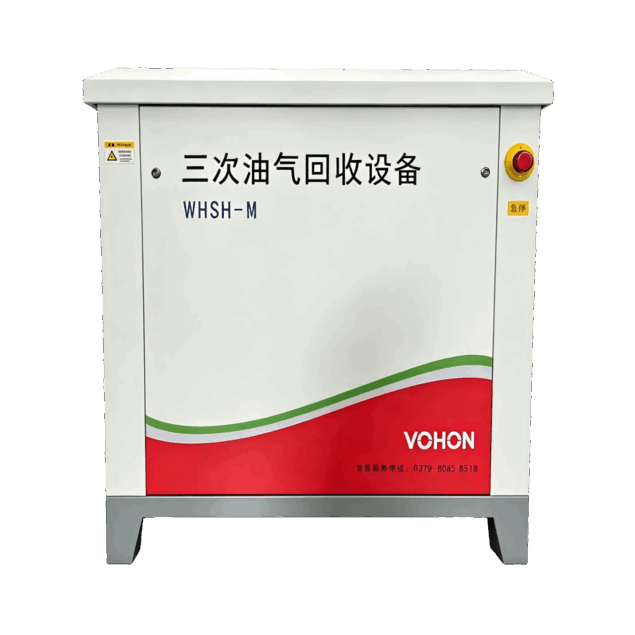
Not all malfunctions require the same response: For those involving excessive emissions or safety risks, remote assessment should be initiated immediately, and on-site personnel should arrive within the promised timeframe; for those affecting recycling efficiency but not involving safety, remote guidance should take precedence, and scheduled handling should be arranged; general defects and inquiries should be incorporated into routine inspections for handling. The classification should be written into the service agreement, so both parties have a common expectation for the response timeframe, and there will be no disputes when malfunctions occur. Remote assessment plays an increasingly important role in the graded response: video connection to observe phenomena and read parameters, a considerable number of problems can be handled remotely through on-site guidance, without waiting for on-site arrival.
Every response leaves a record: repair request time, response time, arrival time, handling measures, and recovery time. This set of data serves as the basis for evaluating service quality and also provides input for improving spare parts inventory.
How to coordinate the replacement of spare parts
| fault level | criteria for judgment | Response arrangement |
|---|---|---|
| Safety level | Excessive emissions or safety risks | Remote start, on-site arrival within a limited time |
| Effect level | The recycling effect has significantly decreased | Remote guidance, handling within the plan |
| General level | Defects and usage consultation | Incorporate into routine inspection and handling |
| Common Parts | Seal ring filter sensor | On-site replacement of spare parts within the station |
| critical component | Compressor control module | Arrive on time as agreed |
| Response record | The entire process from repair request to restoration | Record quarterly reviews sequentially |
The coordination of spare parts involves two aspects: commonly used parts (consumable items such as sealing rings, filter cartridges, and sensors) are delivered with the device in a batch, allowing for on-site replacement within the station; key parts (such as compressors and control modules) are stocked according to the ordering cycle, and the arrival time through the service provider's and manufacturer's channels is specified in the agreement. The key points for coordination during replacement are to confirm before acting: ensure the spare part model matches the device, safety measures for power outage and replacement are in place, and the test run parameters after replacement are checked item by item. The record of the completed replacement is filled back into the ledger, and the warehousing information of the new spare parts is updated synchronously, ensuring the inventory base number is always clear.
How to implement the process
- The repair information card is displayed on the wall, with four items of information and key points for taking photos in a fixed format;
- The primary repair channel is fixed, with an emergency phone number as a backup;
- The response is graded into three levels: safety, effectiveness, and general, with a documented time limit;
- Remote judgment comes first, with video and parameters leading the way;
- Commonly used parts are stocked within the site, and key parts are subject to an agreement on delivery time limits;
- Record response data sequentially and conduct quarterly reviews to improve processes.
Frequently Asked Questions
How to respond to failures during nights and holidays?
The agreement specifies the response arrangements during non-working hours: safety-level failures are not time-sensitive and will be initiated as usual; effectiveness-level failures are scheduled for the next working day, with remote guidance taking precedence. The method and time limit for nighttime response are clearly stated, providing a basis for responding to failures when they occur.
Should I repair it myself or wait for the manufacturer?
Commonly used parts should be replaced by the station itself according to the operation card. Key parts and components involving safety should be handled by the manufacturer. The scope of self-repair and the scope of the manufacturer's responsibility should be clearly delineated during delivery training, and written into the operation manual. Station personnel should adhere to the boundaries and not cross the line.
How to hold accountable for slow response?
The response time limit is specified in the agreement, and the response data is recorded in the ledger on a case-by-case basis, based on the actual data. If a service provider repeatedly exceeds the time limit, the terms can be adjusted or another option can be chosen during renewal. The assessment is based on records, which is more powerful than verbal agreements.
This article is compiled by Luoyang Wohong Petrochemical Equipment Co., Ltd. The company provides design and manufacturing, skid-mounted customization, installation and commissioning, as well as after-sales operation and maintenance services for three-time oil and gas recovery equipment to gas stations and oil depots. If you need on-site inspection or scheme configuration, please feel free to contact us for discussion.