The warranty commitment provided at the time of equipment delivery represents a tangible benefit for users. However, in practical use, warranty terms are often unclear: some stations report every issue to the manufacturer, even minor ones, and wait for a visit, which wastes valuable operational time; others dare not report issues for fear of this or that, and end up repairing parts that should be free of charge at their own expense. Making good use of warranty services not only saves real money but also allows the manufacturer to grasp the true state of the equipment. Clarifying the scope of repair, free items, and boundaries is a compulsory course for every station when taking over equipment.
What does the warranty cover
The core of quality assurance lies in manufacturing quality: under normal usage conditions, any malfunction of the equipment caused by defects in design, materials, or manufacturing falls within the scope of quality assurance, and the manufacturer will provide free repairs or replacement of parts. This typically includes performance failures of the main unit and key components (such as compressors, fans, refrigeration units, and control modules), as well as issues present at the time of delivery, such as defects left over from installation and commissioning, and operational abnormalities caused by improper parameter settings. The warranty period generally begins on the date of acceptance, and the starting date and duration are specified in the contract.
During the warranty period, the manufacturer usually undertakes regular follow-ups and routine maintenance guidance. This is also a contractual right, so don't waste it. During the follow-up, raise all the questions you have about the operation at once, as it is more efficient than calling after a problem arises.
What situations are not covered by the free scope
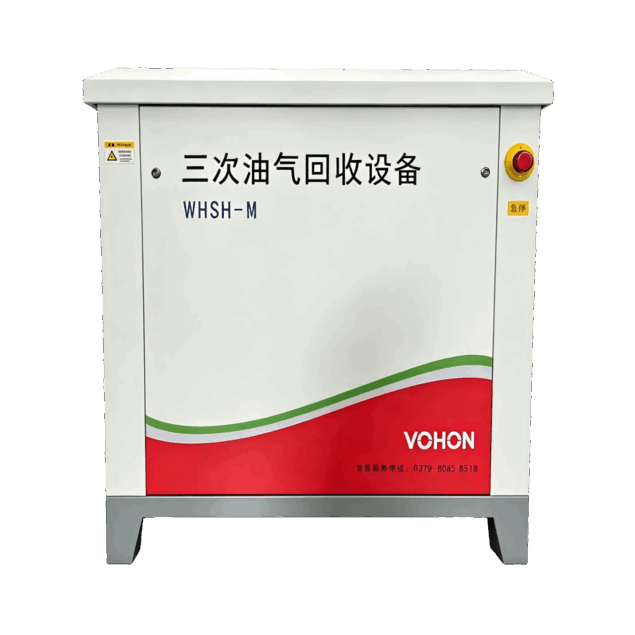
Damage caused by improper use is not covered by the warranty: failure to operate according to operating procedures, unauthorized modifications to the electrical and control systems, and phase loss operation leading to motor burnout, the maintenance costs for such failures are borne by the user. The normal consumption of wear parts should also be clarified: consumables such as sealing rings and filter elements have a design lifespan, and normal wear and replacement are usually handled as agreed. Some manufacturers offer free initial inspection and only charge for material costs during the warranty period, with specifics subject to the contract.
Force majeure and external factors are also excluded from the scope: damages caused by lightning strikes, flooding, and power grid fluctuations fall under the categories of insurance and external liability. Clarifying these boundaries can help you make informed decisions when reporting repairs and avoid unnecessary disputes with the manufacturer.
How can I report a repair most efficiently
| matter | division of responsibilities | Handling method |
|---|---|---|
| manufacturing defect | Within the scope of warranty | The manufacturer provides free repair and replacement services |
| legacy debugging | Within the scope of warranty | The manufacturer has made adjustments |
| Damage due to improper operation | Responsibility of the user | Paid repair |
| Consumption of wearing parts | as stipulated in the contract | Initial inspection is free, but replacement parts are charged |
| Damage caused by external factors | Insurance and external liability | Deal with separately |
| Regular follow-up visits | Contractual obligations of the manufacturer | Solve all questions at once through centralized questioning |
The smoothness of the repair process depends on the completeness of the information provided: equipment model and serial number, fault symptoms, occurrence time, alarm code, and inspections conducted. If all these items are provided at once, the manufacturer's remote diagnosis will be faster. After reporting the repair via phone, take a photo or record a live video and send it over. Most simple issues can receive immediate treatment advice on the spot, without the need for a visit. Keep a record of the repair form, and archive the treatment results and records of replaced parts. At the end of the warranty period, this record will serve as a baseline for the equipment's health status.
What should be done before the end of the warranty period
One to two months before the warranty period expires, arrange a comprehensive physical examination: report all minor abnormalities accumulated during operation for repair and address them all at once - if left over beyond the warranty period, the same fault will have to be repaired at your own expense. During the physical examination, check the spare parts list with the manufacturer, replenish the inventory of commonly used parts, and clarify the maintenance plan and response commitment after the warranty period. This will provide a basis for deciding whether to renew the warranty.
Steps for using quality assurance
- Clarify the scope, duration, and starting date of the warranty upon delivery;
- Make cards with the repair process, contact information, and key points and hang them on the wall;
- When a fault occurs, first collect relevant information and report all key points at once;
- Distinguish between warranty and non-warranty issues. If the boundary is unclear, first report the issue for repair and let the manufacturer determine it;
- The repair request and handling records shall be archived one by one;
- Arrange a comprehensive physical examination and replenish spare parts one to two months before expiration.
Frequently Asked Questions
I'm not sure if it falls within the warranty scope. Will there be a charge if I report it?
The repair request itself is free of charge, and the charges are subject to on-site assessment. In cases where the boundary is unclear, a repair request should be made first, and the manufacturer will determine the responsibility attribution. If there is an objection to the determination, negotiations will be conducted based on the contract terms and acceptance records.
Does the manufacturer still take responsibility for the parts that I have repaired myself?
Regarding unauthorized disassembly and modifications, the manufacturer may no longer be responsible for warranty services. For any uncertain faults, please first report for repair and communicate with us. If emergency measures are indeed necessary, please take photos of the scene and retain the replacement parts, and promptly inform the manufacturer afterwards.
How is maintenance arranged after the warranty period?
During the pre-expiration physical examination, discuss the renewal plan with the manufacturer: confirm the maintenance frequency, response time limit, and spare parts price item by item, and compare the cost with that of purchasing spare parts and performing maintenance on one's own. Most sites choose a combination of basic maintenance and self-prepared commonly used parts, with clear responsibilities and controllable costs.
This article is compiled by Luoyang Wohong Petrochemical Equipment Co., Ltd. The company provides design and manufacturing, skid-mounted customization, installation and commissioning, as well as after-sales operation and maintenance services for three-time oil and gas recovery equipment to gas stations and oil depots. If you need on-site inspection or scheme configuration, please feel free to contact us for discussion.