The repeated occurrence of the same type of fault indicates that the root cause has not been identified; the fact that the new person is at a loss when taking over indicates that the experience has not been accumulated. The fault logbook addresses these two issues: recording each fault in a unified manner, and clearly writing down the cause and solution. Over time, the equipment's "medical record" becomes the most valuable basis for maintenance decisions. The key to maintaining the logbook is persistence. After recording for three months, the distribution of fault locations can be identified. After recording for one year, it can support adjustments to spare parts and maintenance cycles. The investment is only a few minutes of filling time each time, but the return is that fault handling does not have to go back to the beginning.
What fields should be recorded in the ledger
A fault record should include at least six elements: occurrence time, fault location, fault phenomenon, handling measures, downtime duration, and cause judgment. The phenomenon should be accurately described, rather than simply stating "the machine broke down". For example, it could be written as "the fan tripped twice within 3 minutes after startup, and the control panel displayed an overload". The cause should distinguish between direct and root causes - overload is the direct cause, while the overtight belt causing increased bearing resistance is the root cause. Only the direct cause should be recorded, as the same fault may occur again in a different form. The timing of recording is also important: the phenomenon and operating conditions should be recorded on the spot, while the cause and measures should be completed after the handling is completed. Only when the two parts are combined can a complete record be formed.
The item of downtime is often overlooked, yet it serves as the foundation for assessing the impact of failures. For the same failure, a two-hour downtime and a two-day downtime have completely different handling priorities. The duration is calculated from the start of downtime until normal operation is resumed, including waiting time for spare parts and waiting time for power outage windows. Only in this way can the statistics be meaningful.
How to classify faults
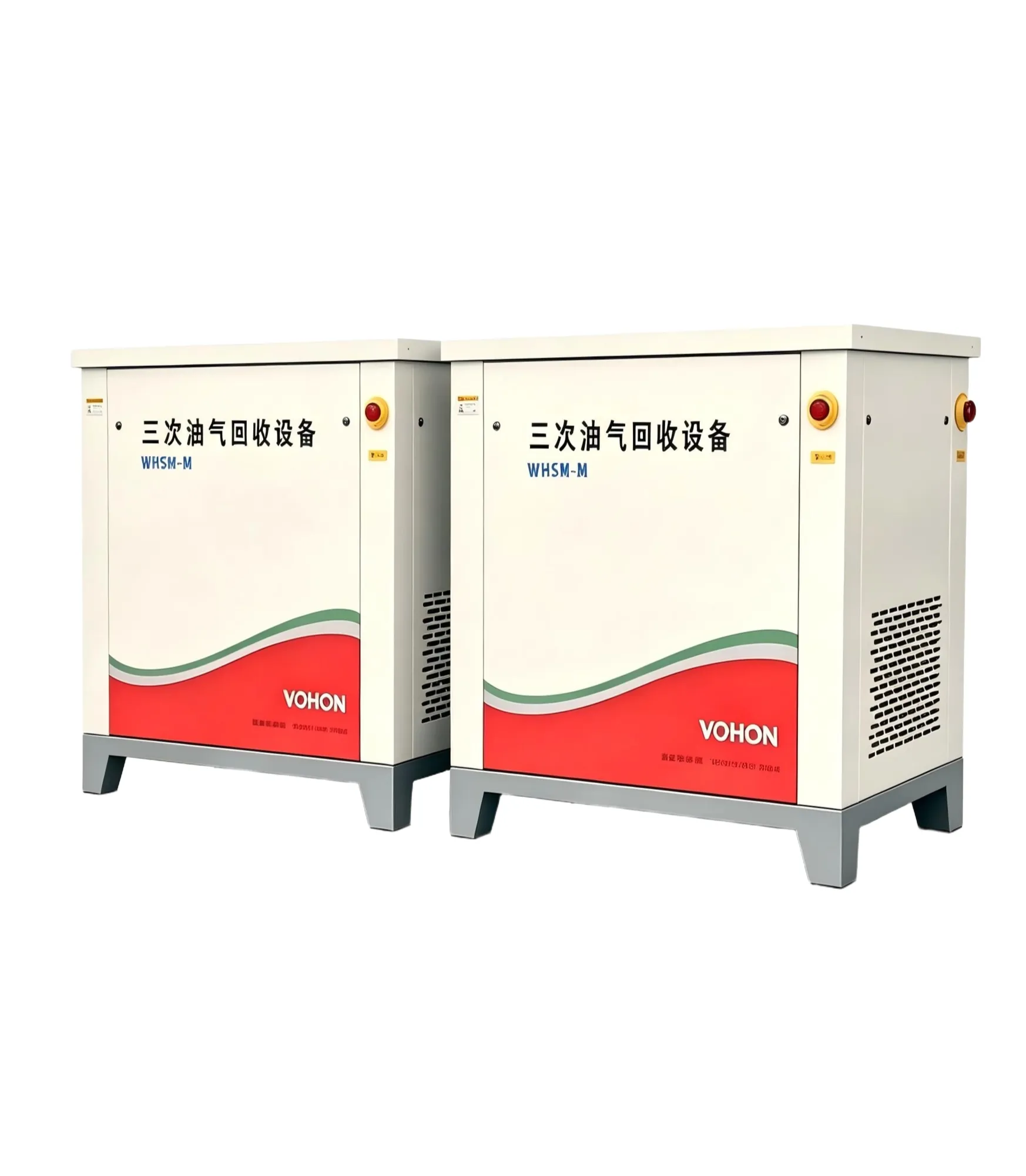
It is recommended to classify the scope based on two levels: "part plus nature". The first level categorizes parts into five major types: fans, compressors, control systems, valve components and pipelines, and instrument sensors. The second level further categorizes parts based on their nature into electrical, mechanical, blocking, and sealing types. Once the scope is unified, it will be clear at the end of the year which part has the most failures and which type of nature accounts for the highest proportion. The spare parts list and inspection priorities will be derived from this data. Once the scope is determined, it should not be changed arbitrarily. If adjustments are indeed necessary, the switching time should be noted in the ledger, and data for the old and new scopes should be separately recorded.
How to analyze the reasons
The analysis of the cause does not seek profoundness, but rather truth. A common way of asking is to ask several "why"s in succession: Why did it stop? Overload. Why was it overloaded? The bearing resistance is high. Why is the resistance high? The bearing has lost lubrication due to water ingress. Why did water enter? The seal of the protective cover has aged. At this level, the treatment action is to replace the seal, rather than simply resetting and restarting. When writing the analysis conclusion into the log, indicate the basis for judgment, and mark "to be observed" for those that are uncertain, to avoid treating speculation as a conclusion.
Reference for ledger format
| field | Record requirements | Frequently Asked Questions |
|---|---|---|
| Time of occurrence | Accurate to time period and working condition | Only remembering dates is not conducive to judgment |
| fault location | According to the unified classification criteria | Caliber drift cannot be statistically analyzed |
| Fault phenomenon | "Realistic portrayal without conclusions" | Just writing "broken" is equivalent to not recording at all |
| Handling measures | Specific actions and replacement parts | Failure to record replacement parts makes it impossible to trace them |
| Downtime duration | From downtime to recovery | Impact assessment is indispensable |
| Reason judgment | "Direct and fundamental causes" | Stopping at the direct cause will lead to recurrence |
Steps to use the ledger
- Record the phenomenon and operating conditions on the spot where the fault occurred, and fill in the causes and measures after handling;
- Summarize the faults of the current month by category once a month, and examine the distribution of locations and nature;
- If the same type of fault repeatedly occurs in the same location within three months, a special inspection will be triggered;
- The spare parts replacement records are linked to the fault log to verify whether the consumption matches;
- At the end of the year, revise the maintenance cycle and spare parts inventory based on the ledger data;
- The ledger and equipment archives shall be kept for the same lifespan and handed over along with the equipment during the transfer.
Frequently Asked Questions
Should minor issues also be recorded in a ledger?
Yes. There are often causes and consequences between failures. This minor leakage may be a foreshadowing of the next trip. Only by keeping complete records can the chain of causes be connected. If only major failures are recorded, the analytical value will be compromised.
Will recording the workload be too much?
Each record should last for several minutes, and the key lies in persistence and consistency. It can be made into a standard form, and you can simply fill in the blanks when there is a fault. What should be more concerned about than workload is that the records are not used - only when they are summarized once a month can the ledger be truly utilized.
How can we get started without historical records for old equipment?
From now on, keep track of and add recent maintenance receipts and inspection records. After half a year of operation, the data will be sufficient for preliminary analysis. There's no need to aim for perfection in one go; consistency in data collection is more crucial than completeness of fields.
This article is compiled by Luoyang Wohong Petrochemical Equipment Co., Ltd. The company provides design and manufacturing, skid-mounted customization, installation and commissioning, as well as after-sales operation and maintenance services for three-time oil and gas recovery equipment to gas stations and oil depots. If you need on-site inspection or scheme configuration, please feel free to contact us for discussion.