The evaporation loss in oil depots is a hidden cost: gasoline emits oil vapor into the atmosphere at every stage of oil receiving, storage, and delivery. While it may not be noticeable on a daily basis, the cumulative loss over a year can reach the order of tens of tons. This loss poses a hidden danger to safety and environmental protection, and it also represents a direct financial loss. The key to addressing this issue lies in the installation of oil vapor recovery devices. Whether the accounts can be balanced depends on the accuracy of loss estimation and the proper configuration of the devices. This article clarifies the sources of loss, the economic benefits of recovery, and the role of membrane separation in this process, step by step. Oil depot operators can refer to their own turnover data to conduct a calculation.
Where does the loss come from
The evaporation loss in oil depots mainly consists of three parts: the large breathing loss caused by the displacement and discharge of gas phase in the tank during oil receiving, the small breathing loss caused by temperature differences between day and night in the tank area, and the loading loss caused by the displacement of the loading arm during loading and transportation. The loading process has the highest concentration and the largest instantaneous volume, which accounts for the majority of the loss; the tank breathing continues but the volume is small. The method to get a clear understanding is to measure by stages: obtain the three base numbers of turnover volume, tank capacity, and operation frequency, convert them item by item according to the loss coefficient, and then check with the inventory difference of the incoming and outgoing ledger - if the theoretical loss matches the book deficit, the number is accurate, and the subsequent recovery account can be confident.
How to calculate the accounts for recycling
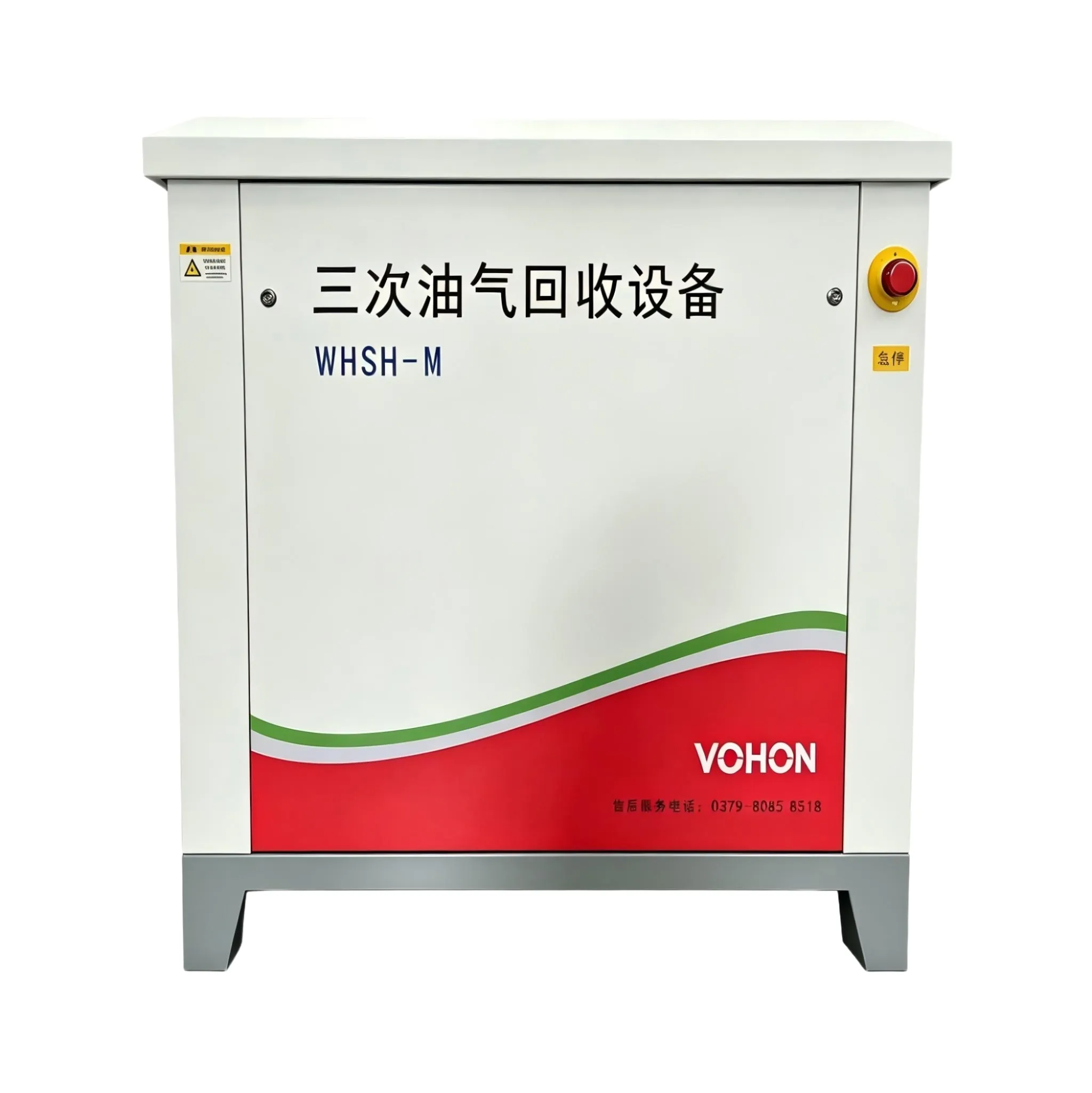
Considering the recycling account from both sides: On the revenue side, the recovered oil and gas are liquefied and returned to the tank, which, converted based on market oil prices, can be quite substantial for oil depots with large annual turnover. On the expenditure side, there are costs related to electricity consumption, maintenance, and depreciation of the equipment. The combination of condensation and membrane control keeps the condensation temperature within an economic range, thereby significantly reducing electricity consumption. When these two factors are taken into account, most medium to large-sized oil depots can break even on their recycling account within two to three years, and then generate net profits every year thereafter. For accounting purposes, it is recommended to conduct a sensitivity analysis: assuming fluctuations in oil prices, turnover, and electricity prices by one level, examine the range of changes in the payback period. Use your own measured data for calculations; conclusions from others should only be used as references.
What does membrane separation do in the process
Membrane separation plays a crucial role in the combined process: condensation first collects the heavy hydrocarbons, while the uncondensed low-boiling components enter the membrane unit for enrichment and then return to the compressor inlet for recycling. This ensures a high overall recovery rate and stable emission concentrations below the limit. The membrane components are non-porous and dense structures, with no electrostatic accumulation during operation. This provides a substantial safety advantage in places like oil depots, where explosion-proof requirements are stringent. The skid-mounted arrangement also saves space, and can be placed between the tank area and the loading platform. As usual, a filtration and dehumidification section is equipped before the membrane, and the investment in this section pays off in terms of membrane lifespan and recovery quality.
Configuration and reconciliation reference
| subject | Data retrieval criteria | Remarks |
|---|---|---|
| Loading loss | Turnover volume multiplied by loading loss coefficient | The bulk of the loss |
| Tank breathing | Tank capacity and temperature difference conversion | Continuous low flow |
| Recycling value | Recycled volume multiplied by market oil price | Revenue side |
| operating cost | Electricity consumption, maintenance, and depreciation | Expenditure side |
| payback period | Investment divided by annual net income | Attach sensitivity interval |
| Monthly reconciliation | Recycled volume vs. turnover volume | Abnormal data collection terminal |
Operational management checklist
- Regular inspection of the sealing performance of collection pipelines and monthly inspection of valve group functionality;
- Record the membrane pressure difference and vacuum degree daily, and plot the trend on a weekly basis;
- The condensation temperature level and electricity consumption are calculated on a monthly basis. If there is any drift, first check the refrigeration unit;
- The emission outlets are inspected in batches, and the data is archived along with the operation records;
- The recycling and turnover volumes are reconciled on a monthly basis, and any anomalies are first investigated at the collection end;
- The inspection of explosion-proof zones and electrostatic grounding has been included in the monthly checklist.
Frequently Asked Questions
Where does the loss coefficient come from?
The industry manual provides reference values, but there are significant differences in operating conditions across various libraries. It is recommended to first estimate a version based on coefficients, and then use the inventory discrepancies to deduce and calibrate the values. The two versions of data should corroborate each other, and only then can the accounts be considered accurate.
Is it worth installing a device in Xiaoku?
Emission compliance is a bottom line that cannot be bypassed; the recovery value is calculated based on turnover volume. For small-scale facilities, skid-mounted and combined processes can be used to keep investment within a reasonable range. Only after the accounts are balanced should action be taken.
How to estimate the investment in equipment?
Estimate by sub-items based on peak gas volume at the crane position and tank size, measure the concentration first, then provide configuration and quotation, and include the sensitivity range in the payback period for more stable decision-making.
This article is compiled by Luoyang Wohong Petrochemical Equipment Co., Ltd. The company provides design and manufacturing, skid-mounted customization, installation and commissioning, as well as after-sales operation and maintenance services for three-time oil and gas recovery equipment to gas stations and oil depots. If you need on-site inspection or scheme configuration, please feel free to contact us for discussion.