The renovation and expansion of oil depot tank areas is a common project in the industry, but for the in-use tertiary oil and gas recovery system, the renovation and expansion period poses a challenge: the safety isolation between construction hot work and in-use recovery pipelines must be ensured. After expansion, the scale of the tank area changes, the oil distribution rhythm changes, and whether the original recovery configuration still matches needs to be reevaluated. If the coordination is good, the renovation construction and oil and gas treatment can proceed simultaneously; if the coordination is poor, it may result in the suspension of oil and gas recovery during the renovation period at the least, and at worst, it may leave behind cross-cutting hidden dangers. This article explains the step-by-step coordination approach for tank area renovation and expansion and tertiary recovery system.
Two types of issues with the recycling system during the renovation and expansion period
The first category pertains to the isolation between construction and operational systems. When renovation and expansion construction involves hot work and excavation, if the adjacent recovery pipelines are still operating with gas, it poses a real risk. The first principle of coordination is to isolate before construction: the involved pipeline sections must be reliably cut off, replaced, and tagged, and work cannot commence based on the judgment that "it should be gas-free". The second category concerns scale matching. After expansion, with increased tank capacity and oil delivery volume, it is necessary to assess whether the processing capacity of the existing recovery equipment is sufficient, and whether the pipeline routing needs to be adjusted according to the tank farm layout, all of which should be evaluated during the design phase, rather than waiting until after the renovation to make up for deficiencies - additional equipment without reserved space and secondary excavation of pipelines all result in additional costs due to coordination gaps.
The common ground of the two types of issues is that the recycling system should be taken into consideration during the renovation planning stage, with professional recycling advice incorporated into the drawings, rather than being thought of only after construction has begun.
Five steps for step-by-step connection
- Understand the current situation: Organize the pipeline routing, equipment locations, and processing capacity of the in-use recycling system into a diagram, which will serve as the base map for the renovation design;
- Joint review of plans: The renovation plan and the adjustment plan for the recycling system are reviewed simultaneously, with the scope of isolation and expansion needs determined item by item;
- Isolation disclosure: The pipe sections involved in the construction shall be isolated and replaced one by one, and a written disclosure shall be provided to the construction party to clarify which lines are not allowed to be moved;
- Step-by-step switching: For those with the necessary conditions, initiate the switching process and initiate the recycling pipeline in batches according to tank zones, avoiding a blanket halt of recycling across the entire warehouse;
- Joint acceptance: After the renovation is completed, the recycling system will be accepted together with the tank area to confirm that the processing capacity matches the new operation scale.
| Reconstruction and expansion stage | Matters related to the connection of the recycling system | Precautions |
|---|---|---|
| Scheme Design | Incorporate recycling capacity assessment and pipeline adjustment into the drawings | Reserved equipment positions and pipe gallery space |
| Construction preparation | Involving pipeline section isolation, replacement, and written disclosure | One should not rely on experience to judge the absence of gas within the pipeline |
| during construction | The recycling device in the non-construction area continues to operate with load | Concentrate the homework in the isolation tank group |
| Pipeline switching | Switch by tank in batches, and confirm each batch individually | After switching, conduct a trial operation before officially putting it into use |
| Completion acceptance | The recycling system is subject to joint acceptance with the tank area | Verify that processing capacity matches the new scale |
| Document archiving | Update the direction of the recycling pipeline in the as-built drawings | Avoid having to search for wires based on old diagrams during later maintenance |
Transitional arrangements for oil and gas treatment during the construction period
During the renovation period, some tank farm operations will be suspended. However, as long as there are oil delivery operations, there should be a destination for the oil and gas. A common practice during the transition period is to concentrate operations on the tank group isolated from the construction area, allowing the in-service recovery device to continue to handle this load. The tank group involved in the construction area will be suspended from receiving and delivering, and the pipelines will be isolated in place. The transition arrangements should be included in the construction organization plan, specifying which tank groups will operate with recovery and which will be isolated and shut down. The personnel on duty should follow the plan to avoid the construction party and the operation party working independently.
Frequently Asked Questions
Is it necessary to re-evaluate the recycling system given the small scale of the renovation and expansion?
Whenever there is a change in tank capacity or oil delivery volume, it is worthwhile to conduct a recalculation. When the scale changes are minor, it may only be necessary to adjust the pipeline routing; for significant changes, it is necessary to calculate whether the processing capacity is sufficient. Evaluation during the design phase involves drawing work, while during the operation phase, it involves business suspension for renovation.
Can the recycling device be completely shut down during the construction period?
As long as there are oil delivery operations in the depot, there should be arrangements for the collection and treatment of oil and gas. It is not recommended to shut down the entire system. A feasible approach is to concentrate the operations in tank groups isolated from the construction site, with the in-service equipment handling this part of the load. The specific arrangements should be determined in the construction organization plan.
What is the most easily overlooked aspect in the renovation of old warehouses?
The information is incomplete. The recycling pipelines built in the early years lack as-built drawings, and their routing relies on the memory of experienced workers. During renovation and excavation, it was discovered that the actual situation did not match their memories. It is essential to take the time to map out the current pipelines before renovation. This effort cannot be spared.
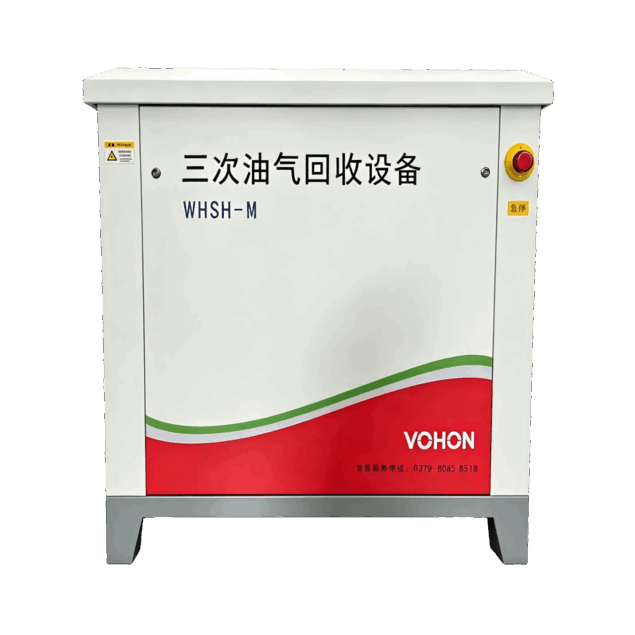
This article is compiled by Luoyang Wohong Petrochemical Equipment Co., Ltd. The company provides design and manufacturing, skid-mounted customization, installation and commissioning, as well as after-sales operation and maintenance services for three-time oil and gas recovery equipment to gas stations and oil depots. If you need on-site inspection or scheme configuration, please feel free to contact us for discussion.