The concern with the oil and gas recovery system of a newly built gas station is that it may require modifications after completion - such as repaving pipelines, opening tank areas, and shutting down for rework, which would incur costs several times higher than the initial installation. It is essential to get everything right the first time, and the effort lies in the design phase: determining the routing of the recovery circuits for the three stages of oil unloading, storage, and refueling, selecting equipment specifications, and reserving space for subsequent membrane treatment, all of which should be clearly defined during the blueprint phase. This article follows the design process of a new station, clarifying the key points of configuration, reserved interfaces, and acceptance considerations for each stage. Owners of newly built or renovated stations can refer to the design specification for verification.
How to allocate the three links
The oil and gas recovery process at gas stations is divided into three stages: primary recovery via the unloading pipe - the gas phase from the unloading tanker is returned to the tanker through the recovery pipeline, forming a closed circuit, which follows the unloading process; secondary recovery via the refueling pipe - the refueling nozzle is equipped with a recovery hole to pump the displaced oil and gas back into the tank during refueling; and tertiary recovery via the storage pipe - the breathing gas from the storage tank is recovered through a small processing device to prevent direct emissions from the breathing port. The pipe diameters, slopes, and interface positions for each stage are uniformly planned during the design phase. The pipeline routing avoids traffic lanes and reserved land, and branch valves are reserved for future upgrades.
What should be reserved during the design phase
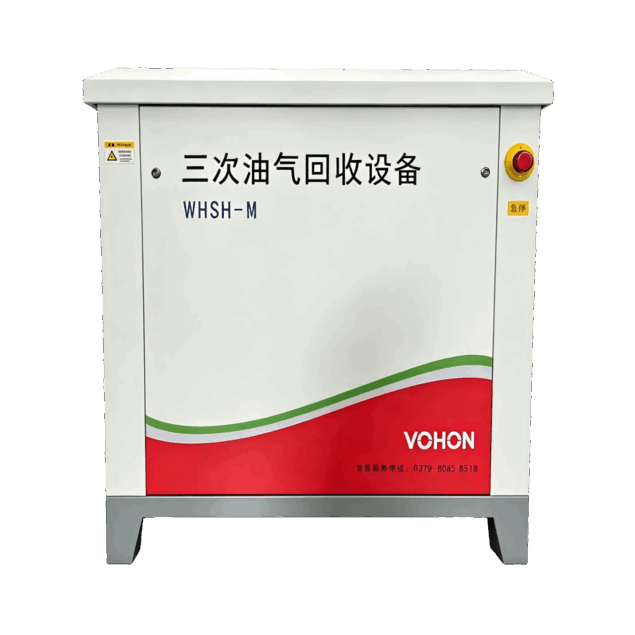
The reservation checklist includes four items: first, pipeline reservation - the inlet and outlet air interfaces and power supply of the tertiary recovery device, which should be in place once or with valves reserved for blocking, and only need to be connected during later installation; second, site reservation - the skid position of the treatment device should be reserved according to the planned capacity, without interfering with other future facilities; third, electrical reservation - the power supply circuit and control signal cables of the device should be pre-buried, with capacity selected based on long-term load; fourth, data reservation - the liquid level gauge and pressure signal should be connected to the station control system, laying the foundation for remote monitoring. The investment in reservation is low, but the savings will be significant for future business shutdown and renovation.
How to determine the selection criteria
The selection is determined by the scale and sales volume of the station: the number of fuel dispensers determines the circuit configuration for secondary recovery, while the tank capacity and turnover volume determine the processing capacity of the tertiary recovery device. Currently, tertiary recovery devices are mainly small-scale skid-mounted units with condensation and membrane technology, which occupy a small area and have stable emissions. When selecting, attention should be paid to matching the breathing capacity of the tank area - the gas volume is calculated based on tank capacity and turnover, rather than just guessing. The after-sales service radius of equipment suppliers should also be considered, as response speed and spare parts supply directly affect availability. Those with local service outlets are preferred.
During the design review, it is recommended to compile the interfaces for the three sections of recycling into a table, listing the interface location, pipe diameter, power supply specifications, and signal format item by item. The civil engineering and process drawings should be checked against this table, and any missing items should be identified on the drawings. This is much cheaper than discovering them on-site. The same applies to renovation and expansion projects - first inventory the existing interfaces, then list the new additions, making the scope of the renovation clear at a glance.
Configuration checklist for new station
| link | Configuration content | Design Key Points |
|---|---|---|
| One-time recycling | Oil and gas unloading tanker with phase return | Closed-loop unloading process |
| Secondary recycling | The fuel nozzle is retracted | The circuits are allocated according to the number of fuel dispensers |
| Three-time recycling | Respiratory gas processing device | The gas volume is calculated based on the tank capacity turnover |
| Pipeline reservation | Interface power valve sealing | The post-installation only involves docking |
| Site reservation | "Pry position according to planned capacity" | Not conflict with other facilities |
| Data reservation | Liquid level pressure control at the inlet station | Lay the foundation for remote monitoring |
Key points of acceptance and delivery
- The records of pressure and tightness tests for the three-stage recovery circuit are complete;
- The inspection of liquid resistance and gas-liquid ratio shall be conducted in accordance with the acceptance specifications and archived;
- The reserved interface is clearly marked, and the valve sealing status is recorded;
- The operating procedures cover three stages of recycling, and training is provided to the on-duty staff;
- Verify the consistency between the as-built drawings and the site, and keep written records of any changes;
- The supplier's quality assurance terms and service response commitments shall be included in the contract.
Frequently Asked Questions
Can the tertiary recovery device be replenished?
Yes, but it will come at the cost of shutting down for renovation. During the design phase, interfaces and power supplies should be reserved, so that only the connection needs to be made later, and the cost is manageable. If no reservations are made, the subsequent connection will be close to a partial reconstruction.
Do I need to go two or three times?
Primary and secondary recovery are the basic configurations for oil unloading and refueling processes, while tertiary recovery depends on local requirements and tank farm conditions. The three-stage planning should be completed at once, and laying the pipelines at one time will result in lower costs.
What is the gas-liquid ratio?
The ratio of the volume of gas extracted during refueling to the volume of fuel dispensed reflects the operational status of the secondary recovery system; both acceptance and annual inspections measure this ratio. If it exceeds the standard, it indicates that the recovery circuit needs to be calibrated.
This article is compiled by Luoyang Wohong Petrochemical Equipment Co., Ltd. The company provides design and manufacturing, skid-mounted customization, installation and commissioning, as well as after-sales operation and maintenance services for three-time oil and gas recovery equipment to gas stations and oil depots. If you need on-site inspection or scheme configuration, please feel free to contact us for discussion.