How much does a set of three-stage oil and gas recovery equipment cost? Straight answer: The price of a complete set of equipment for a common site configuration ranges from tens of thousands to hundreds of thousands of yuan, with a wider range for skid-mounted small devices and large-scale devices at oil depots. Why can the price of the same "three-stage recovery" vary by up to 100%? Because the price is not calculated by "unit", but by processing capacity, process configuration, material grade, and supporting services. If you don't understand these variables, comparing prices won't get to the point. This article breaks down the composition behind the quotation, and owners who are preparing to purchase can use it to compare with the supplier's quotation.
What determines the price
There are four core variables that affect price: processing gas volume - the device is selected based on the peak gas emission volume during respiration, and the larger the gas volume, the larger the scale of the condensation unit and membrane components, with the price increasing accordingly; process route - the combination of condensation and membrane is the mainstream configuration, and the equipment composition varies with different routes such as single condensation and condensation plus adsorption, with different focuses on price and operating costs; material and explosion-proof grade - the material of components that come into contact with the medium and the level of electrical explosion-proof configuration are directly reflected in the equipment cost; degree of automation - configurations such as remote monitoring and online data access, with each additional item being a price increase item.
What is included in the quotation
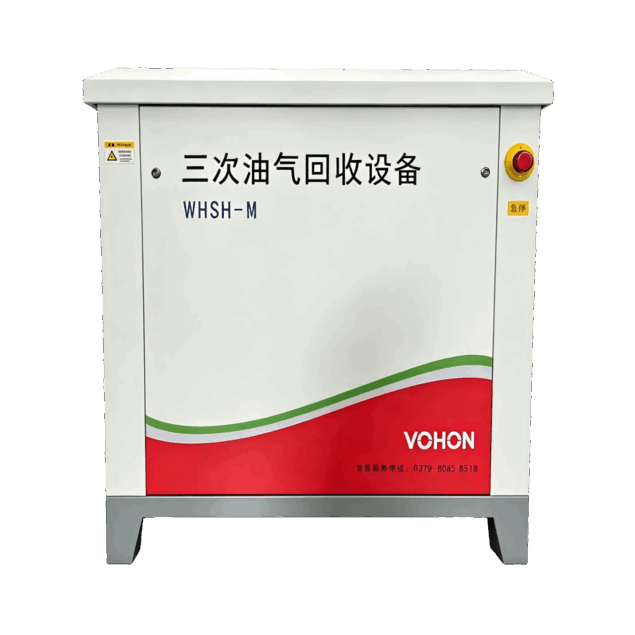
A complete quotation typically includes the equipment itself, transportation, installation and commissioning, training, and warranty. Low-price traps often hide in the fine print: if the quotation does not include installation, pipeline modification, or acceptance coordination, the total cost of additional items later on may exceed the initial price. When comparing quotations, it is important to align all factors: gas volume, process, material, installation scope, and acceptance responsibilities should be aligned item by item before comparing the total price. When signing the contract, include terms on acceptance standards - what limits should be used for acceptance, and how to handle non-compliance. This clause is more important than a difference of tens of thousands in unit price.
How to calculate hidden costs
It is easy to suffer losses when only considering the equipment price during procurement. The accounts during the operation period should also be taken into account: electricity consumption - the condensation and membrane combination mainly consumes electricity, and the annual electricity costs vary greatly among devices with different energy efficiency levels; maintenance - annual expenses for wearing parts, seals, and detection and calibration; downtime losses - the risk cost of non-compliant emissions during the downtime of device malfunctions. Combining the operation accounts for three to five years, a scheme with a low initial quotation but high energy consumption may not be cost-effective. It is more practical to ask the supplier for operation data from similar sites during the procurement stage than to rely on propaganda.
Give the owner a bargaining suggestion: provide all the actual measurement conditions of the site at once - tank capacity and number of tanks, average daily sales volume, current status of breathing pipelines, whether it is a new construction, and the supplier should provide a proposal based on the actual working conditions for a comparable quotation; when the conditions are vague, the other party can only quote with a large margin, resulting in an inflated price.
Quotation composition reference
| Constituent items | Include content | Key points of price comparison |
|---|---|---|
| equipment body | Condensation membrane module skid | Gas volume process alignment |
| Explosion-proof material | Contact material electrical grade | Check according to the medium and on-site conditions |
| Transportation and installation | Lifting pipeline wiring | Clarify the scope boundaries |
| Debugging Training | Training for parameter tuning personnel | Included in the quotation, no additional charge |
| Acceptance coordination | Responsibility for accompanying rectification during inspection | Incorporate the limit clause into the contract |
| operating cost | Power consumption maintenance consumables | "Consolidated calculation for three to five years" |
procurement list
- First, conduct an on-site inspection and working condition assessment, and then provide a quotation;
- Align multiple quotations item by item according to the same criteria and then compare prices;
- Include the installation scope and responsibility for pipeline modification in the contract;
- Include acceptance limits and non-conformance handling clauses in the contract;
- Request operational energy consumption and maintenance data from similar websites;
- The training, warranty period, and response time limits should be documented item by item.
Frequently Asked Questions
Can we buy equipment with low prices?
Let's first look at the reasons for the low price: is it due to structural simplification, material downgrade, or service stripping? When comparing the total price and operating costs on an equal footing, it is necessary to clarify the boundaries of the quotation that is significantly lower than the market level item by item.
Is it more expensive to retrofit an old station than to build a new one?
The cost of adding pipeline openings, connecting existing equipment, and creating construction windows during a renovation is usually higher than that of building a new station with the same configuration. However, renovation can be carried out in sections and phases, allowing for controllable business interruption losses, so the overall cost may not necessarily be higher.
What if the quotation doesn't include operation and maintenance services?
List the operation and maintenance scope separately: the inspection frequency, replacement of wear parts, and response time limits should be negotiated on an annual basis; verbal commitments regarding after-sales service should be put in writing, otherwise they will become pay-per-use items after the project is put into operation.
This article is compiled by Luoyang Wohong Petrochemical Equipment Co., Ltd. The company provides design and manufacturing, skid-mounted customization, installation and commissioning, as well as after-sales operation and maintenance services for three-time oil and gas recovery equipment to gas stations and oil depots. If you need on-site inspection or scheme configuration, please feel free to contact us for discussion.