How much oil can an oil and gas recovery device recover in a year? How to calculate the economic benefits? Straight answer: The recovery amount is strongly correlated with the oil delivery volume at the station. According to industry experience, the annual recovery amount per 10,000 tons of gasoline ranges from hundreds of kilograms to over one ton, with the specific value subject to actual measurements at the station. The calculation method for economic benefits is "annual value of recovered oil products" minus "electricity costs, consumables, testing and maintenance costs". For most gas stations, the recovery value can cover operating costs and even have a surplus. Before calculating, it is necessary to conduct an estimation. Before estimation, collect data from your own station - figures from others can only serve as a reference, and only your own accounts can be accurate. This article clarifies the estimation methods, influencing factors, and steps for calculating economic benefits.
How to estimate the recycling volume
For stations without flowmeters, a rough estimate can be made using an empirical coefficient: multiply the annual gasoline sales volume by the empirical recovery rate, and then apply a discount based on the oil product and climate. For stations with the necessary conditions, they can directly keep accounts: install a meter on the enriched gas return flow or condensate collection pipe, and after running for a full month, they can obtain the real data of the station. The rough estimate is used for feasibility judgment before project approval, while the actual measured value is used for annual assessment and scheme optimization. The two should not be mixed - using the rough estimate for assessment will overestimate or underestimate the contribution of the device.
What factors affect the recycling volume
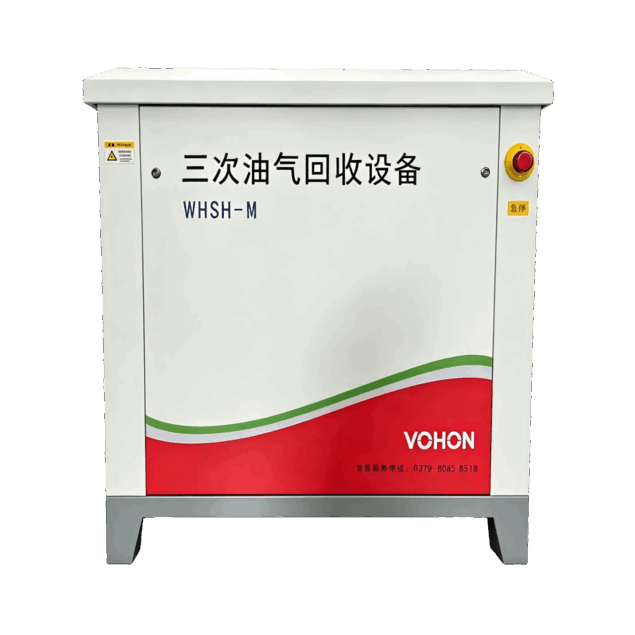
Three variables have the greatest impact. First, oil delivery volume. The more oil sold, the larger the base of oil vapor from tank breathing and refueling replacement, and the recovery volume increases accordingly. Second, oil product. The evaporation loss of volatile oil products is greater than that of ordinary oil product stations. Third, climate. In hot regions, the temperature difference between day and night is large, and tank breathing is frequent, so the recovery volume is generally higher than in cold regions. In addition, the frequency of oil unloading, tank capacity, and loading method also have an impact. These are second-order variables, and there is no need to be overly concerned about their magnitude.
How to calculate the economic accounts
The accounts consist of four lines: value of recovered oil products, electricity costs, consumables and maintenance, and testing expenses. The recovery value is calculated by multiplying the oil equivalent of condensate and enriched gas by the actual settlement price; electricity costs are estimated based on the power of the device and the operating duration, and the electricity costs for intermittently operating stations account for a small proportion; consumables mainly include filter screens and lubricating oil; testing is arranged according to the local cycle. The annual net amount is obtained by subtracting the four lines, and then dividing by the investment amount, which gives an idea of the recovery period. One detail not to be overlooked is that the price for recycling condensate for reblending or disposal is usually lower than the purchase price of refined oil products. It should be calculated based on actual conditions, rather than being overestimated at an ideal price.
Practices to increase recycling volume
After the device is put into operation, there is still room for optimization in terms of recovery volume: ensure the device starts and stops promptly according to the set pressure, and avoid long-term shutdowns just to save electricity; don't compromise on pre-treatment, as clogged filters will directly reduce processing capacity; regularly check operational data, and when there is an abnormal decline in recovery volume, first investigate the pre-treatment and driving force, before suspecting the performance of the membrane or compressor. These actions do not require additional investment, but can bring the reported recovery volume closer to the design value - most stations are not lacking equipment, but a bit of careful attention.
Reference for economic account composition
| accounts | caliber | Explanation |
|---|---|---|
| Value of recycled oil products | "Discounted oil volume multiplied by actual settlement price" | Condensate recovery and blending is calculated at a discounted price |
| electricity bill | Power multiplied by operation duration | The proportion of intermittent operation is relatively low |
| Consumable maintenance | Filter screen, lubricating oil, maintenance | According to the contract or self-maintained standards |
| inspection fee | According to the territorial cycle | Mostly once a year |
| Annual net amount | Income minus four expenses | Most stations are positive |
| payback period | Investment amount divided by annual net amount | For rough estimation of project initiation |
Accounting steps
- Organize gasoline sales and unloading records for the past year;
- Roughly estimate the annual recovery volume based on empirical coefficients;
- If conditions permit, obtain a one-month actual measurement value for correction;
- Calculate the annual net amount based on the four-line account;
- Calculate the payback period based on the investment amount;
- Incorporate the actual measured data into the monthly reconciliation mechanism.
Frequently Asked Questions
Can the recovered oil be sold directly?
Generally, it cannot be directly sold as refined oil. Recovered condensate is usually returned to storage tanks or disposed of according to agreements. The specific path is related to local oil product management regulations, and it is more prudent to confirm the components before returning.
Why is our recycling volume lower than that of our peers?
First, check three points: whether the device starts and stops in a timely manner according to the set pressure, whether the pre-treatment filter screen is blocked, and whether there is any bypass leakage at the discharge port and collection end; after these three items are normal, compare the oil delivery volume with the oil product difference.
Will the electricity bill eat up the recycling profits?
In intermittent operation mode, electricity costs typically account for a small proportion. It is long-term downtime and fault shutdowns that truly affect profits - even though the recovery amount is zero, the operating costs remain. Maintaining the healthy operation of the device is more important than saving electricity costs.
This article is compiled by Luoyang Wohong Petrochemical Equipment Co., Ltd. The company provides design and manufacturing, skid-mounted customization, installation and commissioning, as well as after-sales operation and maintenance services for three-time oil and gas recovery equipment to gas stations and oil depots. If you need on-site inspection or scheme configuration, please feel free to contact us for discussion.