What should one pay attention to when purchasing three oil and gas recovery devices? Straight answer: focus on five things - whether the process combination adopts a two-in-two combination according to local requirements, whether the processing capacity matches the oil dispensing conditions of the station, the supply and price of vulnerable parts and consumables, the caliber and value of factory inspection data, and the after-sales response and speed of spare parts availability. The prices of devices on the market range from tens of thousands to hundreds of thousands, with significant differences in configuration. It is easy to suffer losses when quoting individually; check item by item according to the list before discussing the price, and then the account will be clear. Buying a device is a one-time decision with five years of use. The extra effort spent on checking in the early stage will be repaid in the subsequent operation account. This article expands these five things into a purchase checklist that can be directly followed for verification.
How to verify the process combination
Many places have clear guidelines for the process of tertiary devices, with a common requirement for combinations of adsorption, condensation, and membrane separation. Before placing an order, it is important to confirm the local specifications and verify whether the equipment configuration meets the requirements. Different combination methods result in significant differences in operational costs: the combination of condensation and membrane exhibits a balanced recovery rate and energy consumption, while the combination with adsorption as the key component requires continuous consumable input. It is advisable to ask the manufacturer to clarify the process flow and the functions of each section, and to include a detailed configuration list in the contract. During acceptance, items should be checked one by one to ensure consistency in specifications, thus avoiding disputes such as "the delivered equipment is different from what was discussed".
Match between processing capacity and operating conditions
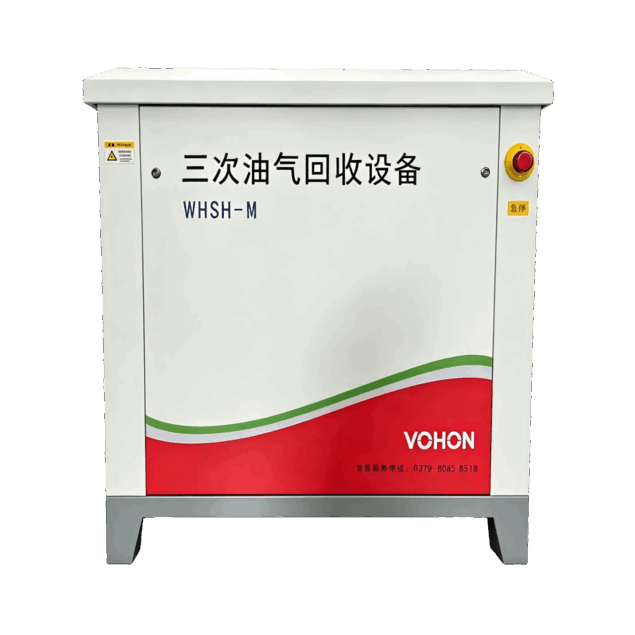
The processing capacity should be selected based on peak oil delivery volume and tank pressure fluctuations, rather than rough estimates based on the area of the gas station or the number of fuel dispensers. If there is an actual measurement curve for the tank pressure, it should be used for selection; if not, estimates should be made based on the oil delivery data from the past six months. The costs of oversizing or undersizing are all in the future: oversizing leads to investment waste and frequent low-load start-ups and shutdowns, while undersizing cannot withstand peak tank pressure. The design conditions should be clearly stated in the contract - inlet gas concentration, processing capacity, and emission indicators. Acceptance inspection should be conducted based on these three criteria, and if they are not met, the terms and conditions should be followed.
Wear parts and after-sales service
The list of consumable parts should be obtained during the purchasing stage: including the replacement cycle and unit price of seals, filter cartridges, adsorbent materials, and separation membranes. These should be factored into the five-year operational budget to compare prices. Some equipment may appear cheap at purchase but expensive in consumables, making it less cost-effective in the long run. When inquiring about after-sales service, ask three questions: response time limit, on-site or remote service, and the distance between the spare parts warehouse and the site; the answers to these three questions should be included in the contract attachments. Every day the device is down is a day of emission risk, and after-sales capability is more valuable than the impressive numbers on the parameter sheet. If possible, request feedback from the manufacturer regarding the use of one or two sites of similar scale, and the opinions of long-term users who have operated the equipment for more than two years are much more credible than promotional brochures.
Purchase checklist
| Check items | What are you looking at? | Key points for avoiding pitfalls |
|---|---|---|
| Process combination | Is it combined in pairs | Confirm the local guidance before placing the order |
| processing capacity | Match with peak oil delivery volume | Don't make rough estimates based on experience |
| vulnerable parts | Cycle and unit price | "Convert the total price into a five-year account" |
| factory data | Measurement caliber and value | Only when the criteria are consistent can there be comparability |
| after-sales service | Response time limit and spare parts distance | Included in the annex of the contract |
| Design condition | Three parameters: concentration, gas volume, and emission | The acceptance inspection shall be conducted item by item according to this |
Steps from signing to acceptance
- Confirm the local process combination and emission standard requirements;
- Verify the processing capacity based on the oil delivery conditions and allow for a margin;
- Request the list of vulnerable parts and the account of consumables for five years;
- The contract is accompanied by a configuration list and design operating conditions;
- Upon arrival, the configuration should be checked item by item according to the list;
- The trial operation with gas shall be accepted and archived according to the design operating conditions.
Frequently Asked Questions
The price difference is several times. Where is the difference?
The difference lies in the configuration and the number of process stages: heat exchange area, compressor unit brand, membrane module area, and control and monitoring configuration all affect the cost. Ask the manufacturer to list the configuration item by item, so the expensive parts are clear at a glance, and then decide whether the money is worth it.
Can I buy second-hand or refurbished equipment?
Be cautious. Membrane components and adsorbent materials have a lifespan, and the hidden costs of refurbishing equipment often lie in the core components. It is indeed necessary to consider this, and request replacement records and inspection data for the core components, and calculate the full-cycle cost based on new accounts.
What are the key points to test during acceptance inspection?
During the test run with gas, three items shall be measured according to the design conditions specified in the contract: gas treatment capacity, emission concentration, and recovery efficiency. Additionally, noise, power consumption, and control interlock functions shall be checked. The measured data shall be signed and archived by both parties as a baseline for future comparison.
This article is compiled by Luoyang Wohong Petrochemical Equipment Co., Ltd. The company provides design and manufacturing, skid-mounted customization, installation and commissioning, as well as after-sales operation and maintenance services for three-time oil and gas recovery equipment to gas stations and oil depots. If you need on-site inspection or scheme configuration, please feel free to contact us for discussion.