Is it normal for the oil and gas recovery device to start and stop frequently? How should the starting pressure be set? Straight answer: No. The device starts and stops automatically according to the tank pressure, and the design intention is to "work only when the tank pressure reaches a certain level". Frequent starts and stops indicate that the starting pressure is set too low or the gas-liquid ratio is too high, causing the tank pressure to quickly reach the starting point, and the device to operate continuously without rest for a long time. In the troubleshooting records, most cases of early fracture of the vacuum pump core are directly related to unreasonable start-stop settings. In terms of settings, the starting pressure should be adjusted based on the oil delivery volume of the station and the fluctuation range of tank pressure, so that the device can work and stop alternately, processing in batches, rather than operating continuously without rest. This article clarifies the start-stop logic, setting ideas, and debugging methods, which should be followed and checked during station debugging.
Why does the device frequently start and stop
There are two common reasons why the device starts and stops frequently. Firstly, the starting pressure is set too low: the device starts up whenever the tank pressure slightly increases, and before the tank pressure drops much after processing, it stops and soon reaches the starting point again, repeating this cycle. Secondly, the gas-liquid ratio for secondary recovery is relatively high: during refueling, the gas returned to the tank exceeds the amount of oil displaced, continuously pushing up the tank pressure and forcing the device to respond frequently. These two factors often overlap, especially at stations with large oil delivery volumes. During peak refueling periods in the day, the device barely stops, and only eases up at night.
How to set the starting pressure
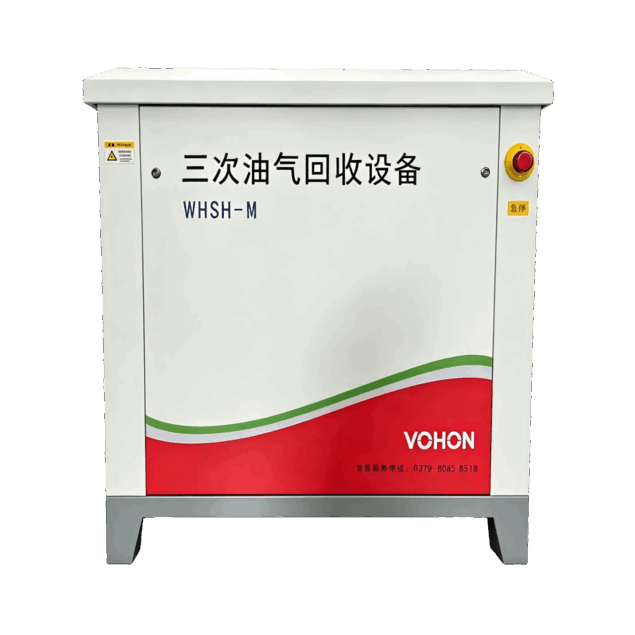
The design philosophy is to ensure that the device can "eat and rest": the lower limit of the starting pressure should be higher than the normal operating range and lower than the activation pressure of the breather valve, leaving a safety margin; for stations with high oil delivery volume and frequent refueling, the starting pressure should be appropriately adjusted upward, allowing the tank pressure to accumulate first, and the device to process batches at a time, which is better for both operational efficiency and equipment lifespan. Local regulations that recommend a starting pressure should be followed, and adjustments should be made during commissioning based on the actual measured curve of the station's tank pressure. It is not just about setting a number - the setting value should be recorded in the commissioning record, so that future maintenance and readjustment can be documented.
The cost of frequent start-stop operations
The costs are primarily incurred on rotating equipment: every start-up of vacuum pumps and compressors involves shock conditions, resulting in high starting currents and slow lubrication establishment, which accelerates wear on the pump core and bearings due to long-term high-frequency start-stop cycles. The number of on-off cycles for electrical components is also limited, leading to a shortened lifespan of contactors and frequency converters. Conversely, reasonable start-stop settings extend the lifespan of equipment, which is a maintenance effort that does not cost money. The downtime also provides time for heat dissipation and fluid drainage, resulting in a much better state of the device compared to machines that operate continuously, and naturally, the number of days of downtime due to malfunctions is reduced.
Debugging and verification items
| Check items | What are you looking at? | handle |
|---|---|---|
| Startup pressure | Is it below the upper limit of the normal range | Adjust upwards and maintain a safety margin |
| Stop stress | After the machine stops, does the tank pressure rise too quickly | Check the return air and sealing |
| gas-liquid ratio | Is there a high pressure bias or high tank pressure | Adjust the proportional valve to a reasonable range |
| Start-stop frequency | Is the frequency per hour too high | Combine pressure setting with extended intervals |
| Single run duration | Is it operating continuously for a long period of time | Batch processing and machine downtime |
| breathing valve | Does it still not jump after adjustment | Not jumping is considered as qualified |
Setting and verification steps
- Record the tank pressure curve for three consecutive days to understand the fluctuation range;
- Check the current starting pressure and gas-liquid ratio settings;
- Set the starting pressure based on the oil delivery volume and leave a safety margin;
- Observe the adjusted start-stop frequency and tank pressure performance;
- Confirm that the breather valve does not activate and the emissions consistently meet the standards;
- Write the setting values into the commissioning record and archive it along with the station.
Frequently Asked Questions
How long does it take for the device to operate in a reasonable manner per day?
Without a unified number, it is determined based on the tank pressure curve: intermittent start-stop and single operation lasting for ten minutes or so are normal; round-the-clock continuous operation or frequent short starts require a review of the settings.
Will increasing the starting pressure affect meeting the standard?
不会。启动压力只决定什么时候开始处理,排放看的是处理效果;整定时确保罐压峰值低于呼吸阀起跳值即可,处理后排放数据反而更平稳。
How does the gas-liquid ratio affect the tertiary device?
The gas-liquid ratio is on the high side, and when refueling, the amount of gas returned to the tank exceeds the amount displaced, leading to a passive increase in tank pressure and increased workload for the tertiary unit. By adjusting the gas-liquid ratio to near the lower limit of the specified range, the tank pressure becomes more stable, and the burden on the unit is reduced.
This article is compiled by Luoyang Wohong Petrochemical Equipment Co., Ltd. The company provides design and manufacturing, skid-mounted customization, installation and commissioning, as well as after-sales operation and maintenance services for three-time oil and gas recovery equipment to gas stations and oil depots. If you need on-site inspection or scheme configuration, please feel free to contact us for discussion.