What is the small breathing emission from the storage tank? How does the tertiary oil vapor recovery device collect this part of oil vapor? Straight answer: Small breathing refers to the "breathing" of the storage tank caused by diurnal temperature differences and temperature changes - the gas inside the tank expands and exhales outwards due to temperature rise, and contracts and inhales inwards due to temperature drop. The exhaled gas is saturated oil vapor, and the inhaled air pushes up the concentration of oil vapor. This cycle of inhale and exhale results in continuous emissions. The tertiary device operates automatically according to the tank pressure. When the tank pressure rises to the start-up value, the oil vapor inside the tank is pumped out for treatment. When the pressure drops back to the stop value, the device shuts down. The oil vapor generated by small breathing is collected by this pressure logic system. This part of emission is not as concentrated as oil unloading, but it is a daily base source. Managing it well has a significant impact on the total annual emission amount. This article clarifies the source of small breathing, the start-stop logic of the device, and the key points of operation.
Where does the small breath come from
The physical cause of small breathing is not difficult to understand: gasoline is volatile, and the oil vapor in the gas phase space inside the tank is close to saturation. When the tank top is exposed to the sun and the temperature rises during the day, the gas phase expands, the tank pressure rises, and the oil vapor is discharged when it exceeds the set value of the breather valve; at night, the temperature drops, the gas phase contracts, the breather valve inhales air to compensate for the pressure, and the partial pressure of oil vapor inside the tank is diluted and tends to saturate again, which is then expelled during the day. Between each inhale and exhale, losses continue to occur, and the tank pressure curve fluctuates accordingly. In addition to temperature differences, the replacement during oil loading and unloading operations, as well as the saturation recovery after oil receiving and dispatching, all superimpose on the tank pressure curve. Understanding this curve provides a benchmark for comparing the start-stop records of the tertiary unit, and abnormality judgment is no longer based on guesswork.
How to collect small amounts of breathing oil and gas with the device
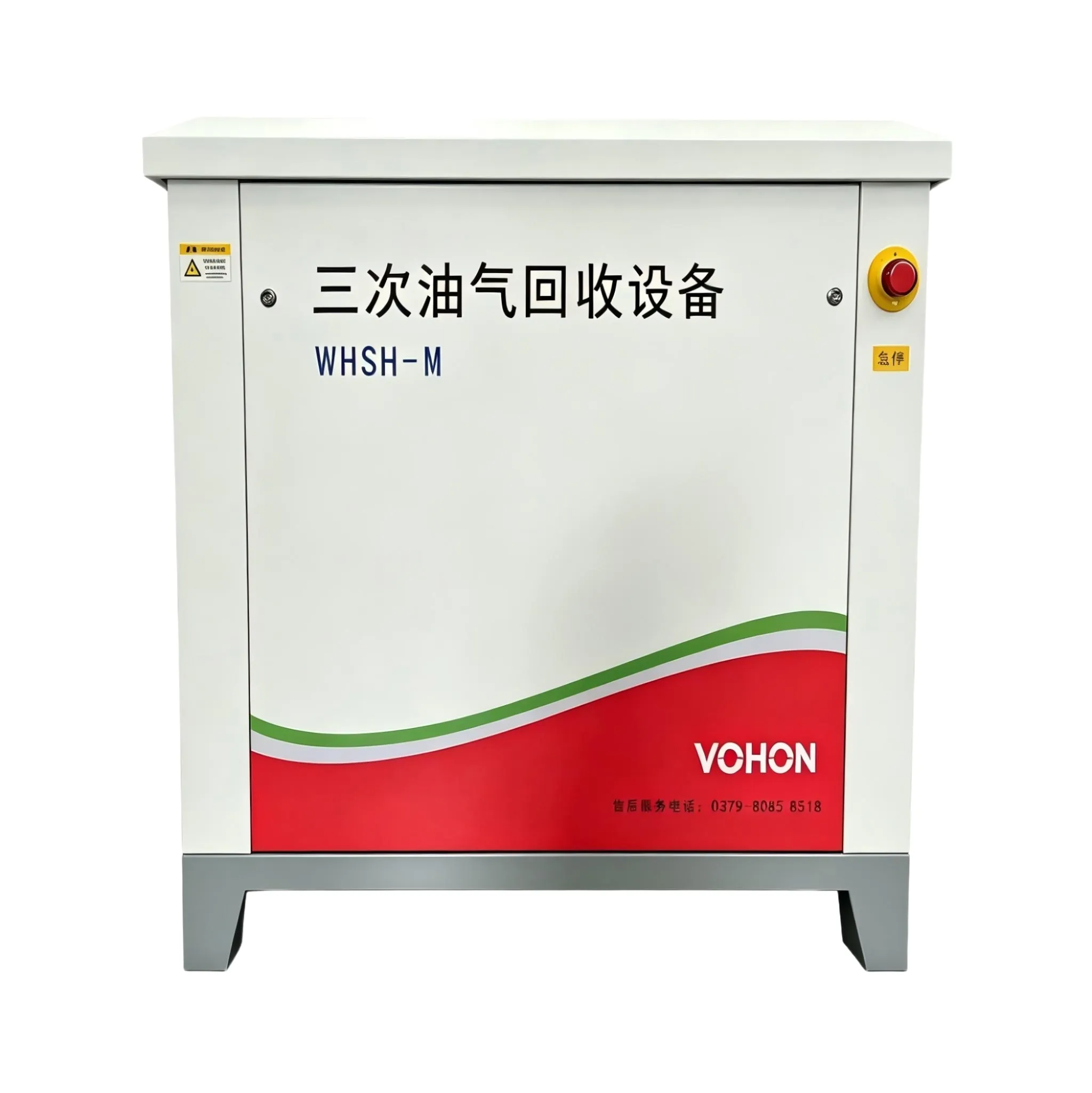
The operation of the device is driven by tank pressure: when the tank pressure rises to the starting set value, the device starts automatically and performs gas extraction processing. The oil and gas are condensed or collected by the membrane separation section. After the tank pressure falls back to the stopping set value, the device stops and waits for the next round. The set value for most stations is that the tank pressure rises to several hundred Pa to start and stops after falling back. The specific value is subject to the commissioning and setting records of the station. The characteristic of small breathing is that the gas volume is small and lasts for a long time. The device mostly operates intermittently with short cycles, and it is normal to start and stop dozens of times a day. As long as a single operation can bring the tank pressure back to the stopping value, there is no need to fuss over the cycle length, which is naturally the norm for intermittent operating conditions.
Start-stop setting and operation observation
If the setting value is set too high, the period of high tank pressure will be prolonged, and the emission risk will increase accordingly; if it is set too low, the device will start and stop frequently, and the wear and tear on the pump and motor will accumulate faster. During operation observation, focus on three metrics: start-stop frequency, single operation duration, and the pressure drop across the tank before and after start-stop. If the frequency suddenly becomes dense, it may be due to rapid increase in tank pressure (large intake volume) or system air leakage and pressure compensation; if the single operation duration becomes longer and longer, it is necessary to check whether the efficiency of the treatment section has declined. Record these three trends in the daily report, so that any abnormalities can be identified early and addressed calmly.
Comparison of operational key points
| key points | Normal performance | Abnormal signal |
|---|---|---|
| Start-stop frequency | Fluctuate with temperature difference and operating conditions | Suddenly becoming dense or remaining motionless for a long time |
| Single duration | Short-cycle stability | Gradually lengthening |
| Tank pressure drop | Can be pressed back to the stop value | Pressing not in place or overshooting |
| set value | Consistent with the debugging records | No record of being altered by others |
| Processing stage | Efficiency cycle review meets standards | The discrepancy between concentration and recovery amount |
| Ledger | "Day by day, month by month" | Missing records or discontinuity |
Daily management steps
- Retrieve the tank pressure curve to confirm the fluctuation range during daytime;
- Check the records of start and stop setting values;
- Calculate the frequency of starts and stops, as well as the duration of each occurrence, over the past week;
- On days with obvious deviations, check the liquid resistance and sealing;
- The efficiency of the processing stage is reviewed based on the detection cycle;
- Record the trends in the operation log and compare them on a monthly basis.
Frequently Asked Questions
Which is greater, the loss due to minor breathing or the loss during oil unloading?
Oil unloading involves short-term high-flow replacement, with a large volume per occurrence but low frequency; while minor breathing refers to continuous low-level emissions throughout the day, which, when accumulated, are not insignificant. Both have different measurement criteria and should be managed. The proportion of minor breathing in the total emissions is often underestimated.
Is it normal for the device to start and stop dozens of times in one night?
Based on the combination of single duration and tank pressure drop, if each time the pressure can be restored to the stop value and the duration remains stable, it is considered as normal intermittent operation with minor breathing; if the duration becomes longer or the pressure cannot reach the stop value, check the efficiency of the processing section and the system sealing.
With small temperature differences in winter, will the device remain idle?
There will be some slack, which is a seasonal normal phenomenon; winter, on the contrary, is a window period for inspection, during which maintenance and setting verification can be carried out during low-load periods to prepare for the high-load season in the coming year.
This article is compiled by Luoyang Wohong Petrochemical Equipment Co., Ltd. The company provides design and manufacturing, skid-mounted customization, installation and commissioning, as well as after-sales operation and maintenance services for three-time oil and gas recovery equipment to gas stations and oil depots. If you need on-site inspection or scheme configuration, please feel free to contact us for discussion.