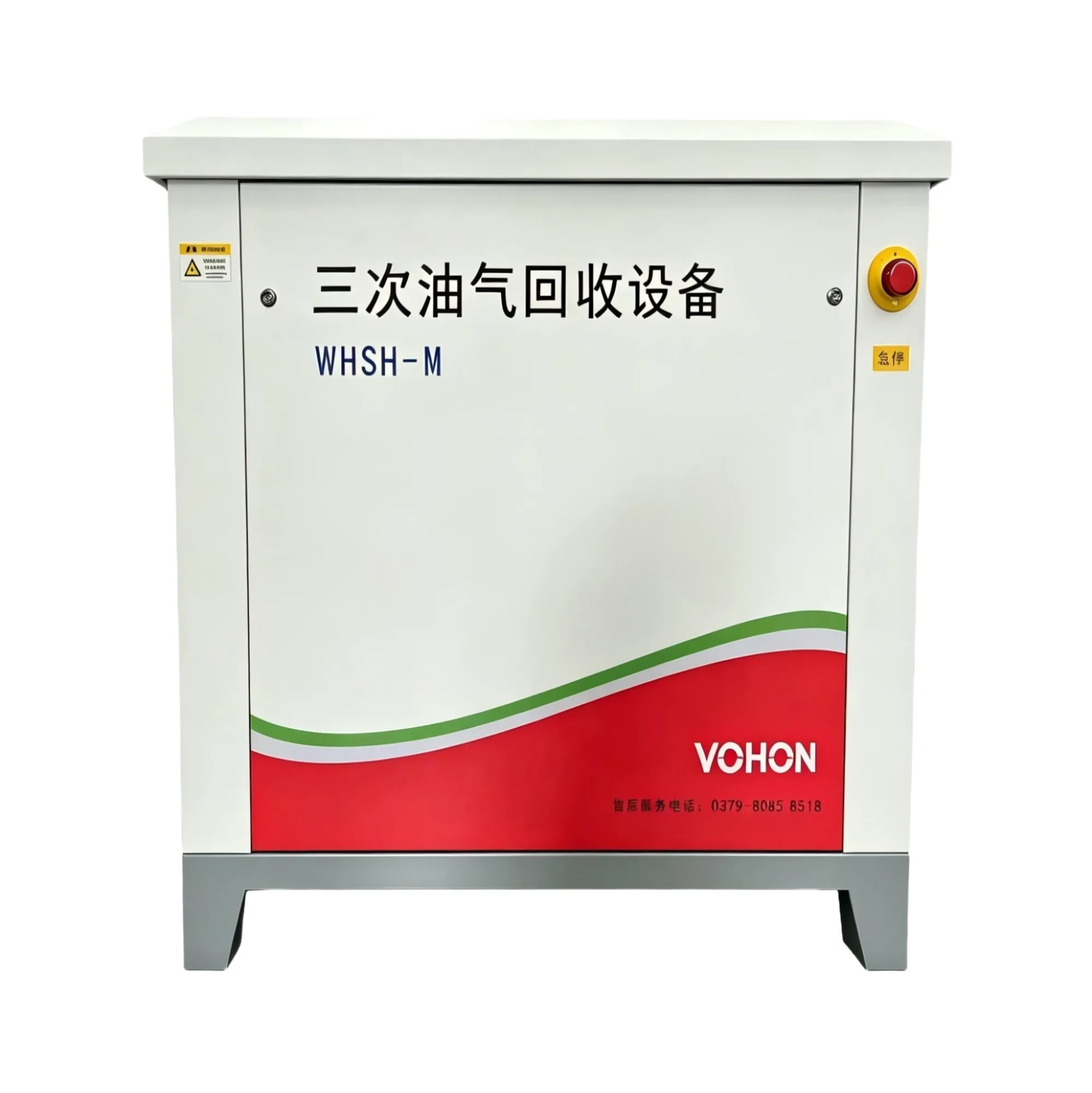
Regarding the electricity bills for the three-time oil and gas recovery equipment, many station managers only have the total amount without details - when they look at the electricity meter numbers at the end of the month, they cannot tell whether it is due to the oil price, sales volume, or equipment issues. In fact, the power consumption structure of the recovery equipment is not complicated: the majority of power consumption is concentrated on power components such as vacuum pumps, while control systems, monitoring instruments, and winter heat tracing only account for a small portion. By breaking down the composition and recording the trend on a monthly basis, electricity bills serve as both a cost account and a barometer of the equipment's health status - any subtle increase in energy consumption often reveals problems earlier than fault alarms. This article breaks down the composition of energy consumption and provides specific practices for energy-saving operation.
Where does the electricity consumed by the equipment go
The first component is the power unit. The vacuum pump (or compressor) plays the core role of extracting oil and gas from the storage tank, and constitutes the majority of electricity costs. Its start-stop strategy and load pattern directly determine the basic electricity bill - for the same amount of oil recovered from a vehicle, the longer the pump runs and the more frequently it starts and stops, the higher the electricity bill. The second component is control and monitoring. The control cabinet and online monitoring instruments are powered all year round, but their power consumption is small and accounts for a limited proportion. The third component is seasonal expenses, such as heat tracing and insulation in winter, and heat dissipation and ventilation in summer, which fluctuate with the seasons.
There is another aspect that is easily overlooked: the hidden electricity consumption caused by equipment aging. Increased pipeline resistance, aging seals, and fouling of heat exchange components all lead to a longer time required to "achieve the same recovery volume" - even though the equipment is not broken, its output is quietly decreasing, and electricity bills are rising first. This is why it is recommended to record electricity consumption as operational data.
Six practices for energy-saving operation
- Check the operation mode: Set the start-stop strategy based on the refueling volume and unloading pace within the station to avoid long periods of idle standby;
- Record electricity consumption on a monthly basis: For the electricity usage data of individual recycling equipment, when there is a sudden change in month-on-month comparison, first check the equipment and then consider the electricity price factor;
- Maintain smooth flow in the pipeline: Regularly check the resistance of the recovery pipeline, pay attention to the valve opening, and the cleanliness of the filter element and heat exchange components;
- Replace seals on schedule: The most intuitive sign of a decrease in pumping efficiency is an increase in the operating time required to achieve the same recovery volume;
- Seasonal load control as needed: heating is activated as needed in winter, rather than operating at full load all day long;
- Conduct energy efficiency review after maintenance: After major maintenance or component replacement, compare the operating time and power consumption changes under the same working conditions to confirm the effectiveness of the maintenance.
| energy consumption composition | Main influencing factors | Practices that can be optimized |
|---|---|---|
| Power components (vacuum pumps, etc.) | Start-stop strategy, load mode, sealing and pipeline status | Set a reasonable start-stop rhythm and replace seals on schedule |
| Control and monitoring | Perennially charged, with low power | Check the equipment configuration to avoid redundant normally open circuits |
| Seasonal expenses (heat tracing and heat dissipation) | Fluctuate with the seasons | Turn on as needed, not at full capacity all day long |
| Hidden power consumption (aging degradation) | Pipeline resistance, fouling of heat exchange components | Regular inspection and cleaning, and energy efficiency review after maintenance |
| Electricity Consumption Record | Is the data retained on a monthly basis | Incorporate into the ledger, and compare on a month-on-month and quarter-on-quarter basis |
Observing equipment status from electricity bill trends
By comparing the electricity consumption of equipment over several consecutive months, insights can be gleaned that are not apparent from the report: if electricity consumption increases gradually while sales remain stable, it is likely that there is degradation in pipeline resistance or sealing efficiency; if there is a sharp increase in electricity consumption accompanied by frequent starts and stops, it is necessary to check the control parameters and sensors; if electricity consumption decreases but recovery does not meet standards, it may be due to internal leakage issues with the pump - the electricity saved is not due to efficiency, but rather to the equipment not working. The station master does not need to understand the internal structure of the equipment, as long as they consistently record monthly and compare quarterly, they can send the equipment for maintenance before a fault occurs. During after-sales inspections, providing this curve to service personnel can also help narrow down the direction of investigation more quickly. Equipment manufacturers should include energy efficiency verification as a standard item in their annual inspections, and provide the station with a comparison record of operating time and electricity consumption.
Frequently Asked Questions
The electricity bill is higher than last month. How can I determine if it's due to a problem with the equipment?
First, let's rule out two external factors: season (electricity consumption will increase due to heat tracing in winter and heat dissipation in summer) and sales volume (if fueling volume increases, the recovery volume will naturally increase). If the consumption remains high after excluding these factors, focus on whether the operation time has lengthened and whether the start-stop frequency has increased. These two abnormalities often indicate increased pipeline resistance or decreased sealing efficiency. It is recommended to arrange a test, rather than waiting for a fault alarm to occur before taking action.
Are there significant differences in power consumption characteristics among equipment used in different process routes?
The difference lies in the main power consumption components: equipment primarily relying on suction concentrates its power consumption on vacuum pumps, while condensation equipment focuses on refrigeration units. For membrane separation equipment, both pumps and fans are equally important. The common point that station masters need to remember is that regardless of the approach, ineffective operation time is a major waste of electricity. Proper start-stop strategies can yield immediate energy-saving effects.
Should electricity consumption data be recorded in the ledger?
Suggested note: It belongs to operational data, and one entry per month is sufficient, with almost zero cost. Looking at just one month is meaningless; only by looking at consecutive months can we see the trend value. For stations with well-developed ledger informatization, electricity consumption and online monitoring data can be directly compared in a single table, making equipment status clear at a glance.
This article is compiled by Luoyang Wohong Petrochemical Equipment Co., Ltd. The company provides design and manufacturing, skid-mounted customization, installation and commissioning, as well as after-sales operation and maintenance services for three-time oil and gas recovery equipment to gas stations and oil depots. If you need on-site inspection or scheme configuration, please feel free to contact us for discussion.