Do diesel gas stations also need to install vapor recovery systems? Straight answer: The regulatory criteria depend on the station type, scale, and local requirements, not just the type of fuel. Diesel stations that meet the scale are also within the installation scope; the real difference lies in the amount of vapor generated - diesel has low vapor pressure and small evaporation volume, and the value of the recovered fuel is also low. Therefore, the scale and configuration of the device can be simpler than that of gasoline stations, but whether to install it depends on the station, not the fuel type in a one-size-fits-all manner. Before renovation, it is more reliable to compare the station type, fuel structure, annual sales volume, and local regulations one by one, rather than relying on the experience judgment that diesel does not need to be installed. This article clarifies the determination criteria and configuration differences at once.
Which diesel stations are within the installation scope
The first priority in determination is local requirements and station type and scale: The installation thresholds for oil and gas recovery at gas stations are set by regions based on annual gasoline sales volume or oil storage scale. Diesel-gasoline hybrid stations are usually benchmarked against the gasoline volume within the station, while pure diesel stations are subject to local detailed regulations and extended requirements for projects in the reservoir area. The second priority is scenario spillover: Volatilized hydrocarbons from diesel storage tank areas, departure platforms, and diesel loading and unloading processes in combined stations are also included in the scope of VOCs management. Such projects are managed according to industrial emission source standards, which are separate from the retail standards for gas stations. If the station itself cannot determine the boundaries, it is more cost-effective to submit the information to the local management department for clarification rather than rework later.
Differences in vapor characteristics between diesel and gasoline
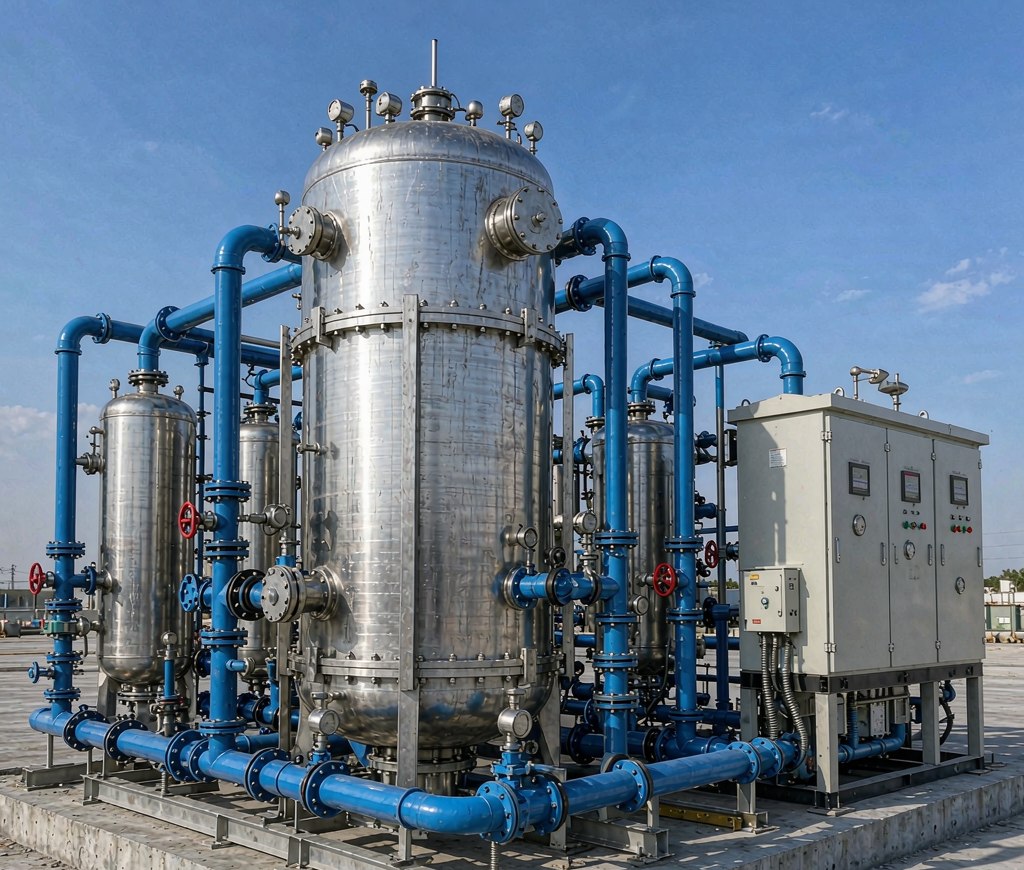
The difference between diesel and gasoline lies primarily in their volatility: gasoline fractions are light with high vapor pressure, resulting in significant evaporation during loading, unloading, and refueling processes. This high vapor concentration leads to a high recovery value. On the other hand, diesel fractions are heavy with low vapor pressure, causing much less evaporation at the same temperature and resulting in lower vapor phase concentration. This lower concentration directly affects economic efficiency: for the same set of equipment, less oil is recovered from diesel vapor, leading to a longer recovery period. Additionally, diesel has a wide composition range and a high freezing point, making it prone to condensation of heavy components in the vapor phase when exposed to cold. Therefore, considerations for preventing condensation and blockage are necessary for pipelines and heat exchange surfaces. These physical property differences determine that the selection of equipment, temperature zone settings, and material considerations for diesel stations differ from those for gasoline stations. Copying the drawings of gasoline stations often leads to issues such as over-engineering or frequent pipeline blockages in winter.
Where can the configuration of diesel stations be simplified
The first aspect that can be simplified is scale: based on the production volume of oil and gas, the processing capacity is usually one level smaller than that of a gasoline station of the same scale, and the skid-mounted size and land occupation decrease accordingly. The second is temperature zone: gasoline stations often adopt deep cooling or condensation plus membrane configurations to maintain efficiency, while diesel stations can often be covered by condensation plus adsorption in many cases. Whether to retain the membrane section depends on emission requirements and measured concentrations, and there is no need to follow suit. The third is disposal of recovered liquid: gasoline recovered liquid is directly returned to the tank for sale, while diesel recovered liquid, due to its small volume, is reused or disposed of through agreed channels, with separate accounting entries. What cannot be simplified is safety and monitoring: diesel is still a flammable liquid, and explosion-proof electrical equipment, electrostatic grounding, and concentration monitoring are all essential, with the difference being in scale rather than availability.
The difference between operation and detection
The focus of operation at the diesel station is shifted forward: while the gasoline station focuses on the gas-liquid ratio and nozzle recovery, the diesel station pays more attention to tank breathing and loading/unloading tightness. The recovery gains at the nozzle are limited, and the device load mainly comes from the two links of breathing and loading/unloading. The inspection side follows local requirements, and the project list for acceptance and periodic inspection is subject to local standards. During renovation, the inspection interfaces should be reserved well, so that there is no need for secondary hot work during the later installation of online monitoring. Winter is a common challenge for both station types: diesel has a high freezing point, and the standards for pipeline tracing and low-point condensate drainage are stricter than those for gasoline stations. Condensate blockage occurs earlier in the diesel system, and pre-winter purging and tracing confirmation should be included in the maintenance plan.
Decision checklist before transformation
| Comparison item | Gas station | Diesel station |
|---|---|---|
| Volatilization and concentration | Large, high concentration | Small and low concentration |
| Recycling value | The condensate can be directly reused and sold | Small quantity, recycled and disposed according to specific channels |
| Process Route | Condensation film formation or cryogenic efficiency retention | Condensation plus adsorption can cover more |
| Plant scale | Determined by gas-liquid ratio and oil filling volume | Usually a small size |
| Anti-condensation requirements | Conventional heat tracing | High condensation point, stricter condensate drainage |
| Monitor safety | Complete explosion-proof concentration monitoring | Same configuration, only different in scale |
Decision steps
- Confirm whether it is within the installation scope according to the station type and local regulations;
- Calculate the production volume and concentration data of oil and gas within the station;
- Determine the process route and temperature zone based on the concentration level;
- Determine the skid-mounted size and land occupation based on the processing capacity;
- Reserved detection and online monitoring interfaces;
- The winter anti-condensation and tracing systems are designed in place together.
Frequently Asked Questions
Do pure diesel stations really not need to be installed?
We cannot just brush over it with the phrase "no need to install": First, we need to look at the local rules and regulations regarding the design and scale of the station. Then, we need to check if there are diesel loading and unloading processes and tank breathing links within the station. Scenarios such as storage areas and combined stations are basically within the scope of governance. If in doubt, consult the local management department. The confirmation cost before renovation is much lower than retrofitting afterwards.
Can the drawings of a gasoline station be directly applied to the diesel station equipment?
It is not recommended to directly copy: The processing capacity will be underestimated if calculated based on the volatility of diesel, and the temperature range and anti-condensation approach are also different; drawings can be borrowed, but parameters must be recalculated according to the physical properties of diesel, otherwise it is easy to overestimate the capacity or be troubled by condensate blockage in winter.
How to determine the configuration of a diesel-gasoline blending station?
Based on the gasoline volume within the station, the installation threshold is benchmarked, and the scale of the device is calculated based on the total oil and gas volume after mixing. The gas-liquid ratio recovery on the gasoline side is configured as usual, while the breathing and loading/unloading on the diesel side are calculated separately in a closed manner. It is a common practice to have multiple interfaces for a single device.
This article is compiled by Luoyang Wohong Petrochemical Equipment Co., Ltd. The company provides design and manufacturing, skid-mounted customization, installation and commissioning, as well as after-sales operation and maintenance services for three-time oil and gas recovery equipment to gas stations and oil depots. If you need on-site inspection or scheme configuration, please feel free to contact us for discussion.