To judge the effectiveness of a set of tertiary oil and gas recovery equipment, the most direct data is not the equipment parameters, but the condensate recovery volume: how much is recovered in a day and whether it matches the input volume. The recovery volume is verifiable, providing a basis for judging the operating status; if the recovery volume is unclear, subsequent maintenance, modification, and effect evaluation lack a fulcrum. Establishing condensate metering and accounting is the least investment and most direct benefit in operation and maintenance.
Where does the condensate come from: first clarify the source
The condensate in the recovery system mainly comes from three sources: the part liquefied on the heat exchange surface of the condensation section, which constitutes the majority of the recovery amount; the part discharged from the low points in the pipeline, which is small in quantity but easily overlooked; and the part separated out from the condensate tank, which may contain water phase or impurities. If these three sources are not recorded separately, the figures on the ledger will only be a total number, and it will be impossible to identify where the problem lies.
Three steps for source sorting
- Register the liquid discharge points at the condensation section, pipeline low points, and condensate tank one by one, and indicate whether there is independent metering;
- Confirm the drainage frequency and operation mode for each location, whether it is continuous drainage or scheduled discharge;
- For points without independent measurement, we should first install simple measurement means before discussing verification.
How to choose a measurement method
The commonly used methods are liquid level measurement and weighing measurement. Liquid level measurement involves adding scales or level gauges to the condensate tank, and converting the volume according to the change in liquid level. This method requires minimal modification and low cost, making it suitable for situations where existing storage tanks are already in place. Weighing measurement involves adding scales under the collection container, providing direct readings and high accuracy. It is suitable for situations where the amount is small but accurate verification is required. The choice depends on the amount of condensate and the requirement for verification accuracy. There is no need to blindly pursue high-precision instruments.
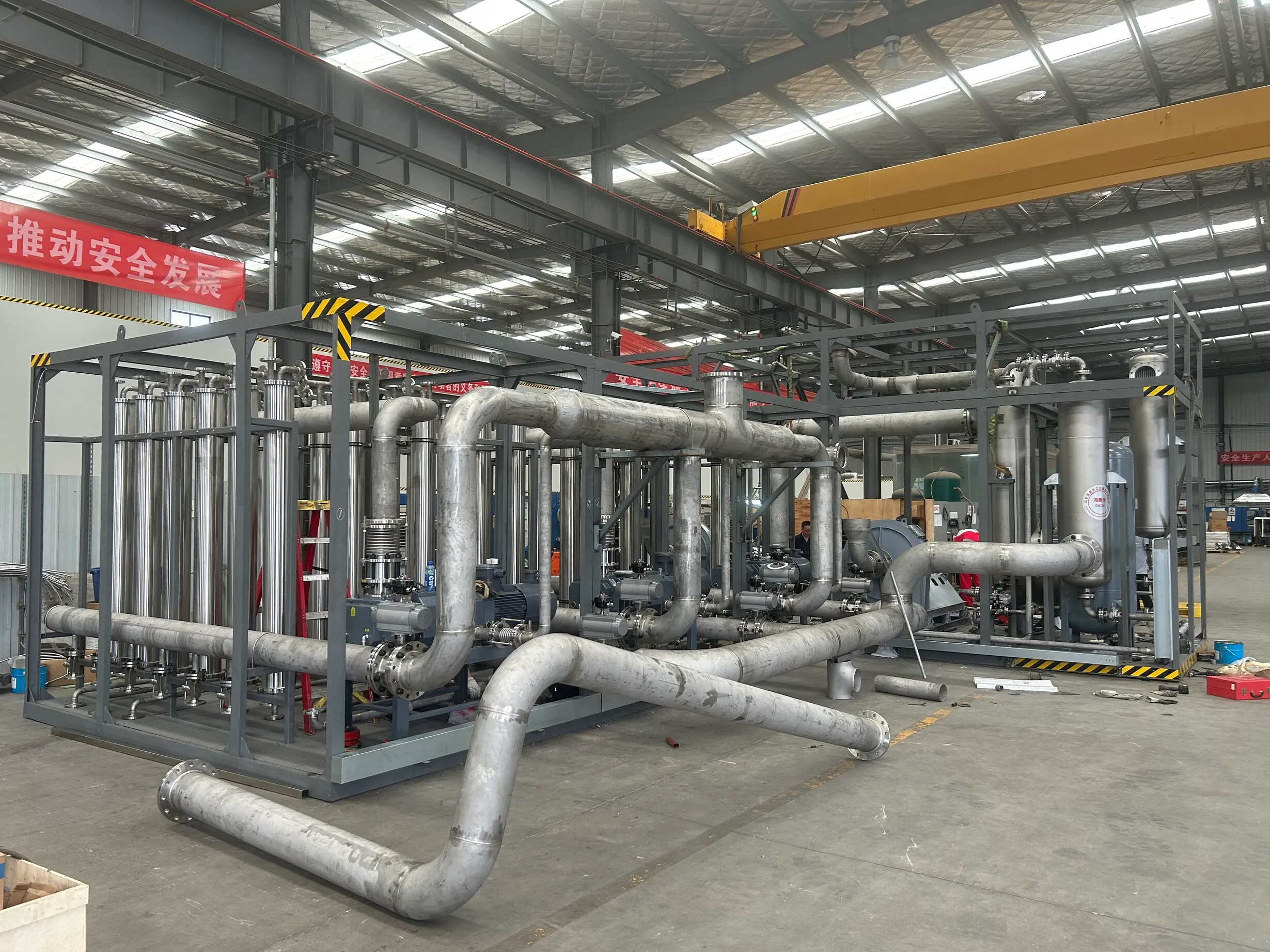
Steps for establishing a ledger
- Determine the recording frequency, whether by shift or by day, and it is advisable to fix the time period to avoid overlapping with the operation period;
- The recorded items include the recycling volume, drainage time, operator, and the amount of material used during the shift;
- Synchronously record operating parameters, such as condensation outlet temperature and system pressure, for comparison in case of abnormalities;
- Summarize by week or month, and plot the trends of recycling volume and usage volume, rather than focusing on single-day figures;
- Conduct a cross-check between the aggregated data and the purchase and requisition records to establish a basic closed-loop system for material balance.
Comparison between recycling quantity and usage quantity
| Comparison item | The recycling volume is stable | Abnormal recycling volume |
|---|---|---|
| Ratio to the amount used | Relatively fixed and predictable | Significantly deviating from the historical range |
| Possible reasons | Running normally | Collect bypass, scaling on heat exchange surface, and metering deviation |
| Processing direction | Maintain the pace of inspection and maintenance | First check the pipeline network and heat exchange surface, then verify the measurement |
| Record key points | Continuous trend | Mark the time period of abnormal occurrence and the operation status |
How to use this ledger during the operation phase
The value of the ledger lies in trends rather than individual points. If the recovery volume continues to decline, first check whether the collection pipe network is bypassed and whether the heat exchange surface is scaled. If the recovery volume suddenly increases, confirm whether it is due to better recovery or changes in the drainage operation. If the recovery volume deviates from the input volume for a long time, it is necessary to go back and verify whether the measurement method itself is accurate. By looking at the ledger and operating parameters together, problem localization will be much faster.
Frequently Asked Questions
Must a flowmeter be used for condensate metering?
Not necessarily. In most cases, liquid level measurement or weighing measurement can meet the verification needs. Whether to install a flowmeter depends on the amount of condensate and the accuracy requirements. The investment should match the actual needs.
How often should the recycling volume ledger be summarized?
Daily records are kept by shift or by day, and weekly and monthly summaries are compiled. The purpose of summarizing is to smooth out daily fluctuations and reveal the true trend.
What should we do if there is a conflict between the ledger and online monitoring data?
Conduct cross-checking based on the actual on-site measurements, first checking the accuracy of the measurement method itself, and then verifying whether the sampling points and conversion methods of online monitoring are consistent with the actual situation.
This article is compiled by Luoyang Wohong Petrochemical Equipment Co., Ltd. The company provides design and manufacturing, skid-mounted customization, installation and commissioning, as well as after-sales operation and maintenance services for three-time oil and gas recovery equipment to gas stations and oil depots. If you need on-site inspection or scheme configuration, please feel free to contact us for discussion.