The breathing control of the tank area often requires the cooperation of two sets of devices: the breathing valve is responsible for allowing the tank to breathe safely when the pressure exceeds the limit, while the nitrogen seal is responsible for suppressing the oil and gas space inside the tank under normal conditions, reducing evaporation and air mixing. If the set values of these two devices are not coordinated, it is easy to encounter a situation where one device acts immediately and the other follows, causing interference. Luoyang Wohong Petrochemical Equipment Co., Ltd. provides supporting services for tank nitrogen seals and breathing valves, configuring the two devices under the same pressure management logic and connecting them with tertiary oil and gas recovery equipment.
What are the respective functions of nitrogen seals and breather valves
The breather valve serves as the final safeguard for tank safety. It opens when pressure or vacuum exceeds limits and should normally remain closed. The nitrogen blanketing system maintains a layer of slightly positive pressure of inert gas in the tank's gas phase space, which not only reduces the escape of oil and gas but also prevents air from entering the tank and forming flammable mixtures, while also reducing corrosion inside the tank. The division of responsibilities between the two is clear: one serves as an emergency relief channel, while the other provides a gas phase protective layer under normal conditions.
Key steps of supporting configuration
- First, confirm the design pressure range of the storage tank, which serves as the benchmark for all set values;
- Determine the nitrogen seal pressure range based on tank capacity and operating conditions, with the pressure setting being lower than the opening value of the breather valve and leaving a margin;
- Analyze the pressure changes within the tank under three states: oil collection, oil dispensing, and standing, and determine the nitrogen sealing and venting strategies;
- Clarify the connection between the breathing port and the recovery system's connecting pipe to avoid competition between the nitrogen seal and the recovery system for the same gas path;
- Equip with complete pressure monitoring and alarm systems, and ensure that adjustments to set values are recorded and traceable.
How to connect with the three-stage oil and gas recovery equipment
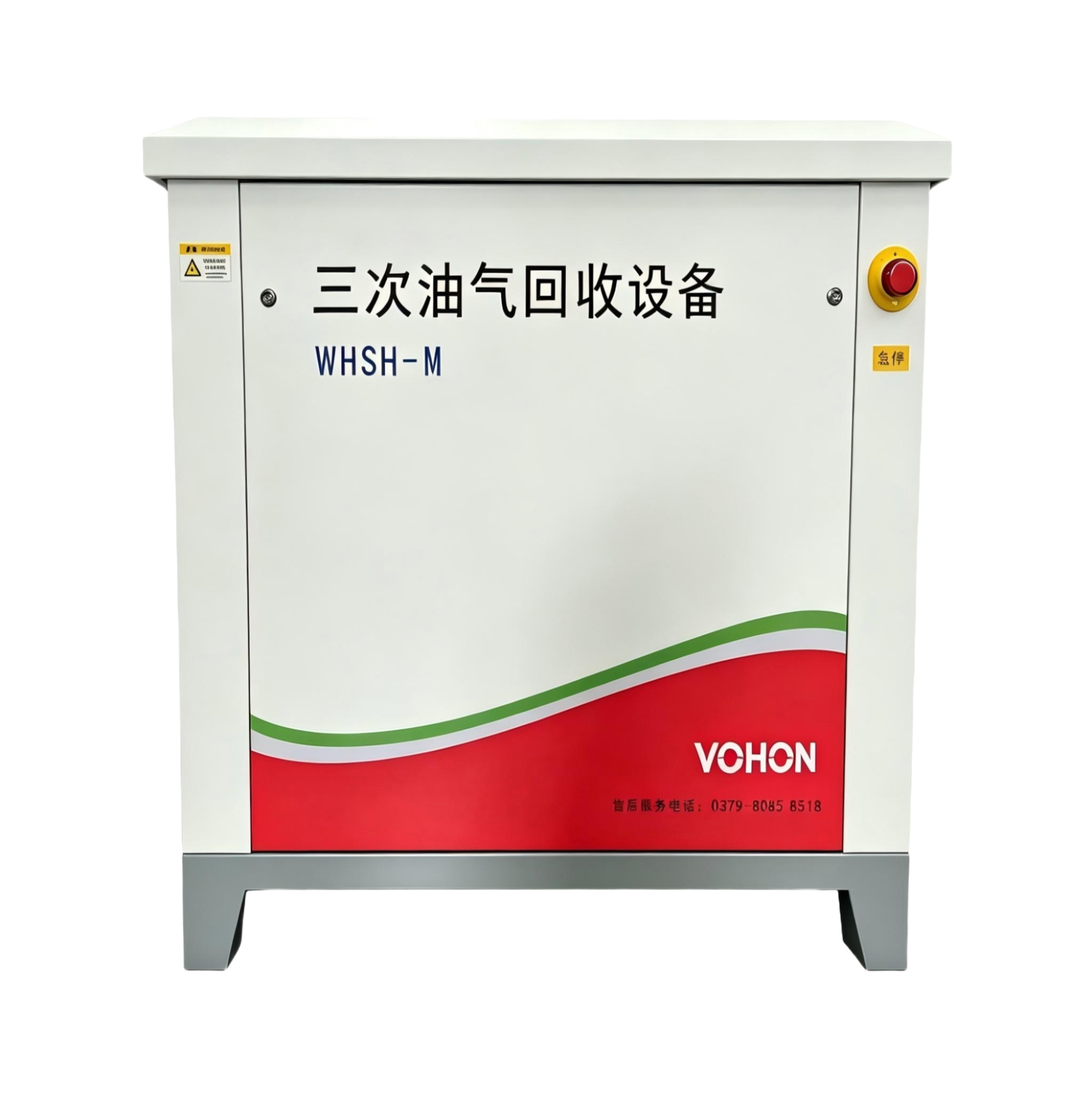
The tank breather is the main gas source for the tertiary oil vapor recovery equipment. After installing a nitrogen seal, the gas phase pressure level inside the tank will change, and the inlet conditions of the recovery system will also change accordingly. Therefore, the two devices must be considered together: the set value of the nitrogen seal pressure determines how much gas the recovery system can extract, and the pumping rhythm of the recovery system will affect the pressure inside the tank, which in turn affects the working state of the nitrogen seal. In the supporting project, Wohong designed the nitrogen seal, breather valve, and recovery system in the same pressure management scheme to avoid separate installations that might interfere with each other after completion.
Differences before and after the supporting facilities
| Comparison item | Before the supporting renovation | After nitrogen sealing is paired with a breather valve |
|---|---|---|
| Breather valve status | Frequent actions, with the set value out of alignment with the system | Set according to the stress management plan, with orderly actions |
| Gas phase inside the tank | Oil and gas easily mix with air | Inert gas protection, with controllable oxygen content |
| Recycling connection | The recovery system and the breather valve compete with each other | The gas path is clearly divided and coordinated with the recovery system |
| Operation Management | No record of set values, adjustments made based on experience | The list of set values is archived, and adjustments are traceable |
Service process and delivery
The service is carried out in the order of on-site inspection, scheme design, equipment matching, installation and commissioning, and training delivery. During the inspection stage, the focus is on verifying the design pressure of the tank body, the status of the existing breather valve, and the connection of the recovery system; during the design stage, a pressure management plan is output, clarifying various setpoints and linkage relationships; construction is arranged as much as possible in conjunction with the tank area maintenance window. The delivery content includes the configuration plan, setpoint list, commissioning records, and operation and maintenance points, so that the personnel on duty can understand the origin and adjustment boundaries of each setpoint.
Frequently Asked Questions
Is it better to set the nitrogen sealing pressure higher?
No. The set value is constrained by the design pressure of the tank. If it is too high, it will reduce the safety margin and affect the gas extraction conditions of the recovery system. It is sufficient to operate within the range determined by the plan.
Having installed three times of oil and gas recovery systems, is nitrogen sealing still necessary?
The two have different functions: the recovery system treats the discharged oil and gas, while the nitrogen seal reduces the escape and mixing with air from the source. Whether to install it depends on the characteristics of the medium, management requirements, and tank conditions. It should be determined after evaluation.
How to prepare the nitrogen blanketing gas source?
The gas source plan and gas consumption are calculated based on tank capacity and operation frequency. On-site gas sources and pressure regulating facilities are provided according to the plan, with specific details to be determined during the plan design phase.
This article is compiled by Luoyang Wohong Petrochemical Equipment Co., Ltd. The company provides design and manufacturing, skid-mounted customization, installation and commissioning, as well as after-sales operation and maintenance services for three-time oil and gas recovery equipment to gas stations and oil depots. If you need on-site inspection or scheme configuration, please feel free to contact us for discussion.