The installation and commissioning of the oil and gas recovery equipment for the third time is the most challenging step in the delivery process: the arrival of the equipment is just the starting point. Only when the basic conditions, interface docking, parameter setting, and linkage confirmation are solidly done item by item, can the device be successfully powered on at one time. The key points of installation and commissioning organization are to make sufficient preparations before arrival, arrange the installation sequence smoothly, and fully arrange the commissioning items.
Based on past delivery experiences, most reworks and delays stem from inadequate preparation: foundations not reaching the required strength, power supplies not being in place, and mismatched interface flange sizes. These issues are not technical challenges but rather verification issues that can be avoided with a checklist of on-site conditions.
What conditions must be met before arriving
Check the conditions for arrival item by item: the location, size, and elevation of the equipment foundation should be rechecked according to the drawings, and the concrete should reach the strength allowed for installation; the capacity, circuit, and contacts of the power supply should be available; the specifications of the interface flanges with the storage tank, oil unloading point, and discharge port should be checked; the lifting channel and equipment placement route should be unobstructed. The checklist should be sent to the station party for confirmation item by item before shipment, and both parties should jointly review it again after arrival before unpacking.
For construction during the rainy season and winter, environmental conditions must also be taken into account: rainproof measures, wind protection for welding areas, and pressure testing arrangements under low temperatures should be included in the plan ahead of time. Don't overlook site lighting and night work arrangements: debugging often drags on until nightfall, and when lighting is insufficient, both reading gauges and monitoring will be compromised.
How to organize the installation process
| link | Main content | Key points of organization |
|---|---|---|
| Unpacking inspection | Check equipment, spare parts, and materials | Unpack after confirming the arrival conditions |
| The equipment is in place | Hoisting, alignment, and foundation fixation | The positioning route and lifting plan should be determined first |
| Pipeline docking | Intake pipe, return pipe, exhaust port | Align the flange, and verify the slope as it is installed |
| Electrical wiring | Control cabinet, sensing and communication | Connect wires according to the diagram and verify each circuit |
| Replacement and pressure test | Pipeline purging and air tightness test | Confirm the pressure test scope and pressure level segment by segment |
| Debugging and power-on | Parameter tuning, linkage confirmation | Carry out each item according to the debugging outline |
The key to the installation sequence table is interleaving: civil engineering completion and unpacking inspection are carried out in parallel, pipeline prefabrication and equipment positioning are carried out in parallel, and electrical wiring is checked before pipeline pressure testing. Daily work completion involves checking progress against the next day's plan, with any discrepancies adjusted on the same day, rather than waiting until the next day.
How to do debugging
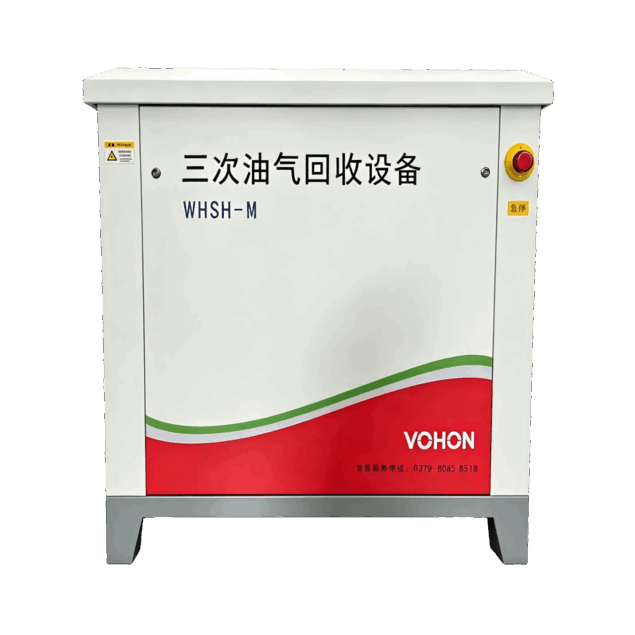
Debugging follows the sequence of standalone operation followed by interconnected operation: confirm the steering, vibration, temperature rise, and control circuits for standalone operation; confirm the start-stop sequence, interlocking, and alarm actions for interconnected operation. Set parameters one by one according to the design values, and record the set values and alarm values for temperature control, pressure, and liquid level separately. During the first on-load operation during debugging, arrange for specially-assigned personnel to monitor, and continuously record the operation data, which will be handed over to the station as a delivery benchmark.
There is another item that is often omitted during debugging: simulation and confirmation of abnormal operating conditions. Simulating power failure recovery, sensor cable detachment, and liquid level exceeding limits, and confirming that the device enters a protective state as expected, can better illustrate the problem than simply starting up under normal operating conditions.
How does the delivery process work
- Confirm the list of conditions for arrival item by item, and open the box after both parties sign and confirm;
- Proceed according to the installation sequence table, and verify the pipeline slope and joint sealing as they are installed;
- After the completion of pressure testing and replacement, proceed to commissioning, and confirm and record each item according to the commissioning outline;
- Confirm the simulation of abnormal operating conditions, ensuring that the interlocking and alarm actions are in place item by item;
- Conduct continuous observation during on-load trial operation, and organize the data as the benchmark for delivery;
- Hand over materials and conduct operational disclosure, clarifying after-sales contact and response arrangements.
Frequently Asked Questions
How many days does it usually take for installation and debugging?
When the conditions for the arrival of conventional skid-mounted equipment are met, the installation and commissioning process usually takes three to five days. Waiting due to unmet conditions often takes longer than the installation itself, which is why it is important to adhere to the arrival condition checklist.
What does the station need to cooperate with?
The main tasks involve preparation for on-site conditions and collaboration during the commissioning period: ensuring the availability of power supplies and interfaces, coordinating with lifting operations, and providing on-site supervision during the trial run. Both parties should clearly define their responsibilities at the kick-off meeting to avoid any confusion or delays upon arrival on site.
Should the data station be retained for debugging?
Yes. The delivered benchmark data serves as a reference for judging device state drift in the future. When troubleshooting after one or two years of operation, the first thing to do is to compare it with the delivered benchmark. During data handover, the commissioning records must be included as a required item.
This article is compiled by Luoyang Wohong Petrochemical Equipment Co., Ltd. The company provides design and manufacturing, skid-mounted customization, installation and commissioning, as well as after-sales operation and maintenance services for three-time oil and gas recovery equipment to gas stations and oil depots. If you need on-site inspection or scheme configuration, please feel free to contact us for discussion.