Most malfunctions of gas station oil and gas recovery equipment are not sudden failures: there are signs of wear and tear on hoses, air leaks at connections, and abnormal liquid resistance beforehand. Daily inspections are to identify these signs before they turn into malfunctions. The core of inspection scheduling lies in project selection: too many projects make it impossible to cover them all, while too few projects fail to achieve the desired effect. It is more practical to focus on a few key projects and inspect them thoroughly than to cover everything comprehensively.
The division of labor between inspection and testing should be clearly defined: testing relies on instruments to speak based on a cycle, while inspection relies on eyes, nose, and simple techniques to be done daily. Hidden dangers that cannot be detected by inspection should be handed over to testing, and faults that can be prevented by inspection should not be left to testing. The two lines of defense should each manage their own responsibilities.
What is the purpose of inspection
The project is based on high-risk failure points: the appearance and connectors of coaxial hoses - wear, collapse, and looseness are the primary reasons for decreased return air volume; various connection ports and flanges - apply leak detection liquid to observe bubbles, covering oil discharge ports, return air ports, and pipeline interfaces; control cabinet and display - check for abnormal changes in alarm information, operation indicators, and data; low points and discharge points of pipelines - check whether fluid accumulation discharge is normal; breather valve ports - check for foreign objects blocking or freezing.
The judgment of oil and gas smells can also be considered as a task: if a strong gasoline smell is detected within the station while the equipment is operating normally, this itself is a clue. Following the smell to locate the source is much faster than checking item by item according to the schedule.
How to determine the frequency and division of labor
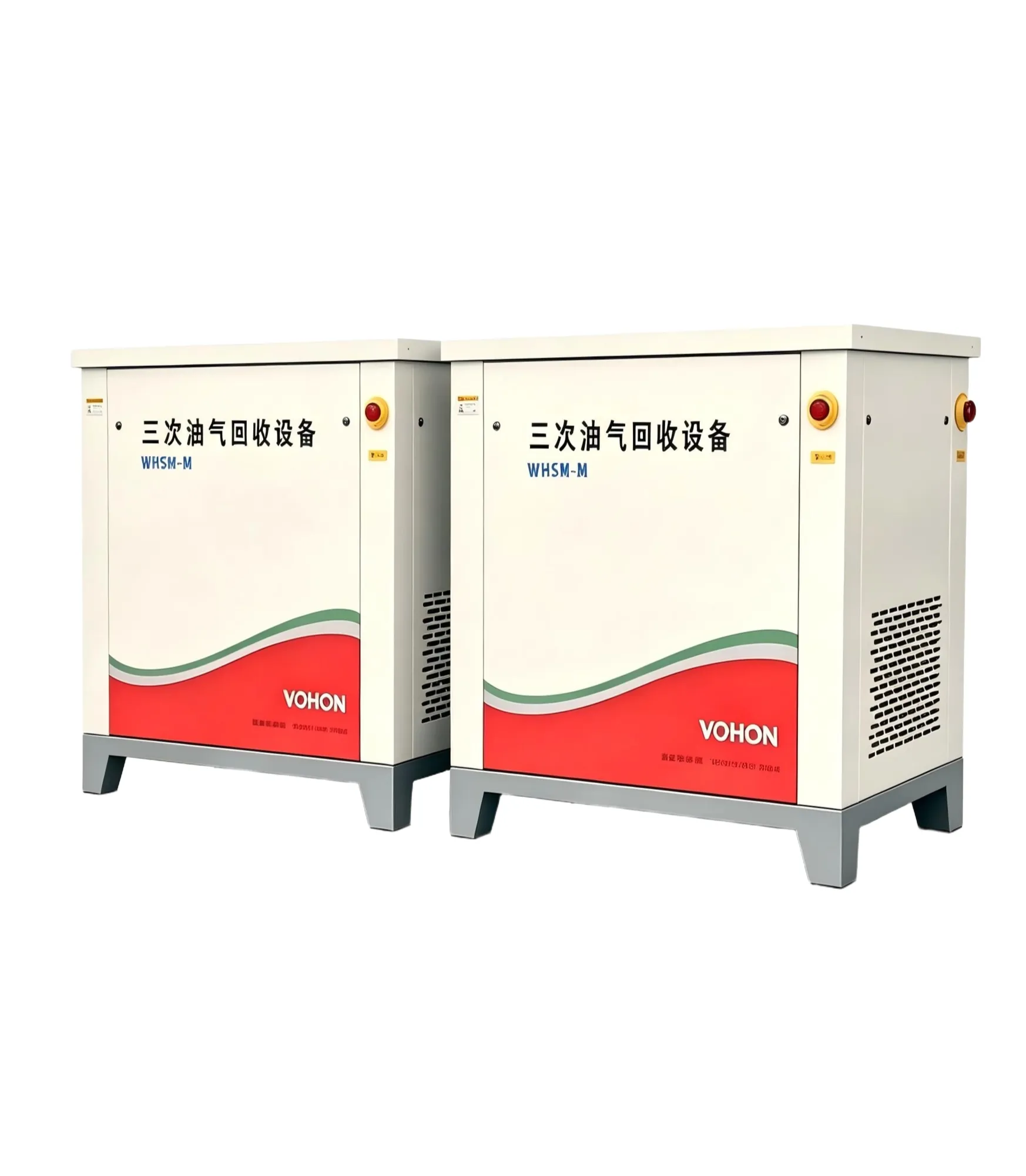
There are two levels of patrols: shift patrols and weekly patrols. Shift patrols are assigned to on-duty employees, with three to five tasks to be completed during the shift change in two minutes. Weekly patrols are assigned to station managers or equipment personnel, with more comprehensive tasks, including leak detection and flashlight inspection, to be completed within half an hour. The frequency is not necessarily the more the better; effective patrols are those that can be consistently carried out.
For sites outsourced for operation and maintenance, the inspection is divided between the site owner and the operation and maintenance provider: the site owner conducts routine patrol and maintenance, while the operation and maintenance provider conducts professional inspections on a periodic basis. Both parties record and mutually acknowledge each other's work to avoid misunderstandings that one party is conducting an inspection.
How to design a record sheet
| inspection item | inspection method | exception handling |
|---|---|---|
| Coaxial hose | Visual wear and tear, and crushing when pinched by hand | Request for repair and replacement |
| Connector flange | Apply leak detection liquid and observe for bubbles | Tighten or replace the gasket |
| Control display | Observe the alarm and data trends | Record and report |
| Low emissions | Open the discharge valve to observe the liquid | Abnormal and intensive discharge of fluid accumulation |
| breathing valve port | Visual foreign objects and freezing | Clean or defrost |
| Oil smell | In-station olfactory positioning | Smooth taste inspection for leaks |
The principle of record sheet design is to ensure quick ticking and clear writing of anomalies: tick off normal items, write the location and phenomenon of abnormal items, and backfill the handling results. The header is arranged according to the inspection route, following a straight line from the refueling area to the unloading point, without turning back and forth. The value of records lies in comparison - if similar anomalies occur at the same location several times in a row, it is a signal that maintenance is needed, which is much more useful than a single record.
How to implement inspection
- Conduct a thorough inspection of the on-site equipment, identify inspection items based on high-risk failure points, and compile a checklist for this station;
- The scheduling is divided into two levels: daily patrol and weekly patrol, with the projects and routes fixed on a schedule;
- The record sheet should be placed in a visible place during shift handover, and any abnormal items should be addressed or reported on the same day;
- Summarize records monthly, and schedule maintenance for recurring anomalies;
- Compare the inspection data with the inspection records, verify the effectiveness of the inspection items, and make adjustments on a quarterly basis;
- Update inspection priorities during seasonal transitions, adding items such as rain and lightning protection in summer, and anti-freezing and anti-skid measures in winter.
Frequently Asked Questions
What if the class patrol is too busy to persist?
Reduce the number of routine inspection items to two or three, and integrate them into the shift handover process. For example, take a quick look at the hoses and alarms before handing over the shift. The effectiveness of routine inspection lies not in the quantity, but in the thoroughness of the few items that are done every day.
During the inspection, we found some air leakage. Can you tighten it yourself?
Simple fastening can be done, but records should be kept; if there is still leakage after tightening, or if it is unclear whether it should be moved or not, stop and report for repair. Do not handle leakage at pressurized parts and near electrical equipment on your own.
Should the record sheet be electronic?
Observe the station's habits. Paper charts are most intuitive when hung in the shift change room, while electronic charts facilitate data aggregation. The key is to be able to trace and compare anomalies, with formality being secondary.
This article is compiled by Luoyang Wohong Petrochemical Equipment Co., Ltd. The company provides design and manufacturing, skid-mounted customization, installation and commissioning, as well as after-sales operation and maintenance services for three-time oil and gas recovery equipment to gas stations and oil depots. If you need on-site inspection or scheme configuration, please feel free to contact us for discussion.