The gas-liquid ratio of the fuel dispenser is the core indicator of secondary vapor recovery: it reflects whether vapor recovery is synchronized by comparing the ratio of the gas return volume to the fuel dispensed through the nozzle. If the gas-liquid ratio exceeds the allowable range, it indicates a mismatch between the gas return volume and the fuel dispensed: when it is too high, excessive gas is drawn from the tank space, and when it is too low, the vapor generated during refueling is not fully collected and escapes into the atmosphere. After detecting an out-of-limit value, adjustments should be made in order, starting with identifying the cause before operating the valve components.
Many stations tend to adjust the valve first when they see the readings exceed the standard. While the adjustments may make the readings appear to be within the standard range at the time, they often drift back up after a while. The reason is likely not the valve itself: upstream issues such as air leaks in the pipeline, damaged hoses, and water accumulation in the return pipe have not been resolved, and no matter how the valve is adjusted, it cannot be stabilized. The core of the adjustment process is to first clarify the mechanical status and then adjust the components.
Common reasons for exceeding standards
The common reasons for insufficient return air volume are mainly concentrated in three areas: damage or collapse of the return air core tube of the coaxial hose, deviation in the operation of the centralized recovery pump, and blockage of the return air port on the gun head. The common reasons for excessive return air volume are: high vacuum setting of the decentralized pump, spring fatigue or setting drift of the regulating valve, and excessive suction force of the back-end processing device causing reverse driving.
There is another category of reasons related to the interface between the nozzle and the vehicle: the compatibility differences between the fuel nozzle and different vehicle models, and the obstruction of the air return port caused by the nozzle insertion angle. The discrepancy between the standard test barrel used for testing and actual refueling also falls into this category. When troubleshooting, after ruling out equipment reasons, consider operational and compatibility factors.
What should I check before making adjustments
| Check Items | Corresponding fault manifestation | Handling method |
|---|---|---|
| Coaxial hose | The return air volume remains consistently low | Replace the hose and check the joint seal |
| Centralized recovery pump | The overall size of multiple guns is relatively small | Check the operating parameters and rotation direction of the pump |
| Control valve | Individual gun deviation | Reset or replace the valve core |
| Return air inlet filter screen | Small and fluctuating | Clean or replace the filter screen |
| Pipeline sealing | Oil unloading port and flange are leaking gas | After leak detection, tighten or replace the gasket |
| Processing device side | Fluctuations in readings across the entire station | Check the setting of the vacuum assist port |
The order of inspection and adjustment cannot be reversed: when mechanical reasons exist, adjusting the valve is to temporarily suppress the deviation rather than eliminate it. The tools used for troubleshooting are not many: a spare hose, leak detector, and multimeter. Most deviations can be located with these three tools. Troubleshoot first and then adjust, so that the adjusted state can be stabilized.
How do I adjust it?
Valve adjustments are performed after the mechanical status has been confirmed: Each gun is measured individually according to the inspection procedure. Guns with deviations are adjusted separately, while those that are qualified remain unchanged. The adjustment of the regulating valve should be done in small steps, with each adjustment being followed by a measurement. The adjustment should be made to the mid-range position within the allowable range, rather than close to the edge. Guns in the edge state will drift out of range after a short period of time.
After adjustment, the next step is to conduct a review: retest all guns on the same day, and then conduct a spot test a week later to confirm stability. The adjustment record should clearly state the gun number, readings before and after adjustment, and the content of the adjustment. This record will serve as a basis for determining the cause of drift in case of any issues detected during the next inspection.
How to go through the adjustment process
- Call up recent testing data to confirm the gun positions that exceed the standard and the direction of the deviation;
- Check the sealing of hoses, pumps, filters, and pipelines according to the direction of deviation, and first eliminate mechanical causes;
- After addressing the mechanical issues, conduct a retest. If the results are still out of specification, adjust the valve;
- Make small adjustments and measure each time, then lock it when it reaches the mid-range of the allowable range;
- The entire gun underwent retesting on the same day, and a spot test was conducted a week later to confirm its stability;
- Archive the adjustment records and compare them with the next set of detection data to observe any drift.
Frequently Asked Questions
The gas-liquid ratio varies from test to test. Which result should be taken as the standard?
The average value of the specified number of times in the procedure shall prevail. Single fluctuations are commonly seen in test operations and vehicle adaptation differences. Only when the average value consistently leans towards one side does it indicate a substantial deviation in the system.
It only skews during peak refueling periods, and is normal at other times. What's going on?
During peak hours, multiple guns operate simultaneously, leading to a superimposed load on the centralized recovery pump and changes in return gas distribution. It is important to verify whether the pump capacity matches the pipeline resistance. The condition of multiple guns operating simultaneously is often overlooked during model selection.
How often should the regulating valve be rechecked after adjustment?
It is recommended to conduct a spot test within one week after adjustment and then incorporate it into the regular testing cycle. The newly adjusted valve components have a break-in period, and early spot tests can promptly detect any drifts.
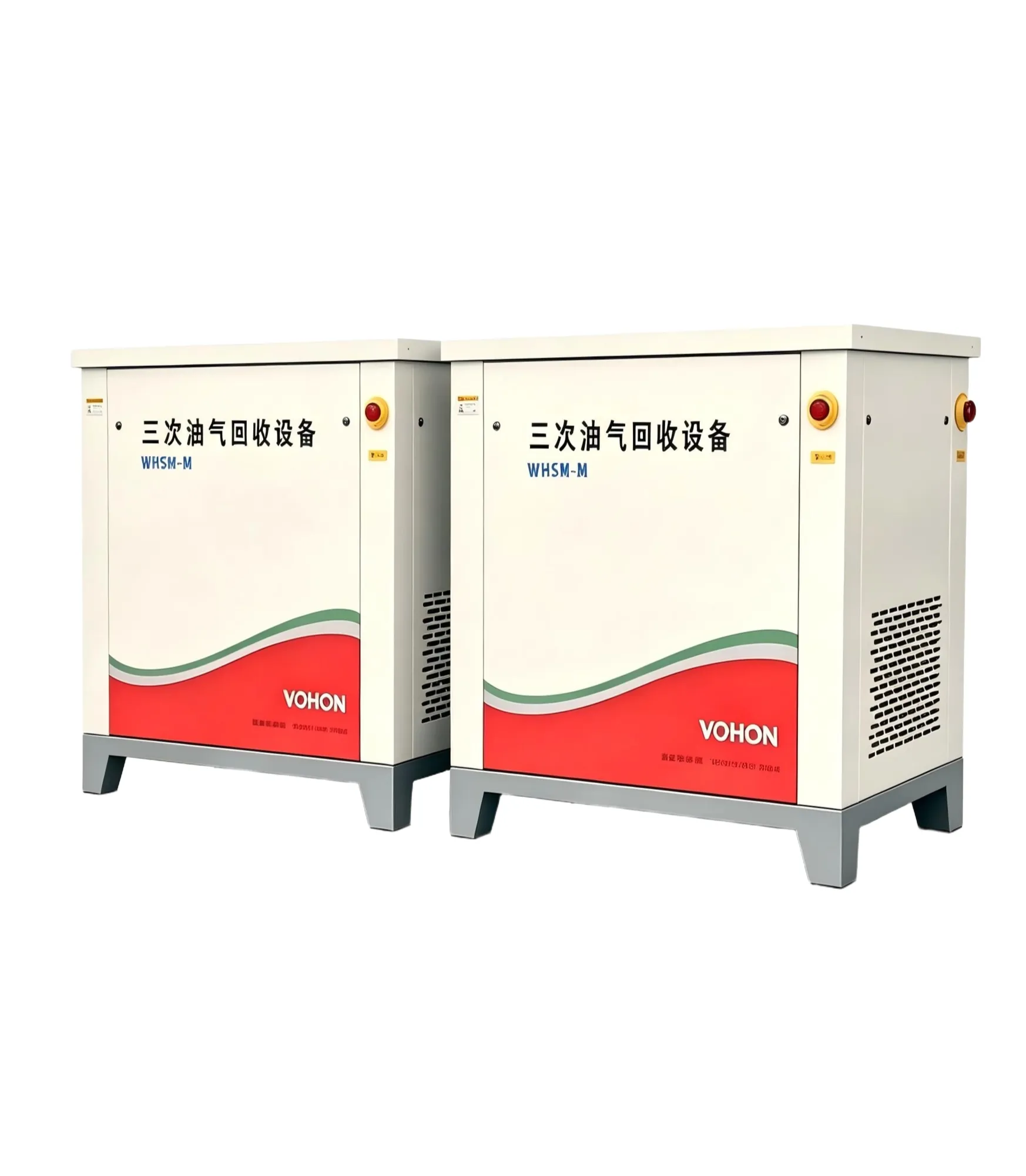
This article is compiled by Luoyang Wohong Petrochemical Equipment Co., Ltd. The company provides design and manufacturing, skid-mounted customization, installation and commissioning, as well as after-sales operation and maintenance services for three-time oil and gas recovery equipment to gas stations and oil depots. If you need on-site inspection or scheme configuration, please feel free to contact us for discussion.