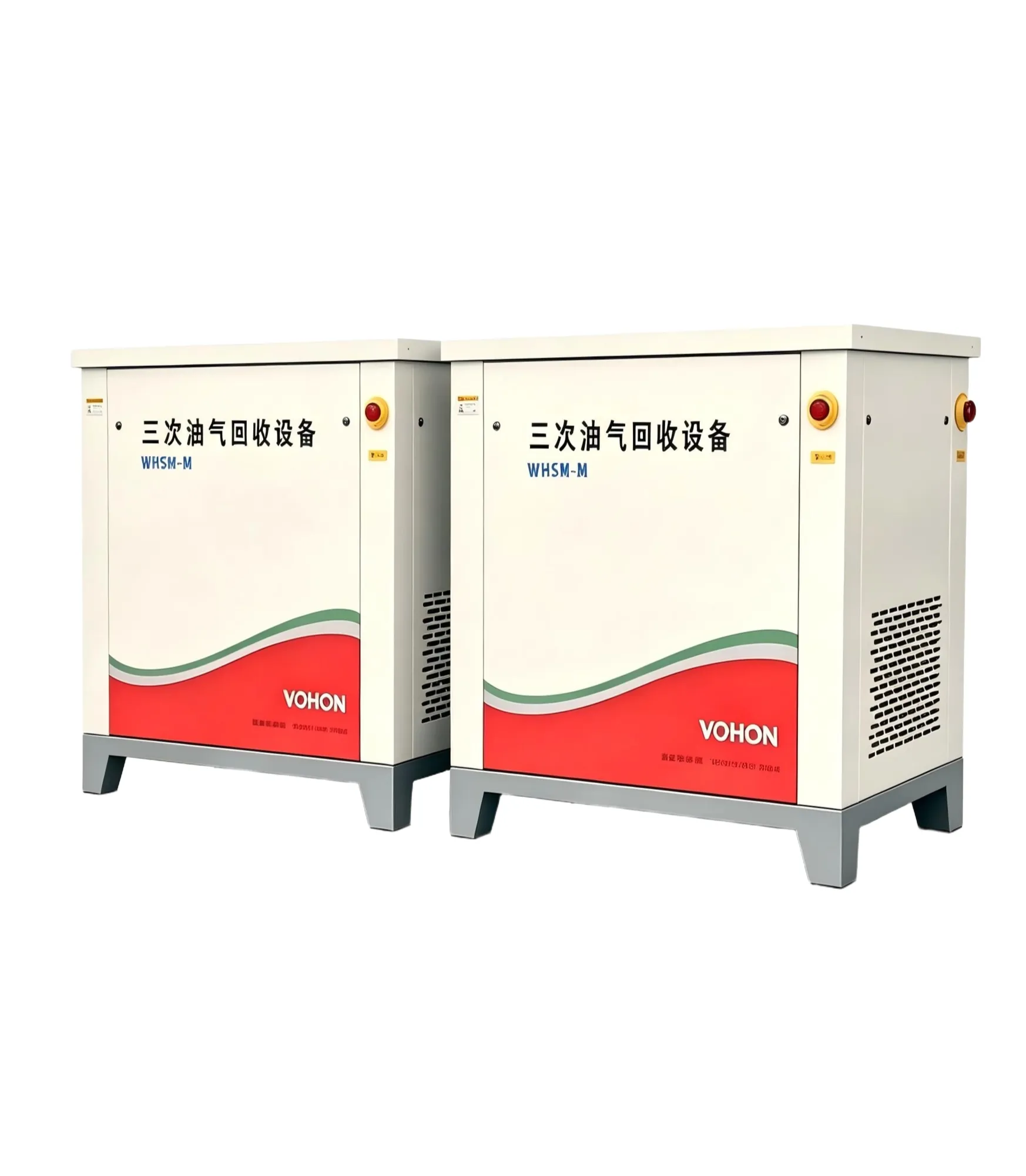
Many station managers are unsure about the electricity bill for operating the oil and gas recovery equipment three times. Some believe that the equipment doesn't consume much electricity, while others fret over the electricity meter during peak usage periods. In fact, there is a pattern to the energy consumption of the equipment - it is mainly spent on vacuum pumps, condensers, and fans, with control valves and instruments accounting for a small proportion. To save electricity, we must first understand where the electricity is being consumed, and then discuss how to save it.
On which components is the energy consumption spent
In the common process routes of three-stage oil and gas recovery devices, power-consuming components can be roughly divided into three categories: first, vacuum pump components, responsible for oil and gas collection and desorption, which are frequently started and have a direct correlation between operating duration and collection volume; second, condensation components, responsible for cooling and liquefying oil and gas, which constitute the bulk of continuous load. The higher the temperature requirement and the greater the processing capacity, the more significant this proportion becomes; third, fan and control components, which have low single-unit power but operate for long periods, and their cumulative impact cannot be ignored.
Process configurations vary across different sites, leading to significant differences in the proportion of three types of components. To gain a clear understanding of the situation at one's own site, the most direct approach is to review the operation records: compare the operating hours and start-stop frequencies of each component, and refer to the time-segment structure of the electricity bill. This will allow for a rough estimation of which part constitutes the main load.
Five steps to understand energy consumption status
- Organize the operation log: List the operation duration, start-stop frequency, and corresponding time periods for each component;
- Compare with electricity tariff structure: Align the equipment operation period with the peak and valley electricity pricing periods to see which period the load falls within;
- Identify high-consumption links: recognize situations of long-term idling, frequent start-stop, and ineffective operation;
- Evaluate adjustable space: Combine the patterns of oil receiving and dispatching operations to determine which time periods can be used for peak shifting or reducing idle time;
- Formulate an adjustment plan: Confirm with the equipment manufacturer that the adjustments will not affect the recycling effect, and then conduct a trial observation.
Where can we start to achieve energy-saving operation
Energy conservation is not just about turning off equipment. The premise is that the recycling effect should not be compromised. There are several common and feasible directions: First, reduce ineffective operation, such as the part of equipment that stands by and idles for a long time during the intermittent period of operation, by optimizing and reducing it through start-stop strategies; second, arrange peak-shaving, and try to arrange the planned processing loads during the low-price electricity period, provided that it does not conflict with the operation system; third, maintain the equipment status, as poor sealing, dirty and blocked heat exchange surfaces, and other status issues will cause the equipment to consume more electricity but perform less work. Periodic maintenance itself is energy conservation.
| Component Category | Energy consumption characteristics | Energy-saving focus |
|---|---|---|
| Vacuum pump components | Frequent start-ups, varying with the amount of collection | Optimize start-stop strategies to reduce ineffective starts and stops |
| Condensation components | Continuous load, accounting for the largest proportion | Keep the heat exchange surface clean and maintain it periodically |
| Fan components | The power is not high but the duration is long | Confirm the air volume demand to avoid long-term full operation |
| Control and instrumentation | It accounts for a very small proportion | Just keep it normal, it's not a key point for energy conservation |
| Overall operation period | Related to peak and valley electricity prices | The planned load can be arranged during the off-peak period |
What should we focus on before and after the adjustment
Any energy-saving adjustments must be made on the premise that the recovery effect does not decline. After adjustments, it is recommended to closely monitor the operation data for a period of time: recovery volume, emission port status, equipment start-stop records, and compare them with the data before adjustments to confirm that the effect has not deteriorated. For adjustments that are uncertain, it is advisable to conduct a small-scale trial in a single time period, observe the results for a round, and then implement them. Maintain communication with the manufacturer, clarify the intention of the adjustments, and the manufacturer can help determine which parameters are suitable for adjustment and which should not be touched.
Frequently Asked Questions
Does the device consume power even when it is in standby mode?
In standby mode, the main power consumption is in the control and instrumentation parts, which accounts for a small proportion. However, if the equipment has frequent self-start-stop or long-term idling, the cumulative power consumption cannot be ignored. It is recommended to verify from the operation log, rather than relying on personal judgment.
Will off-peak operation affect the recycling efficiency?
The recycling operation should follow the oil distribution and receiving operation, and cannot be arbitrarily shifted for the sake of electricity pricing. Planned processing loads can be arranged during off-peak periods under institutional permission, while operation-driven collection loads should be based on the actual operation needs. The two should be treated separately.
Should we carry out energy-saving renovation?
First, exhaust the space for operational strategies and management, and then assess the necessity of hardware modification. The energy savings brought by maintaining equipment status in place are often underestimated. Before making modification decisions, rely on operational data.
This article is compiled by Luoyang Wohong Petrochemical Equipment Co., Ltd. The company provides design and manufacturing, skid-mounted customization, installation and commissioning, as well as after-sales operation and maintenance services for three-time oil and gas recovery equipment to gas stations and oil depots. If you need on-site inspection or scheme configuration, please feel free to contact us for discussion.