What does daily maintenance for oil and gas recovery equipment involve? How often should it be inspected? Straight answer: Daily maintenance is divided into three levels - checking the operating status and pressure curve daily, inspecting the seals, joints, and filter screen pressure difference weekly, and cleaning the filter screen, draining and discharging sewage, and tightening key parts monthly; the inspection cycle is carried out according to local regulatory requirements, with most regions requiring an inspection once a year, and additional acceptance inspection after the device is put into operation and modified. Maintenance is not "fixing when it breaks". The three-stage recovery device operates in an oil and gas environment for a long time, and small hidden dangers can lead to downtime and excessive emissions. This article lists the specific actions and inspection arrangements for each level of maintenance, which can be directly followed and implemented by the station.
What do you watch every day
The daily inspection primarily involves "visual inspection", which can be completed in two to three minutes: inspecting the device's operation indicator lights and current status, and ensuring normal operation during the oil unloading period; checking the tank pressure and emission concentration readings on the control cabinet, and looking for any abnormal spikes in the curve; inspecting the emission outlet and breathing pipe connections for any traces of oil or unusual odor. If the operating status is abnormal, first check if there has been a recent power outage, oil unloading operation, or filter blockage. Most abnormalities have clear indicators, so don't immediately suspect equipment failure.
What to check weekly
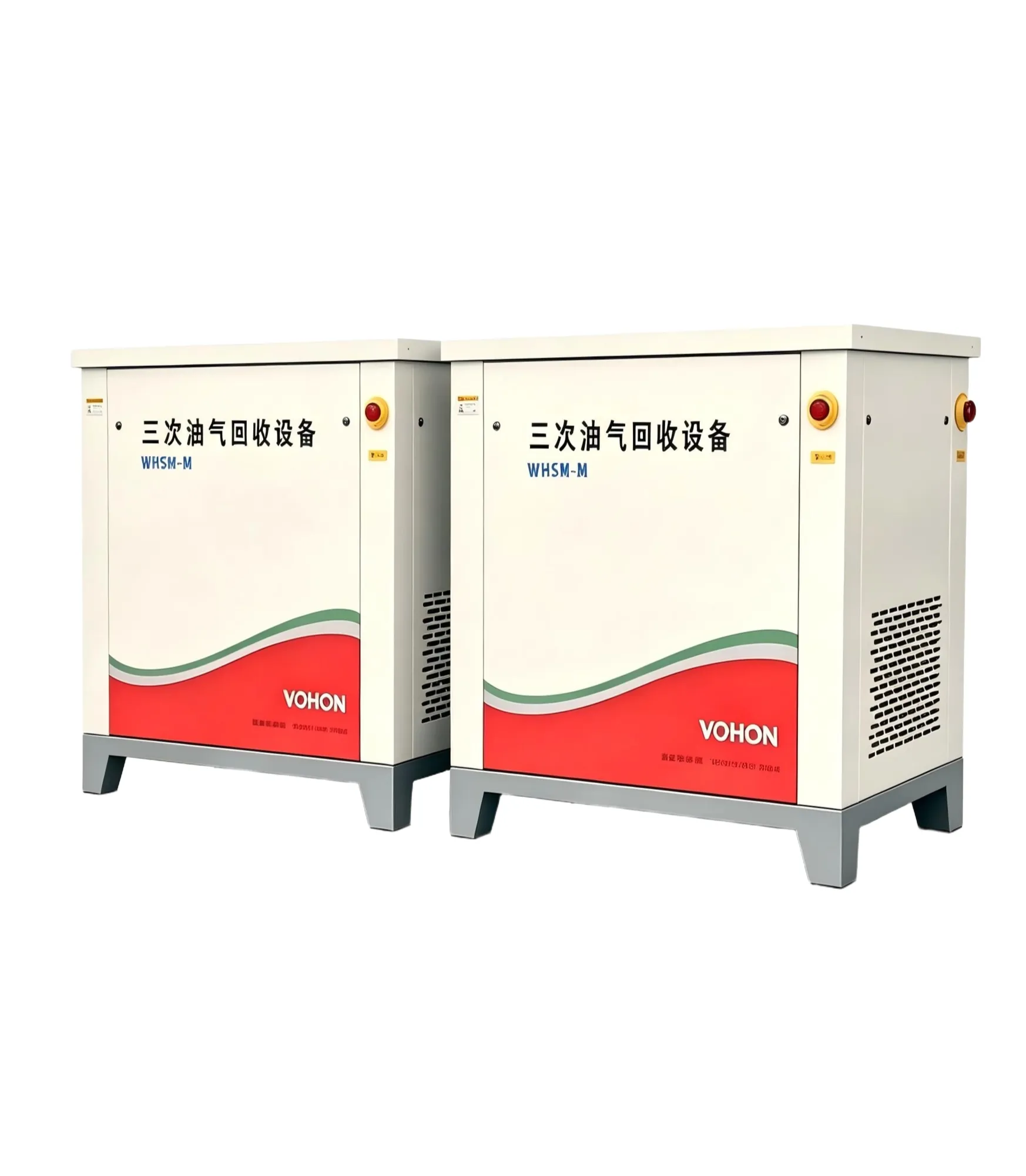
Conduct a round of static inspection every week: walk along the breathing tube and enrichment gas pipeline, checking for any signs of leakage at connectors, flanges, and valves; feel the temperature rise of the compressor or vacuum pump, and listen for any changes in sound; check the pressure difference gauge of the filter screen, and if the pressure difference increases rapidly, it indicates that the filter material should be cleaned or replaced; inspect the drainage and sewage outlets for any accumulated fluid or dirty oil. In winter, focus on checking the risk of heat tracing and pipeline freezing, while in summer, focus on checking the heat dissipation of the unit. The focus of inspection changes with different seasons.
What do you do every month
Conduct a round of maintenance work every month: clean or replace the pre-treatment filter screen, drain the accumulated liquid in the gas-liquid separation section; tighten the connecting pieces of the vibrating parts; replenish and change the oil of the rotating equipment periodically; check the operation records, and sort out the start-stop times, operation duration, and abnormal events into the ledger. Maintenance records are the common basis for environmental inspection and equipment warranty. Without records, no matter how good the explanation is, it is difficult to provide evidence - this is a blind spot for many stations.
How often should it be tested
The inspection cycle is implemented according to local requirements, with most regions conducting inspections once a year. The inspection items usually cover emission concentration and system tightness, and the supporting gas-liquid ratio and liquid resistance are arranged synchronously with the secondary recovery system. Newly installed and renovated devices undergo acceptance inspection first, and the results serve as the baseline for subsequent annual comparisons. Routine maintenance is carried out on a daily, weekly, and monthly basis, with a round of self-inspection before inspection. This greatly increases the likelihood of passing the inspection and reduces the panic of cramming at the last minute.
How to keep maintenance records
Records are not about being aesthetically pleasing, but about traceability: it suffices to clearly state what was done on which day, what was replaced, what the numerical values are, and who did it. It is recommended to bind them monthly and keep them in the same place as the inspection reports. These records are valuable in three scenarios: environmental inspections, equipment warranty disputes, and personnel handovers. In stations with records, newcomers can get started within a week; in stations without records, it takes half a year to rely on the experience of experienced workers.
Maintenance frequency reference
| frequency | Action | key points |
|---|---|---|
| every day | Check the status and readings | Operation light, tank pressure, emission concentration |
| weekly | Check sealing and temperature rise | Joint leakage, pump temperature rise, filter screen pressure difference |
| monthly | Maintenance work | Filter screen, drainage, fastening, lubricating oil |
| each season | Deep inspection | Pipeline wall thickness, electrical wiring, grounding |
| every year | Detect by territory | Items such as emission concentration and tightness |
| after renovation | Acceptance Inspection | The results serve as the baseline for subsequent comparisons |
Monthly maintenance steps
- Clean the pre-treatment filter screen after powering off and tagging out;
- Drain the accumulated fluid and dirty oil from the gas-liquid separation section;
- Fasten the connectors at the vibration parts and retighten them;
- The refilling and oil change of rotating equipment should be carried out periodically;
- Check the start-stop records and the log of abnormal events;
- After reassembly, the trial operation confirmed that the status is normal.
Frequently Asked Questions
Does the device require special personnel to be on duty at ordinary times?
不需要。装置按罐压自动启停,日常以巡检为主;配远程监控的站点异常会推送,无人值守时段重点确认告警功能在投。
How often should the filter screen be replaced?
Focus on pressure difference, not the calendar - Clean and replace when the pressure difference reaches the set upper limit or is significantly higher than the initial level after commissioning; for stations with high levels of oil, gas, and dust, the maintenance cycle should be shorter, while for clean stations, the maintenance cycle can be appropriately extended.
Can maintenance be outsourced to suppliers?
Yes, we can incorporate the daily, weekly, and monthly actions and response time limits into the service contract, requiring records to be kept for each service. The on-site personnel should retain the responsibility for daily inspections and record archiving, rather than taking on all responsibilities.
This article is compiled by Luoyang Wohong Petrochemical Equipment Co., Ltd. The company provides design and manufacturing, skid-mounted customization, installation and commissioning, as well as after-sales operation and maintenance services for three-time oil and gas recovery equipment to gas stations and oil depots. If you need on-site inspection or scheme configuration, please feel free to contact us for discussion.