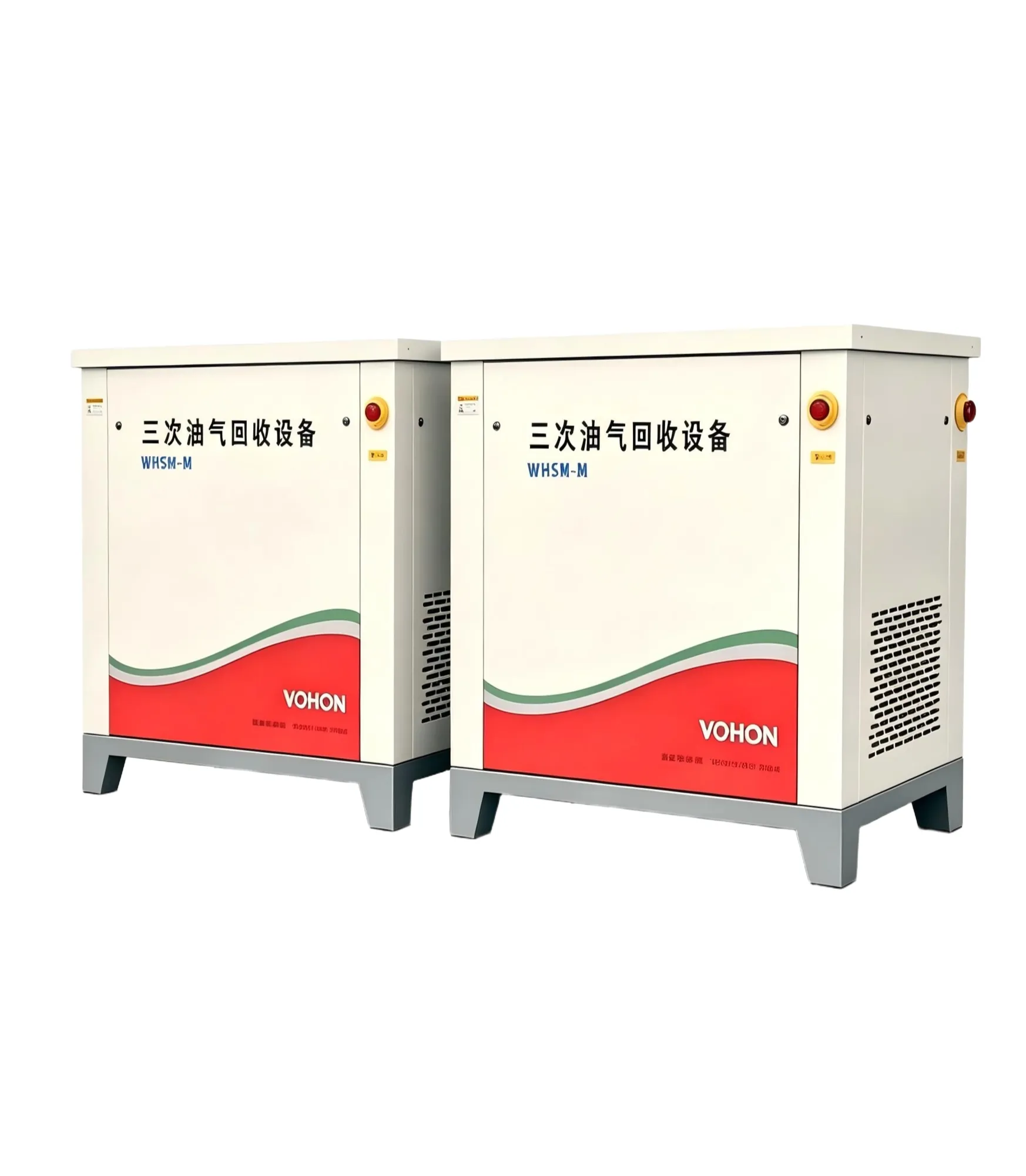
The oil and gas recovery device is still operating, but why is the emission concentration getting higher and higher? Straight answer: This is called implicit failure - the equipment is mechanically intact and there are no alarms, but the recovery efficiency is quietly declining, and the emission concentration is climbing month by month. Common causes, ranked by probability: saturation of adsorption materials in the treatment process or contamination of membrane components, condensation temperature not reaching the design value, deterioration of working conditions due to clogged pre-treatment filters, dilution of inlet gas concentration due to deterioration of the collection end seal, and "false exceeding standards" caused by distortion in monitoring and sampling itself. The indicator light only reflects "operating" and does not reflect "meeting standards". If you notice a trend of increasing concentration, take the initiative to investigate, don't wait until spot checks fail. This article clarifies the causes, signals, and troubleshooting methods.
Common reasons for concentration ramp
There are three types of processing issues: the adsorption material nearing saturation, the breakthrough point moving forward, and the outlet concentration increasing; frosting and scaling on the condensation side heat exchanger, the actual temperature failing to reach the design value, and light components not being collected; membrane module contamination or pre-treatment failure, with dirt entering the separation layer. There are two types of system issues: aging of the collection end seal, oil and gas leaking from the source, and total emissions actually increasing; fluid accumulation in pipelines and pressure buildup altering operating conditions, causing the device to deviate from its design point.
Warning signal before climbing a slope
Concentration ramp-up is not an isolated event, and there are usually three signals preceding it: a decline in recovery volume, with less oil being recovered for the same sales volume; an increase in unit consumption, with higher electricity costs for recovering the same amount of oil; and a change in sound, with pumps and compressors sounding sharper or duller than before. All three signals come from daily operational data, which is precisely the value of inspection records - without trend data, latent failures can only be exposed during spot checks.
How to conduct segmented investigation
The troubleshooting principle is to start with the cheaper options before moving on to the more expensive ones, and to address external issues before internal ones. First, inspect the sealing and piping at the collection end, which is the most cost-effective and yields immediate results. Next, measure the pressure difference across the pre-treatment filter screen and replace it if it is blocked. Then, measure the concentration in sections, taking samples at the inlet and outlet of the device and before and after each treatment unit, so that the efficiency loss in any particular section is immediately apparent. Finally, disassemble and inspect the pump and treatment units. Suspecting equipment failure and applying for major repairs right from the start is the most expensive path to troubleshooting.
Manage the data
The nemesis of implicit failure is trend management: emission concentrations are recorded monthly to draw curves, and normal operation should be stable within a narrow range. If there is a one-way slope for several consecutive months, an investigation should be initiated. The recovery amount is compared with the first year of operation based on the "recovery amount per 10,000 tons of sales volume" metric, and a comprehensive maintenance plan is arranged if the decrease exceeds 15%. The concentration comparison baseline uses the data from acceptance testing, and all subsequent fluctuations are interpreted against this baseline.
Comparison of signals and causes
| signal | The reason for the direction | Investigative action |
|---|---|---|
| Emission concentration ramp | The efficiency of the processing stage has declined | Segmented concentration measurement and localization |
| The recycling volume has declined | Pump efficiency decline or heat transfer deterioration | Compare with the baseline of 10,000 tons of recycling volume |
| Unit consumption increases | Frosting on heat exchanger or pressure buildup in pipeline | Trend of electricity consumption per ton of nuclear power generation |
| Voice variation | Wear and tear of pumps and compressors | Stop the machine to inspect the wearing parts |
| The intake air concentration becomes lean | Deterioration of the sealing at the collection end | Check the seals and connectors |
| Data glitch | Monitor sampling distortion | Check the probe position and calibration |
Troubleshooting steps
- Check the concentration trend curve to confirm the ramp is genuine;
- Check and collect the sealing of the end and fluid accumulation in the pipeline;
- Check the pressure difference of the pre-treatment filter screen, clean it, and replace it if necessary;
- Segmented concentration measurement unit with reduced positioning efficiency;
- Repair or replace the corresponding components according to the positioning results;
- After processing, retest the concentration to ensure it returns to the baseline and archive the results.
Frequently Asked Questions
Even if the concentration is not above the limit, should we still investigate?
Yes. Climbing the slope itself indicates that the system is deteriorating. If we wait until it exceeds the standard before taking action, the scale of rectification and the risk of business suspension will be even greater. The significance of trend management is to address issues within acceptable limits.
How often should the adsorption material and separation membrane be replaced?
Instead of looking at the calendar, we should look at the status: the final say is given to the trend of outlet concentration, pressure difference, and recovery rate; replacing based on status is more cost-effective than replacing based on age, and it also allows for earlier detection of real issues.
How to eliminate "false exceeding standards"?
Check whether the monitoring point is located at the outlet of the treatment facility, whether the sampling tube is blocked or contains liquid, and whether the instrument calibration has expired; if all three items are normal, then arrange for troubleshooting based on actual exceedances.
This article is compiled by Luoyang Wohong Petrochemical Equipment Co., Ltd. The company provides design and manufacturing, skid-mounted customization, installation and commissioning, as well as after-sales operation and maintenance services for three-time oil and gas recovery equipment to gas stations and oil depots. If you need on-site inspection or scheme configuration, please feel free to contact us for discussion.