How to choose among the three oil and gas recovery processes: membrane separation, condensation, and adsorption? The straightforward answer is: none of the three stands out as a comprehensive winner. The choice should be based on the inlet concentration and the treatment objectives. Condensation is suitable for high-concentration and high-flow conditions, capable of directly converting oil and gas into recoverable oil products. The higher the concentration, the more cost-effective it becomes. Membrane separation is suitable for continuous intake of medium to low concentrations, responsible for enrichment and concentration, as well as final quality control. Its open process ensures good safety. Adsorption is suitable for deep treatment, capable of significantly reducing outlet emissions, but requires good management of adsorption heat and regeneration processes. In practical engineering, these three processes are rarely used alone; the mainstream approach is a combined configuration: condensation or membrane as the main recovery process, and adsorption as the quality control segment. This article outlines the strengths and weaknesses of the three processes, providing a practical approach for selection.
Condensation method: converting oil vapor back into oil
The approach of condensation is straightforward: reduce the temperature of the oil and gas to liquefy the components, and what is recovered is the oil itself. In scenarios with high concentration and large flow rate, such as loading and unloading, the value of the condensed oil is immediately apparent. The shortcoming lies in the depth of temperature: to reduce emissions to very low levels, the condensation temperature has to be further lowered, which increases refrigeration energy consumption and the management of heat exchanger frosting. Relying solely on condensation to achieve low-concentration emissions is usually not cost-effective in terms of operational costs.
Membrane separation: A balancing act between enrichment and quality control
The membrane approach involves screening: oil and gas molecules are enriched and extracted through the separation layer, while air remains on the other side and is discharged. It excels in the range of continuous gas intake at medium and low concentrations - even in conditions where the concentration is so low that condensation is not cost-effective, the membrane can still operate stably; the enriched high-concentration gas is then returned to the condensation or absorption section for treatment, with each section performing its own specialized task. The membrane method features no phase change throughout the process, open flow channels, no heat accumulation during operation, and fewer safety configuration items. This is why it is increasingly being selected for projects in gas stations and oil depots.
Adsorption method: the main force at the end of the line for strict quality control
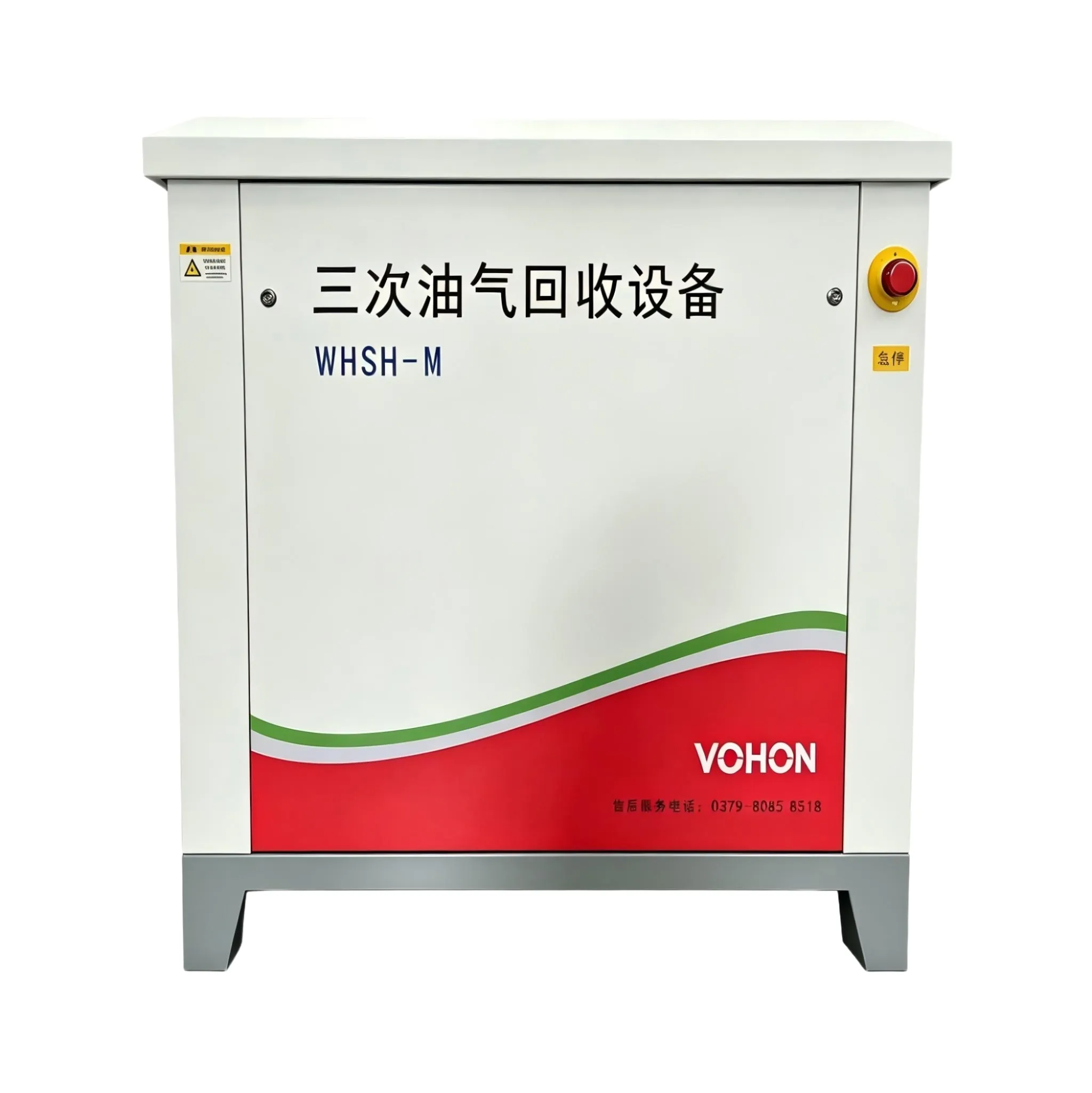
Adsorption captures oil and gas molecules on the surface of the material, and excels at reducing the outlet concentration to very low levels. It is often placed at the end of the process as a checkpoint. The cost involves two things: the adsorption process is exothermic, requiring temperature control and monitoring for the bed; the material will become saturated, necessitating continuous investment in regeneration and replacement. Significant fluctuations in inlet concentration are not conducive to adsorption, so it is better to place it at the end of the process and allow the concentration to stabilize in the earlier stages before allowing adsorption to proceed smoothly.
Collaboration is better than going it alone
A common combination in engineering is condensation plus membrane: condensation is responsible for recovering oil products in the high-concentration segment, while the membrane is responsible for enrichment and control in the low-concentration segment, ensuring both emission compliance and high recovery rates; there is also a combination of membrane concentration and adsorption for fine treatment, used in situations where control requirements are stricter. The principle of division of labor is simple: let each process stay in its most efficient concentration range, and don't force anyone to do work they are not good at. A comparison of the three processes is shown in the table.
Comparison of three processes
| dimension | condensation | membrane separation | adsorption |
|---|---|---|---|
| Proficient in the range | High concentration and high flow rate | Continuous air intake at medium and low concentrations | Strict control over low concentrations |
| output | Directly recycled oil products | Pre-treatment of enriched gas | The oil and gas recovery rate is limited |
| Safety features | Low temperature system management | Open type without heat accumulation | Temperature control and monitoring are required as supporting facilities |
| Continuous investment | Refrigeration energy consumption and defrosting | Membrane life cycle cost | Regeneration and consumable replacement |
| Typical role | Main recovery section | Enrichment and quality control stage | End-of-line quality control section |
| Combined suggestions | Combined with membrane or adsorption | It is mostly combined with condensation | Perform final fine processing |
Selection steps
- The fluctuation range of measured intake concentration and air volume;
- Clarify governance objectives and emission limit margin requirements;
- For the high-concentration segment, first calculate the oil product account for condensation recovery;
- Compare the costs of membrane enrichment and adsorption control in the low concentration range;
- Check the load and temperature level connection of each section in the combined scheme;
- Compare candidate configurations based on a five-year operational budget.
Frequently Asked Questions
Which of the three processes has the highest recovery rate?
Consider the concentration range: the recovery rate and economic efficiency are good in the high-concentration segment, while in the low-concentration segment, emission can only be reduced by membrane enrichment and adsorption control; it is meaningless to talk about recovery rate without considering concentration.
Is it necessary to adopt combined processes at small stations?
Not necessarily. For stations with regular emission requirements and small oil throughput, a single-stage configuration can meet the standards; for stations with strict quality control requirements or large oil throughput, a combined process is suitable. Whether to adopt it or not should be determined based on operational calculations.
How can existing equipment be utilized in the renovation project?
First, assess the efficiency and status of existing devices, retain what can be used for a period, and supplement the gap with membranes or adsorption; for the plan of completely overhauling everything, it is necessary to first ask where the residual value of the old equipment has gone.
This article is compiled by Luoyang Wohong Petrochemical Equipment Co., Ltd. The company provides design and manufacturing, skid-mounted customization, installation and commissioning, as well as after-sales operation and maintenance services for three-time oil and gas recovery equipment to gas stations and oil depots. If you need on-site inspection or scheme configuration, please feel free to contact us for discussion.