How to choose the processing capacity of a three-stage oil and gas recovery device? What are the problems with choosing a capacity that is too large or too small? Straight answer: Choose based on the peak oil delivery volume and tank pressure fluctuation range of the station during peak hours, so that the device can promptly reduce the tank pressure during high-load periods and leave room for downtime during low-load periods - not necessarily the larger the better. Choosing a larger device for long-term low-load operation will result in excessive investment that cannot be recovered, and frequent start-ups and shutdowns are also likely to occur; choosing a smaller device will not be able to handle peak hours, and the tank pressure will reach the point where the breather valve pops, leading to increased emissions and oil loss. Choosing the processing capacity is not a matter of guesswork. It can be calculated using the number of fuel dispensers, the number of fuel nozzles, and the average daily oil delivery volume. This article clarifies the matching logic and checklist.
What determines the processing capacity
The processing capacity of the tertiary device needs to align with the production rate of oil and gas within the tank. The production rate of oil and gas is determined by the oil delivery volume: during peak refueling periods, as oil products are quickly discharged from the tank, the space inside the tank is replaced, and the concentration of oil and gas rises simultaneously with the tank pressure. The device must process this portion of oil and gas before the tank pressure reaches the trip point of the breather valve. To estimate the processing capacity based on this, three sets of data are required: peak flow rate per nozzle and the number of nozzles, distribution of oil delivery volume during peak periods, and tank area volume and pressure control range. Stations with actual measurement curves for tank pressure are easier to handle, as the height and width of the curve directly correspond to the amount of gas that the device needs to process. For stations without such curves, estimates can be made based on the oil delivery volume, and the error can be controlled within an acceptable range. The estimation results should then be cross-checked against the actual configuration of stations of the same size. If the two align, there is basically no deviation.
Three major issues selected
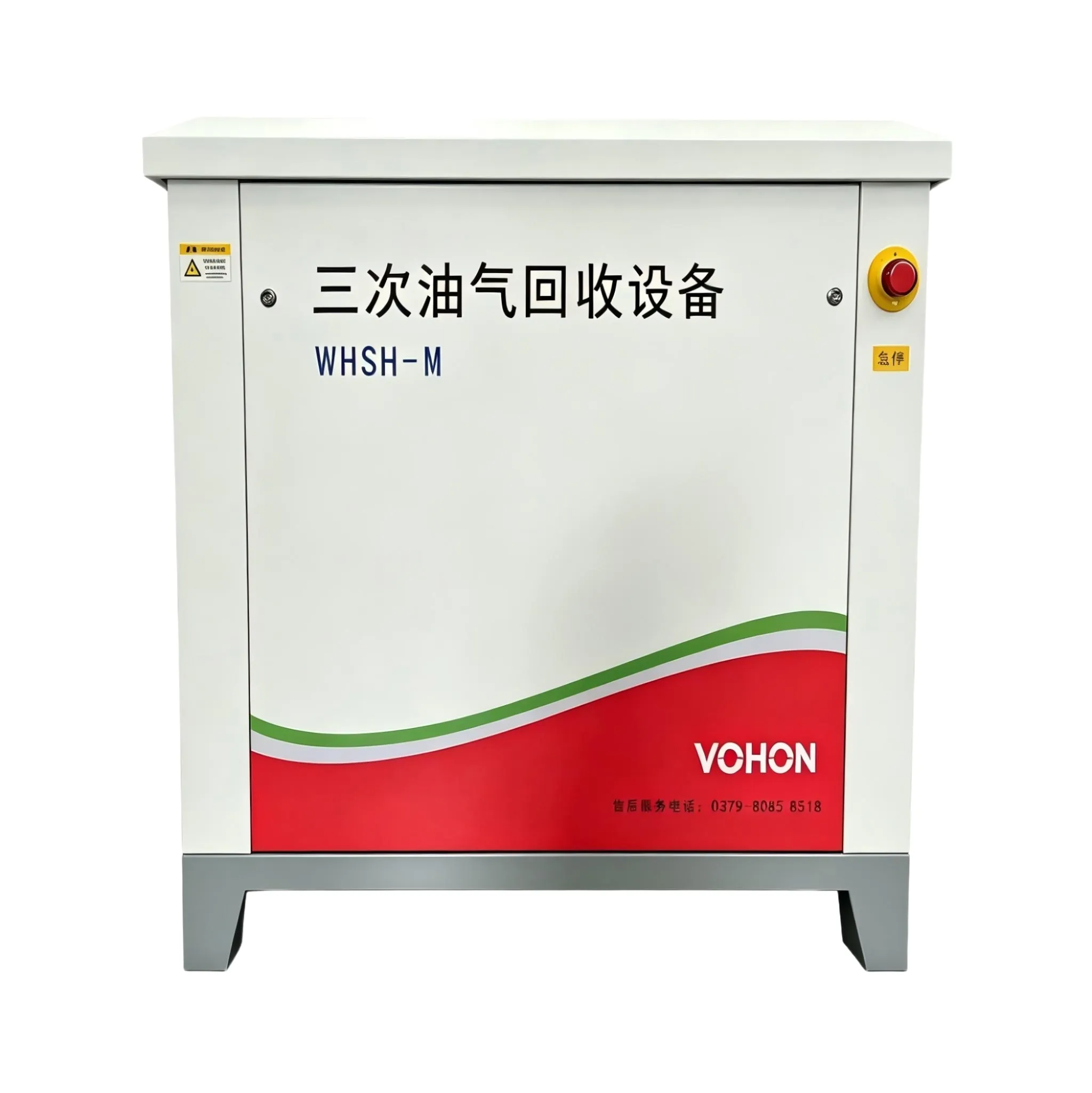
If the processing capacity is chosen to be too large, it appears as an investment waste on paper: as the equipment specifications are upgraded, the price, land occupation, and power configuration all increase accordingly, while the daily operating conditions are not fully utilized. There are also operational issues - equipment operating at low loads for extended periods can result in unstable processing efficiency. The tank pressure hasn't built up yet, and the device has already been exhausted, leading to frequent starts and stops that shorten the lifespan of pumps and compressors. The number of on-off cycles of electrical components is also being depleted. Low loads may also cause instruments to operate at the lower end of their range, leading to distorted readings and skewed operational and maintenance judgments.
The risk of choosing too small
The processing capacity is too small, and it cannot withstand peak periods: the tank pressure continues to rise until the breather valve pops, and the oil gas is directly discharged, posing both environmental risks and oil loss; the device is forced to operate continuously at full capacity for extended periods, leading to increased heat dissipation and wear, and an increased probability of malfunction and downtime. Renovation requires additional expenditure, and the downtime window also needs to be rescheduled. The cost of secondary investment is much higher than choosing the right option the first time.
Processing quantity matching and verification
| dimension | Over-sized configuration | Low-end configuration |
|---|---|---|
| investment | Specification and power configuration wastage | Spending money repeatedly for secondary renovation |
| run | Frequent start-stop operations under low load | "Operating at full capacity and working non-stop" |
| can pressure | The fluctuation is small, but the equipment breaks easily | The pressure relief valve of the roof is activated for external discharge |
| Equipment lifespan | Cumulative wear due to start-stop impact | Excessive heat dissipation leads to increased wear and more malfunctions |
| instrument | Low-load reading distortion | Long-term operation at full scale without margin |
| suggestion | Leave a moderate margin based on the peak value | It's better to adjust upwards than to rigidly enforce specifications |
Selection steps
- Calculate the average daily and peak oil delivery volumes over the past six months;
- Count the number of oil guns and peak simultaneous usage rate;
- Measure or retrieve the tank pressure fluctuation curve;
- Select the initial processing capacity based on the peak gas volume and leave a margin;
- Check the power and site conditions;
- Based on five years of operation, we determine the specifications.
Frequently Asked Questions
The oil production will increase in the future. Is it okay to buy a larger one now?
It can be moderately increased, but don't jump to double the specifications; first calculate the surplus based on the predicted increment, and increase by one level. When it comes to expansion, there is still room for modification and connection of the device.
How to assess the existing operating conditions for the renovation of the old station?
By comparing the sales data from the past year with the tank pressure records, and installing a temporary pressure recorder to measure for two to four weeks, estimating the peak gas volume using the actual measured curve is much more reliable than relying on empirical estimates.
Is processing capacity the same as vacuum pump selection?
不是。处理量指装置整体处理气量的能力,真空泵是其中建立抽吸动力的部件,泵的抽速与极限真空要按处理量与管路阻力配套核算,两项都对上才算匹配。
This article is compiled by Luoyang Wohong Petrochemical Equipment Co., Ltd. The company provides design and manufacturing, skid-mounted customization, installation and commissioning, as well as after-sales operation and maintenance services for three-time oil and gas recovery equipment to gas stations and oil depots. If you need on-site inspection or scheme configuration, please feel free to contact us for discussion.